Liu Wei, Meng Jin, Su Rongjun, Shen Changjun, Zhang Shuai, Zhao Yantao, Liu Wenqi, Du Jiang, Zhu Shuai, Li Pan, Wang Zhigang, Li Xiaoxia
Department of General Surgery, Yan'an People's Hospital, Yan'an, 716000, P.R. China.
Department of Fifth Treatment Areas of Anorectal Disease, Shenyang Coloproctology Hospital, Shenyang, 110002, P.R. China.
Cell Death Dis. 2022 May 4;13(5):433. doi: 10.1038/s41419-022-04805-w.
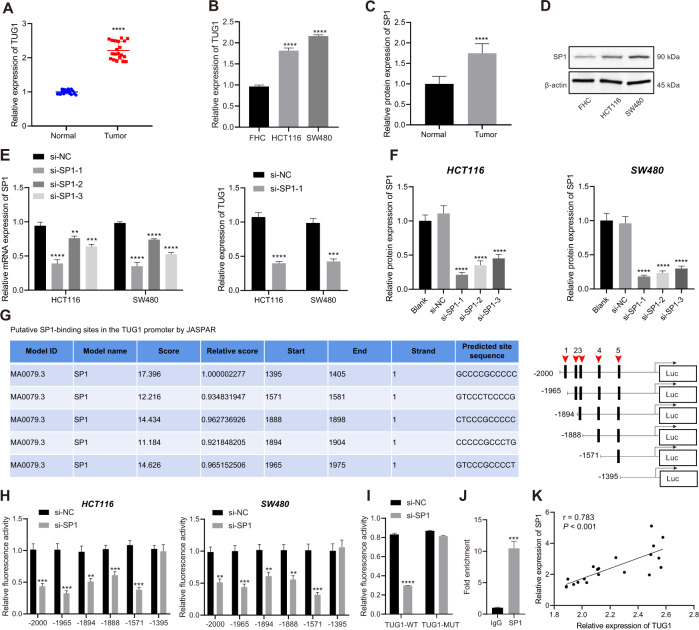
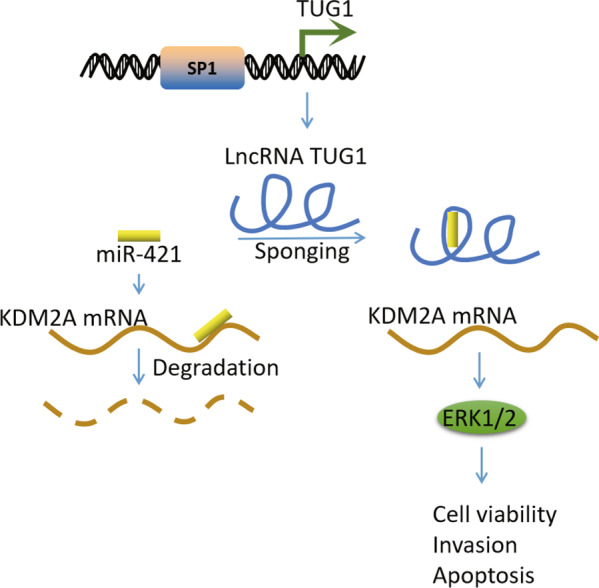
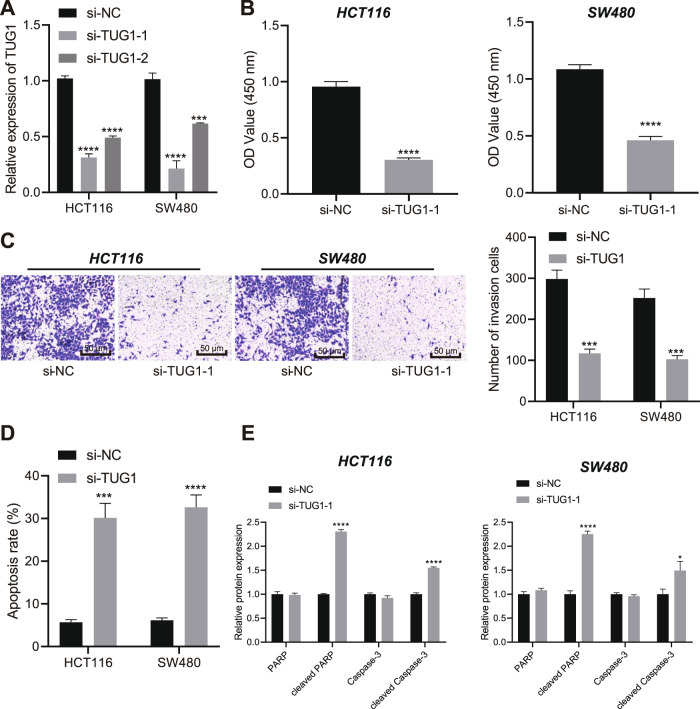
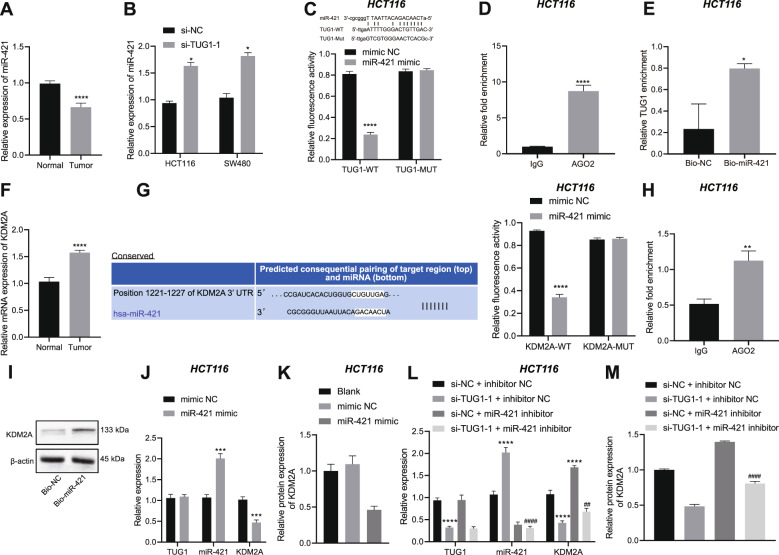
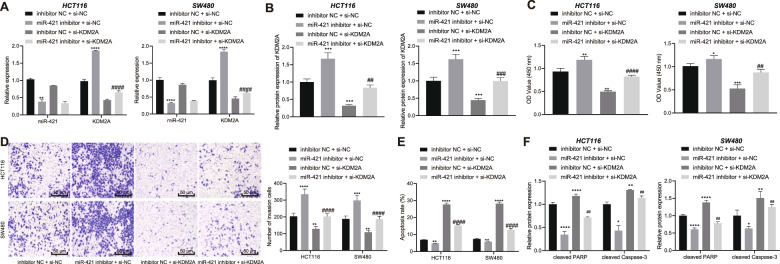
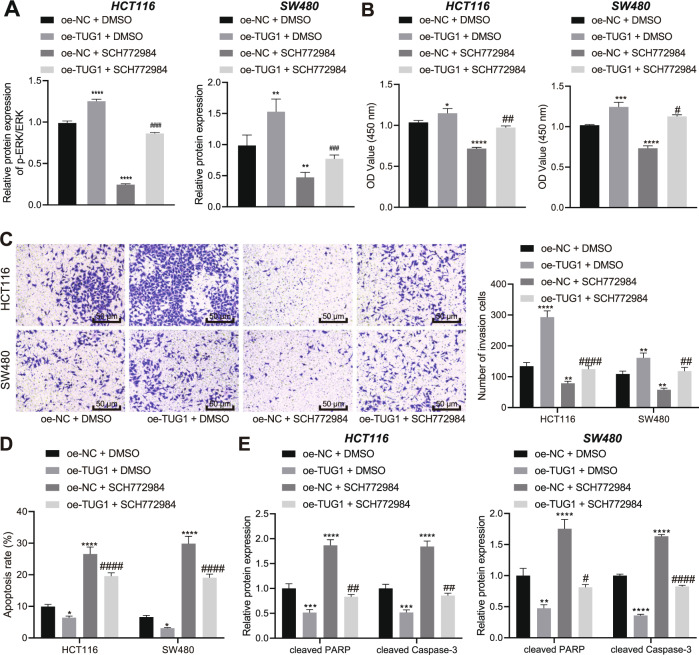
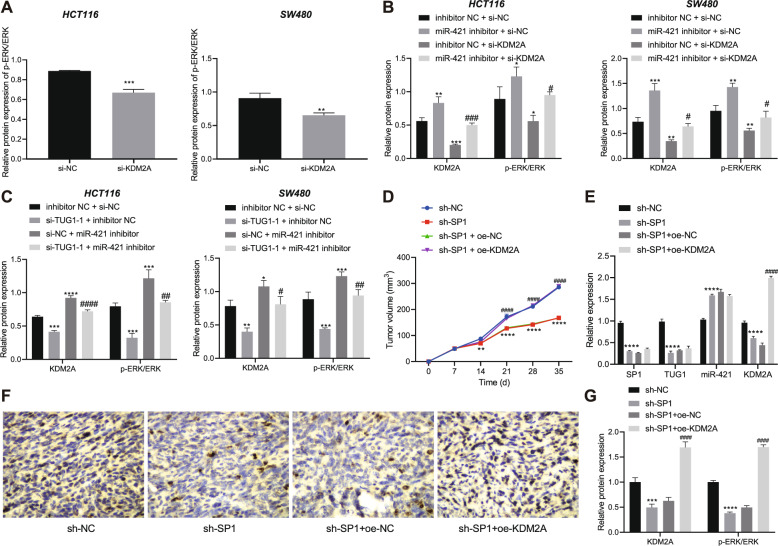
The long non-coding RNA (lncRNA) taurine up-regulated gene 1 (TUG1) acts as tumor-promoting factor in colorectal cancer (CRC). We aimed to elucidate the mechanism by which the transcription factor specificity protein 1 (SP1) regulates TUG1 and microRNAs (miRs)/mRNAs in the context of CRC, which has not been fully studied before. Expression patterns of TUG1 and SP1 were determined in clinical CRC samples and cells, followed by identification of their interaction. Next, the functional significance of TUG1 in CRC was investigated. An in vivo CRC model was established to validate the effect of TUG1. The results demonstrated that TUG1 and SP1 were highly-expressed in CRC, wherein SP1 bound to the TUG1 promoter and consequently, positively regulated its expression. Silencing of TUG1 caused suppression of CRC cell growth and promotion of cell apoptosis. TUG1 could bind to miR-421 to increase KDM2A expression, a target gene of miR-421. TUG1 could activate the ERK pathway by impairing miR-421-targeted inhibition of KDM2A. Additionally, SP1 could facilitate the tumorigenesis of CRC cells in vivo by regulating the TUG1/miR-421/KDM2A/ERK axis. Altogether, the current study emphasizes the oncogenic role of TUG1 in CRC, and illustrates its interactions with the upstream transcription factor SP1 and the downstream modulatory axis miR-421/KDM2A/ERK, thus offering novel insights into the cancerogenic mechanism in CRC.
长链非编码RNA(lncRNA)牛磺酸上调基因1(TUG1)在结直肠癌(CRC)中作为肿瘤促进因子发挥作用。我们旨在阐明转录因子特异性蛋白1(SP1)在CRC背景下调节TUG1以及微小RNA(miR)/信使核糖核酸(mRNA)的机制,此前这方面尚未得到充分研究。在临床CRC样本和细胞中确定TUG1和SP1的表达模式,随后鉴定它们之间的相互作用。接下来,研究TUG1在CRC中的功能意义。建立体内CRC模型以验证TUG1的作用。结果表明,TUG1和SP1在CRC中高表达,其中SP1与TUG1启动子结合,从而正向调节其表达。沉默TUG1导致CRC细胞生长受抑制并促进细胞凋亡。TUG1可与miR - 421结合以增加miR - 421的靶基因KDM2A的表达。TUG1可通过削弱miR - 421对KDM2A的靶向抑制来激活ERK通路。此外,SP1可通过调节TUG1/miR - 421/KDM2A/ERK轴促进体内CRC细胞的肿瘤发生。总之,当前研究强调了TUG1在CRC中的致癌作用,并阐明了其与上游转录因子SP1以及下游调节轴miR - 421/KDM2A/ERK的相互作用,从而为CRC的致癌机制提供了新的见解。