Department of Oncology, Nanjing Jiangning TCM Hospital Affiliated to Nanjing University of Chinese Medicine, Nanjing, P.R. China.
Department of Geriatric Gastroenterology, The First Affiliated Hospital with Nanjing Medical University, Nanjing, P.R. China.
Bioengineered. 2022 May;13(5):11668-11683. doi: 10.1080/21655979.2022.2070975.
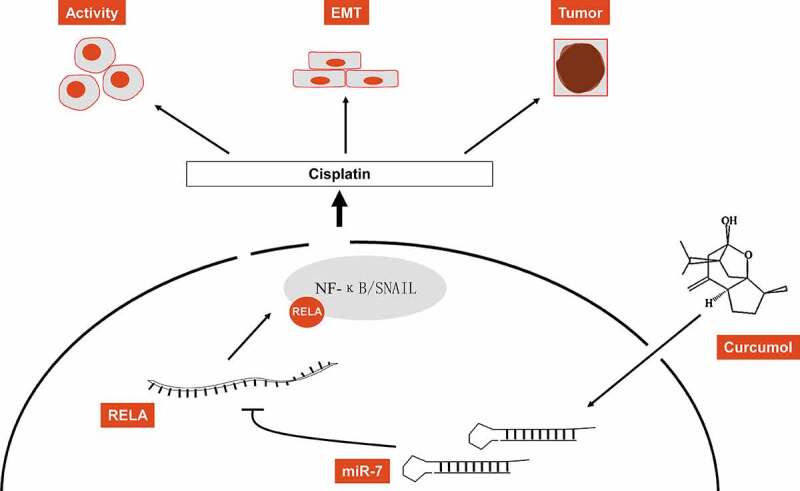
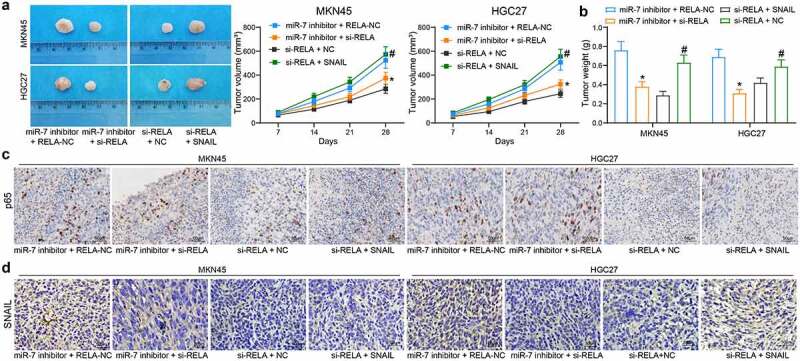
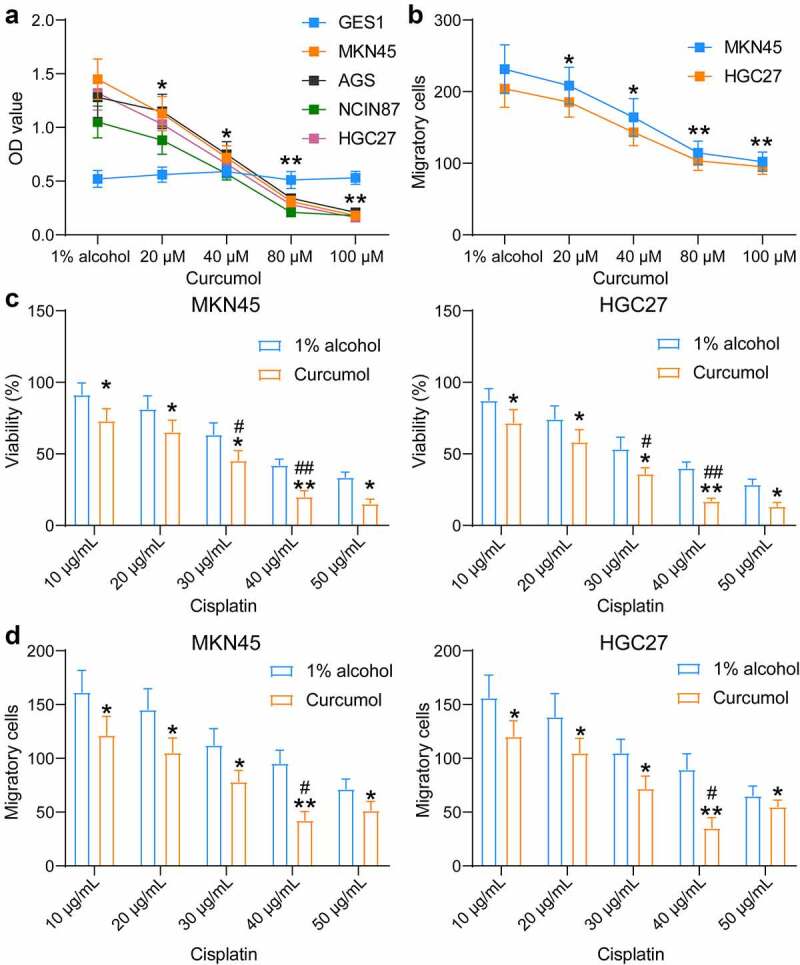
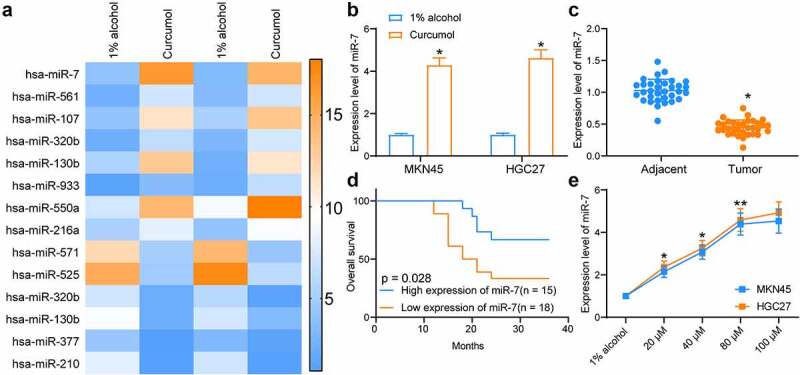
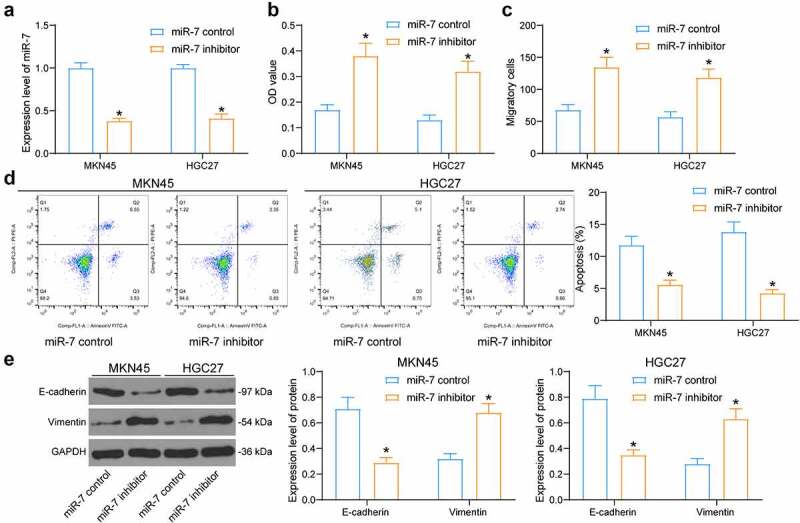
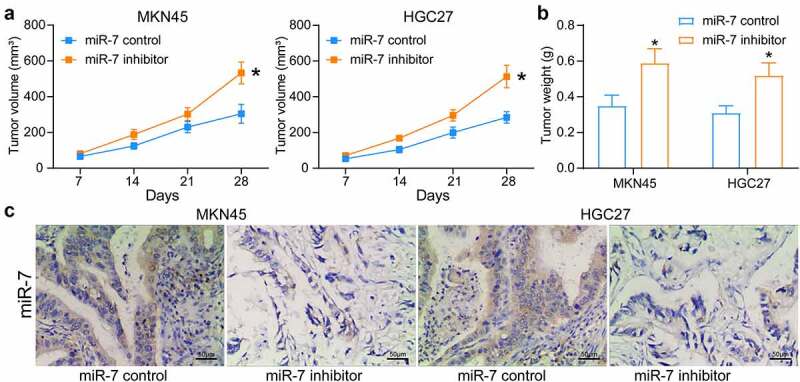
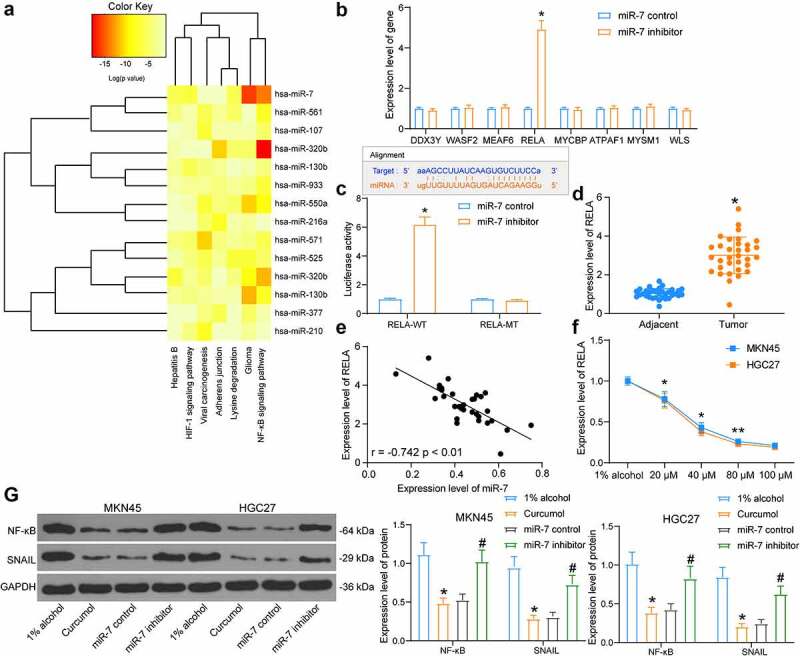
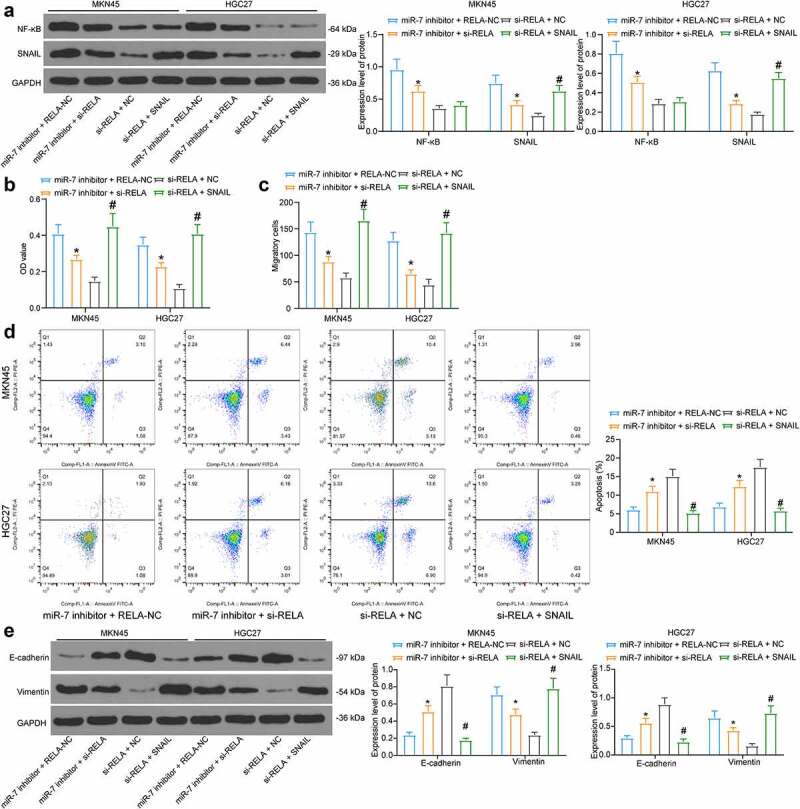
Cisplatin is a primary chemotherapeutic drug for gastric cancer (GC) patients, but the drug resistance remains the leading cause of treatment failure and high mortality. Curcumol is a bioactive sesquiterpenoid that has reportedly been linked to cisplatin sensitivity in GC. This study focuses on the exact functions of curcumol in the cisplatin sensitivity of GC cells and the molecules of action. The curcumol treatment reduced the viability and migration and enhanced cisplatin sensitivity of GC cells in a dose-dependent manner. Microarray analysis suggested that () was the most upregulated miRNA in GC cells after curcumol treatment. The Kyoto Encyclopedia of Genes and Genomes pathway enrichment analysis showed that the curcumol-affected genes, including the target genes of miR-7, were enriched in the nuclear factor-kappa B (NF-κB) pathway, whose activity was suppressed after curcumol treatment. miR-7 was found to target and suppress RELA proto-oncogene (, also known as p65), a NF-κB subunit. Downregulation of blocked the sensitizing effects of curcumol on cells to cisplatin and led to increased expression of NF-κB p65 and snail family transcriptional repressor 1 (SNAIL). Further downregulation of enhanced, whereas upregulation of suppressed the sensitivity again. In summary, this study suggests that curcumol sensitizes GC cells to cisplatin via and the suppression of the NF-κB/SNAIL axis. The findings may offer new thoughts that curcumol in combination with cisplatin might be a useful strategy for GC management.
顺铂是胃癌(GC)患者的主要化疗药物,但耐药性仍是治疗失败和高死亡率的主要原因。莪术醇是一种生物活性倍半萜烯,据报道与 GC 中的顺铂敏感性有关。本研究重点研究莪术醇在 GC 细胞顺铂敏感性中的确切作用和作用分子。莪术醇处理以剂量依赖的方式降低 GC 细胞的活力和迁移,并增强顺铂敏感性。微阵列分析表明,()是莪术醇处理后 GC 细胞中上调最明显的 miRNA。京都基因与基因组百科全书途径富集分析显示,莪术醇影响的基因,包括 miR-7 的靶基因,富集在核因子-κB(NF-κB)途径中,莪术醇处理后该途径的活性受到抑制。miR-7 被发现靶向并抑制 RELA 原癌基因(,也称为 p65),一种 NF-κB 亚基。下调 阻止了莪术醇对细胞顺铂敏感性的增敏作用,并导致 NF-κB p65 和蜗牛家族转录抑制因子 1(SNAIL)的表达增加。进一步下调 增强了敏感性,而上调 再次抑制了敏感性。总之,本研究表明莪术醇通过 及其对 NF-κB/SNAIL 轴的抑制作用使 GC 细胞对顺铂敏感。这些发现可能为莪术醇与顺铂联合可能成为 GC 管理的一种有用策略提供新的思路。