Department of Molecular Microbiology and Immunology, School of Medicine, Oregon Health & Science University Portland, Oregon, OR, 97239, USA.
Commun Biol. 2022 May 5;5(1):422. doi: 10.1038/s42003-022-03381-1.
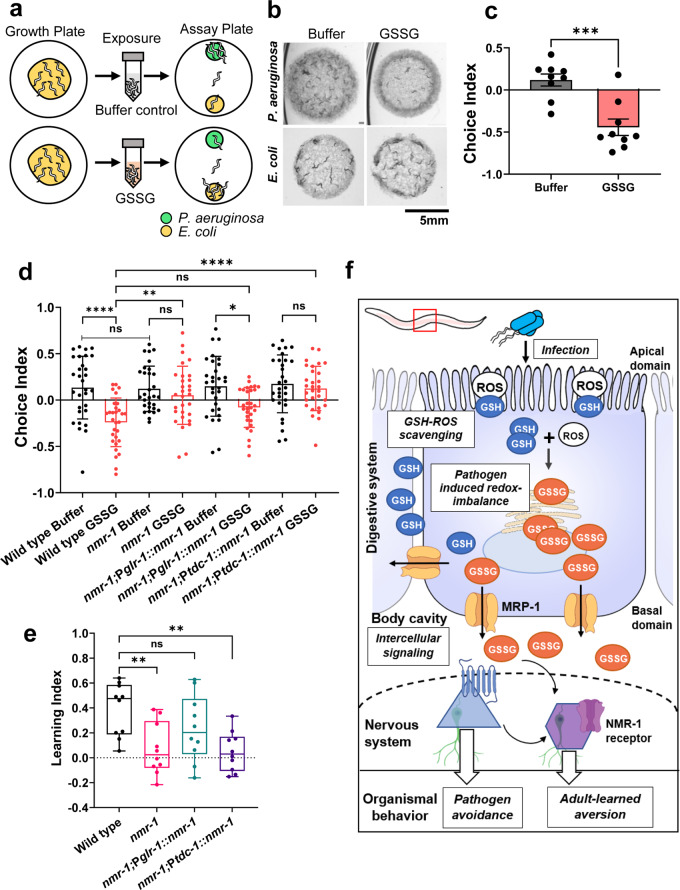
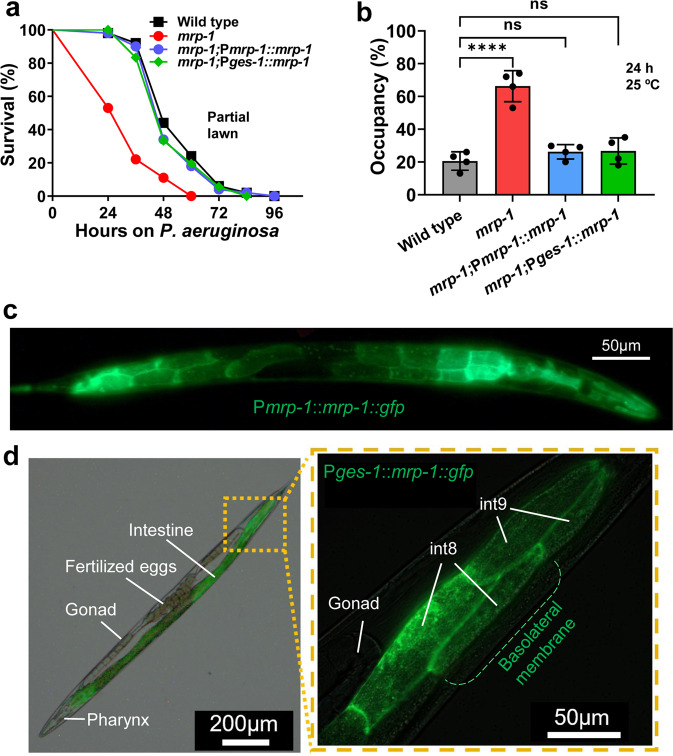
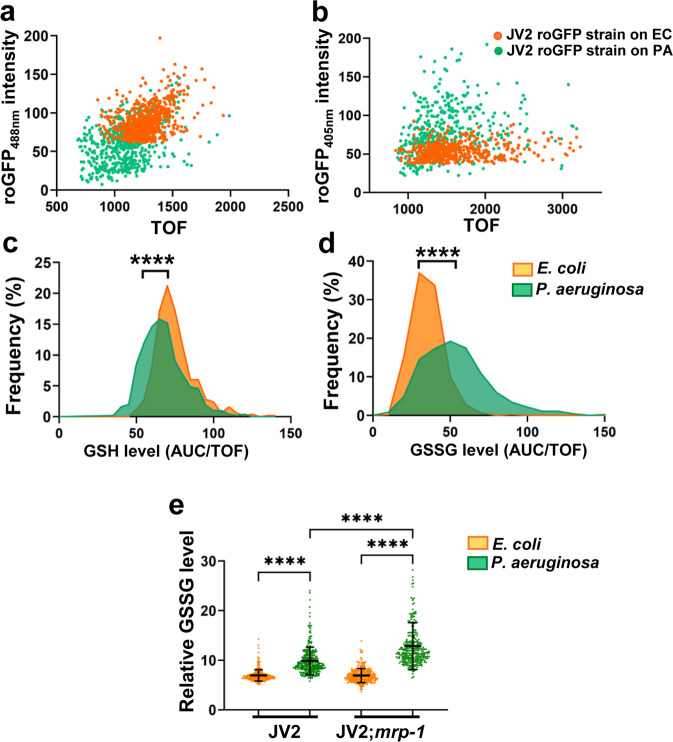
Innate immune surveillance, which monitors the presence of potentially harmful microorganisms and the perturbations of host physiology that occur in response to infections, is critical to distinguish pathogens from beneficial microbes. Here, we show that multidrug resistance-associated protein-1 (MRP-1) functions in the basolateral membrane of intestinal cells to transport byproducts of cellular redox reactions to control both molecular and behavioral immunity in Caenorhabditis elegans. Pseudomonas aeruginosa infection disrupts glutathione homeostasis, leading to the excess production of the MRP-1 substrate, oxidized glutathione (GSSG). Extracellular GSSG triggers pathogen avoidance behavior and primes naïve C. elegans to induce aversive learning behavior via neural NMDA class glutamate receptor-1 (NMR-1). Our results indicate that MRP-1 transports GSSG, which acts as a danger signal capable of warning C. elegans of changes in intestinal homeostasis, thereby initiating a gut neural signal that elicits an appropriate host defense response.
先天免疫监视,监测潜在有害微生物的存在和宿主生理的扰动,这些是区分病原体和有益微生物的关键。在这里,我们表明多药耐药相关蛋白 1(MRP-1)在肠道细胞的基底外侧膜中发挥作用,将细胞氧化还原反应的副产物转运出去,以控制秀丽隐杆线虫的分子和行为免疫。铜绿假单胞菌感染破坏了谷胱甘肽稳态,导致 MRP-1 底物氧化型谷胱甘肽(GSSG)的过量产生。细胞外 GSSG 触发病原体回避行为,并通过神经 NMDA 类谷氨酸受体-1(NMR-1)使幼稚的秀丽隐杆线虫诱导厌恶学习行为。我们的结果表明,MRP-1 转运 GSSG,GSSG 作为一种危险信号,能够警告秀丽隐杆线虫肠道内稳态的变化,从而引发肠道神经信号,引发适当的宿主防御反应。