Alsubi Thamer A, Attwa Mohamed W, Bakheit Ahmed H, Darwish Hany W, Abuelizz Hatem A, Kadi Adnan A
Department of Pharmaceutical Chemistry, College of Pharmacy, King Saud University P.O. Box 2457 Riyadh 11451 Saudi Arabia
Students' University Hospital, Mansoura University Mansoura 35516 Egypt.
RSC Adv. 2020 Jun 12;10(38):22668-22683. doi: 10.1039/d0ra01624a. eCollection 2020 Jun 10.
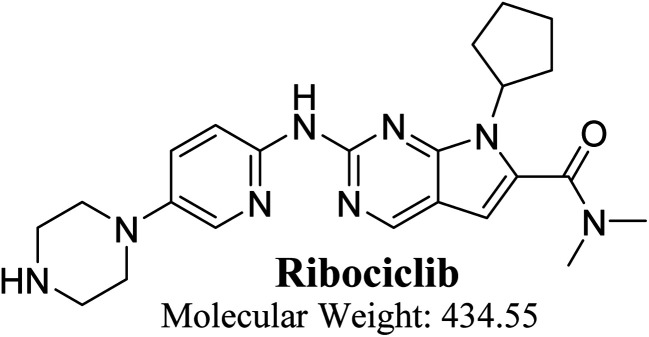
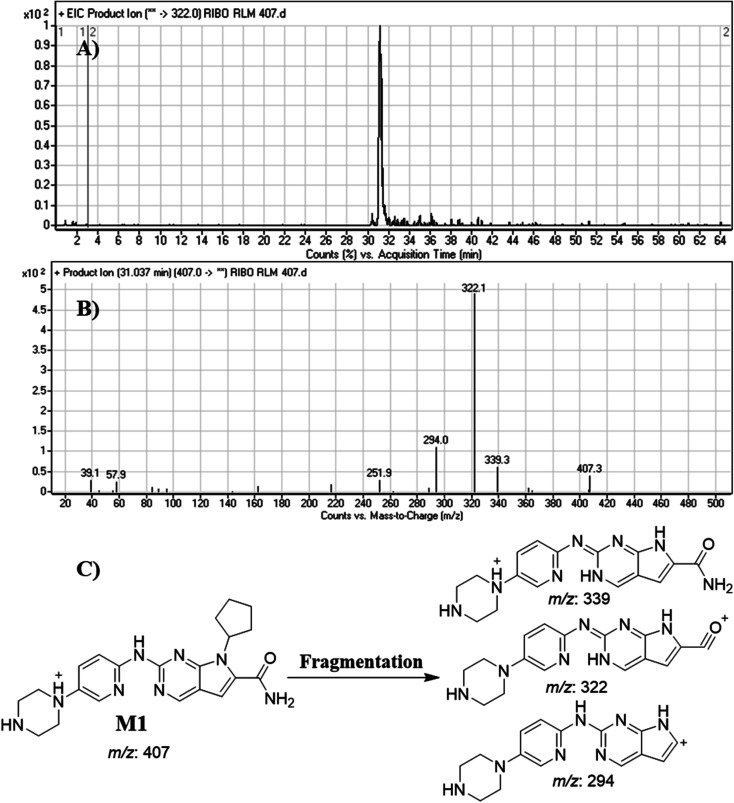
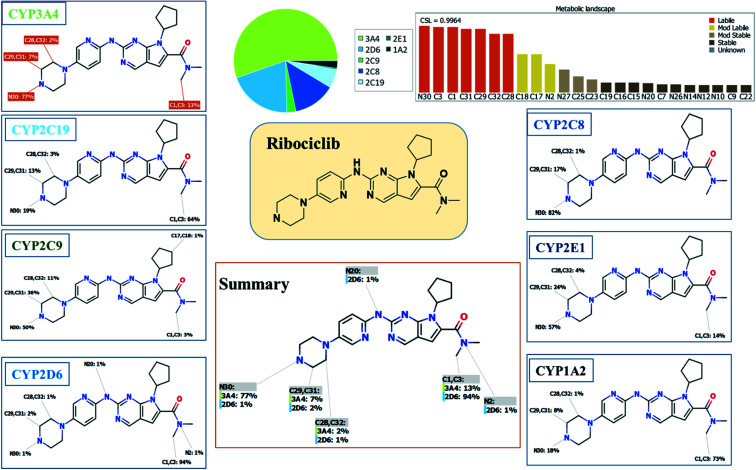
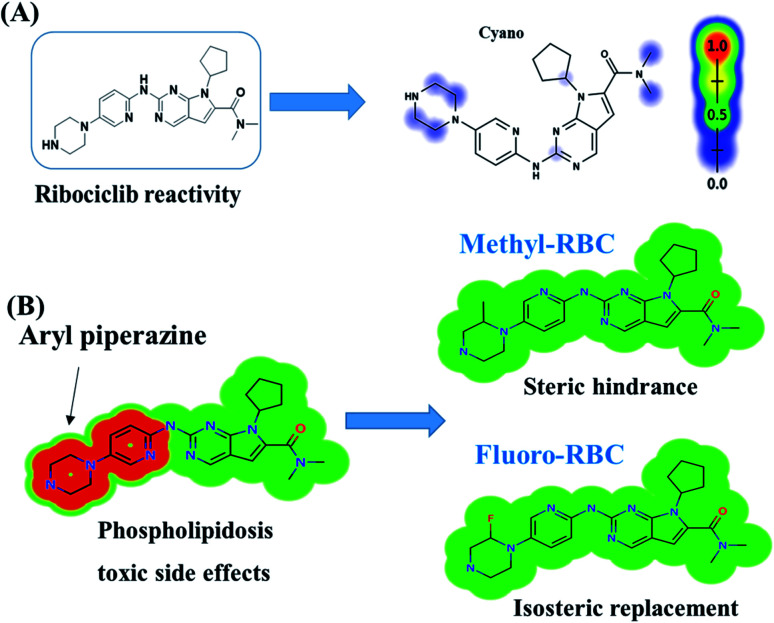
Ribociclib (RBC, Kisqali®) is a highly selective CDK4/6 inhibitor that has been approved for breast cancer therapy. Initially, prediction of susceptible sites of metabolism and reactivity pathways were performed by the StarDrop WhichP450™ module and the Xenosite web predictor tool, respectively. Later, metabolites and adducts of RBC were characterized from rat liver microsomes using LC-MS/MS. Subsequently, data was used as a guide for the work. Finally, toxicity assessment of RBC metabolites was carried out using DEREK software and structural modification was proposed to reduce their side effects and to validate the bioactivation pathway theory using the StarDrop DEREK module. phase I metabolic profiling of RBC was performed utilizing rat liver microsomes (RLMs). Generation of reactive metabolites was investigated using potassium cyanide (KCN) as a trapping nucleophile for the transient and reactive iminium intermediates to form a stable cyano adduct that can be identified and characterized using mass spectrometry. Nine phase I metabolites and one cyano adduct of RBC were characterized. The proposed metabolic pathways involved in generation of these metabolites are hydroxylation, oxidation and reduction. The reactive intermediate generation mechanism of RBC may provide an explanation of its adverse reactions. Aryl piperazine is considered a structural alert for toxicity as proposed by the DEREK report. We propose that the generation of only one reactive metabolite of RBC in a very small concentration is due to the decreased reactivity of the piperazine ring compared to previous reports of similar drugs. Docking analysis was performed for RBC and its proposed derivatives at the active site of the human CDK6 enzyme. Methyl-RBC exhibited the best ADMET and docking analysis and fewer side effects compared to RBC and fluoro-RBC. Further drug discovery studies can be conducted taking into account this concept allowing the development of new drugs with enhanced safety profiles that were confirmed by using StarDrop software. To the best of our knowledge, this is the first literature report of RBC metabolic profiling and structural characterization and toxicological properties of the generated metabolites.
瑞博西尼(RBC,Kisqali®)是一种已被批准用于乳腺癌治疗的高选择性细胞周期蛋白依赖性激酶4/6(CDK4/6)抑制剂。最初,分别通过StarDrop WhichP450™模块和Xenosite网络预测工具对代谢敏感位点和反应途径进行预测。随后,使用液相色谱-串联质谱(LC-MS/MS)对大鼠肝微粒体中的瑞博西尼代谢物和加合物进行了表征。接着,这些数据被用作该研究工作的指导。最后,使用DEREK软件对瑞博西尼代谢物进行毒性评估,并提出结构修饰以减少其副作用,同时使用StarDrop DEREK模块验证生物活化途径理论。利用大鼠肝微粒体(RLMs)进行了瑞博西尼的I期代谢谱分析。使用氰化钾(KCN)作为捕获亲核试剂,研究瞬态和反应性亚胺离子中间体生成反应性代谢物,以形成稳定的氰基加合物,该加合物可通过质谱进行鉴定和表征。鉴定出了瑞博西尼的9种I期代谢物和1种氰基加合物。这些代谢物生成过程中涉及的推测代谢途径包括羟基化、氧化和还原。瑞博西尼的反应性中间体生成机制可能解释了其不良反应。如DEREK报告所提出的,芳基哌嗪被认为是毒性的结构警示。我们认为,与先前类似药物的报道相比,瑞博西尼仅生成一种浓度极低的反应性代谢物是由于哌嗪环的反应性降低。对瑞博西尼及其推测的衍生物在人CDK6酶的活性位点进行了对接分析。与瑞博西尼和氟代瑞博西尼相比,甲基瑞博西尼表现出最佳的药物代谢动力学、药效学、毒理学及电子性质预测(ADMET)和对接分析结果以及更少的副作用。考虑到这一概念,可以开展进一步的药物研发研究,从而开发出安全性更高的新药,这一点已通过使用StarDrop软件得到证实。据我们所知,这是关于瑞博西尼代谢谱分析、生成代谢物的结构表征和毒理学性质的首篇文献报道。