Yi Ruokun, Wang Feng-Bo, Tan Fang, Long Xingyao, Pan Yanni, Zhao Xin
Chongqing Collaborative Innovation Center for Functional Food, Chongqing University of Education Chongqing 400067 P. R. China
Chongqing Engineering Research Center of Functional Food, Chongqing University of Education Chongqing 400067 P. R. China.
RSC Adv. 2020 Jun 19;10(40):23510-23521. doi: 10.1039/d0ra03311a.
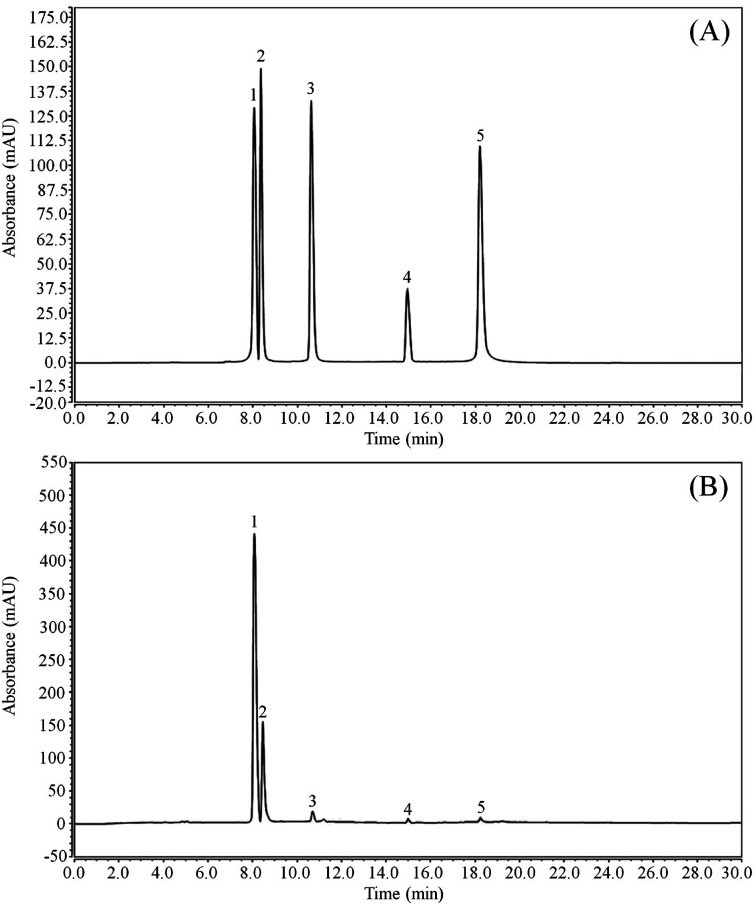
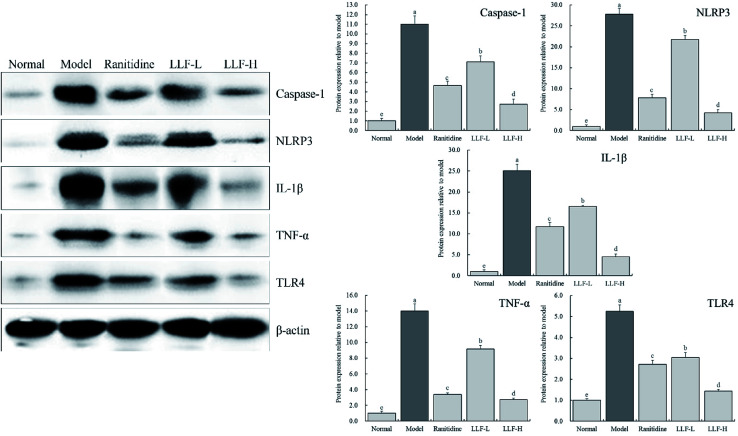
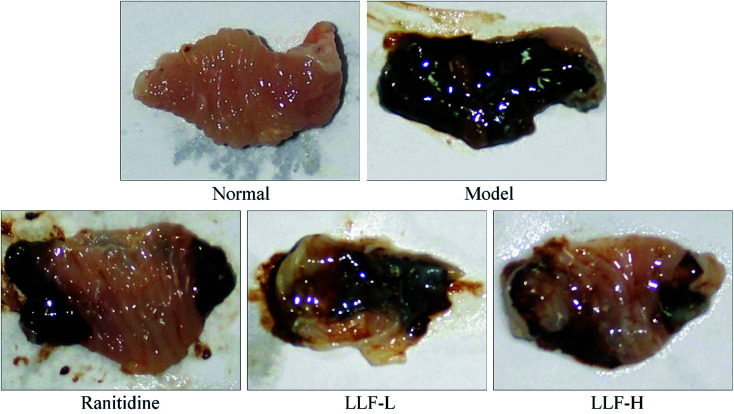
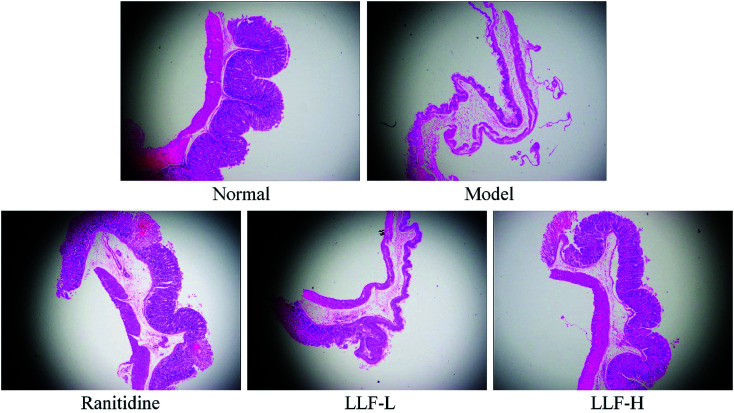
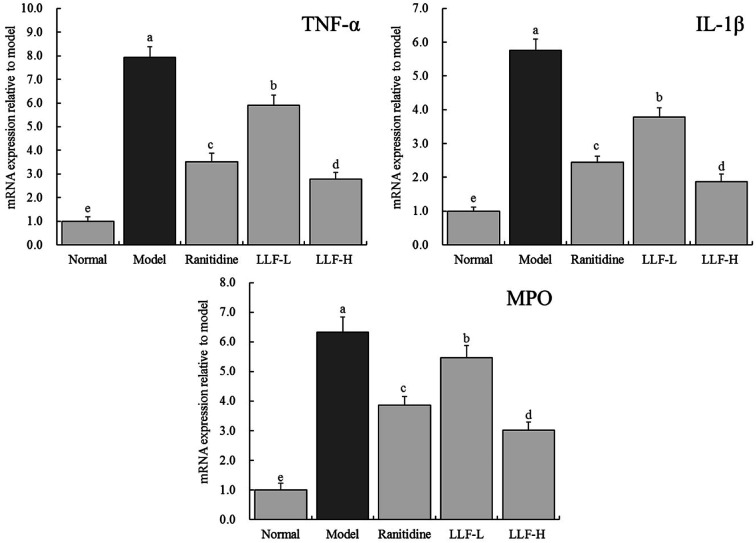
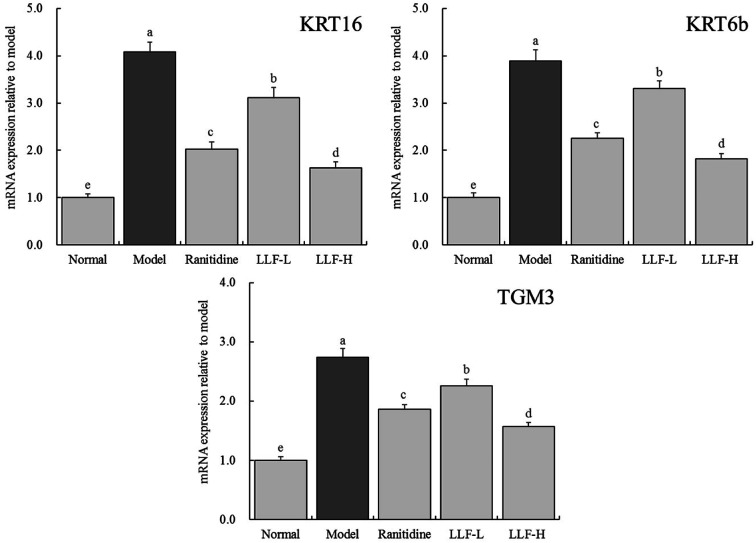
() is one of the main factors that cause gastric lesions. The lotus leaf is an edible plant used in traditional Eastern medicine. This study evaluates the intervention effects of lotus leaf flavonoids (LLF) on gastric mucosal lesions in mice infected with and explores their mechanism of action. High-performance liquid chromatography analysis reveals that LLF contain kaempferitrin (kaempferol-3,7-dirhamnoside), hypericin, astragalin (kaempferol-3-glucoside), phlorizin, and quercetin. LLF can reduce the number of gastric mucosal lesions and tissue lesions in mice with -induced gastric lesions. LLF can increase the levels of somatostatin and vasoactive intestinal peptide in the serum of mice with gastric lesions and decrease the levels of substance P and endothelin-1 to inhibit gastric lesions. LLF can also reduce the levels of interleukin (IL)-6, IL-12, tumor necrosis factor (TNF)-α, and interferon-gamma cytokines in the serum of mice with gastric lesions. Using a quantitative polymerase chain reaction assay it can be seen that LLF can downregulate mRNA expressions of TNF-α, IL-1β, myeloperoxidase, keratin (KRT) 16, KRT6b, and transglutaminase 3 epidermal in the gastric tissues of mice with gastric lesions. Western blot analysis indicates that LLF can downregulate the protein expressions of caspase-1, Nod-like receptor protein 3, IL-1β, TNF-α, and Toll-like receptor 4 in the gastric tissues of mice with gastric lesions. LLF have beneficial effects on gastric lesions induced by . Meanwhile LLF is more active in competition with ranitidine. LLF represent an active substance that can inhibit -induced gastric lesions. The flavones of LLF may enhance the inhibition of gastric mucosal lesions by promoting the interaction between the compounds.
()是导致胃损伤的主要因素之一。荷叶是一种可食用植物,用于传统东方医学。本研究评估荷叶黄酮(LLF)对感染(此处原文缺失感染因素)的小鼠胃黏膜损伤的干预作用,并探讨其作用机制。高效液相色谱分析表明,LLF含有山柰酚鼠李糖苷(山柰酚 - 3,7 - 二鼠李糖苷)、金丝桃素、紫云英苷(山柰酚 - 3 - 葡萄糖苷)、根皮苷和槲皮素。LLF可减少由(此处原文缺失诱导因素)诱导的胃损伤小鼠的胃黏膜损伤数量和组织损伤。LLF可提高胃损伤小鼠血清中生长抑素和血管活性肠肽的水平,并降低P物质和内皮素 - 1的水平以抑制胃损伤。LLF还可降低胃损伤小鼠血清中白细胞介素(IL) - 6、IL - 12、肿瘤坏死因子(TNF) - α和干扰素 - γ细胞因子的水平。使用定量聚合酶链反应测定法可以看出,LLF可下调胃损伤小鼠胃组织中TNF - α、IL - 1β、髓过氧化物酶、角蛋白(KRT)16、KRT6b和转谷氨酰胺酶3表皮的mRNA表达。蛋白质印迹分析表明,LLF可下调胃损伤小鼠胃组织中半胱天冬酶 - 1、Nod样受体蛋白3、IL - 1β、TNF - α和Toll样受体4的蛋白表达。LLF对由(此处原文缺失诱导因素)诱导的胃损伤具有有益作用。同时,LLF在与雷尼替丁的竞争中更具活性。LLF是一种可抑制(此处原文缺失诱导因素)诱导的胃损伤的活性物质。LLF的黄酮类化合物可能通过促进化合物之间的相互作用增强对胃黏膜损伤的抑制作用。