Tomal Wiktoria, Chachaj-Brekiesz Anna, Popielarz Roman, Ortyl Joanna
Faculty of Chemical Engineering and Technology, Cracow University of Technology Warszawska 24 31-155 Cracow Poland
Faculty of Chemistry, Jagiellonian University Gronostajowa 2 30-387 Cracow Poland.
RSC Adv. 2020 Aug 28;10(53):32162-32182. doi: 10.1039/d0ra04146g. eCollection 2020 Aug 26.
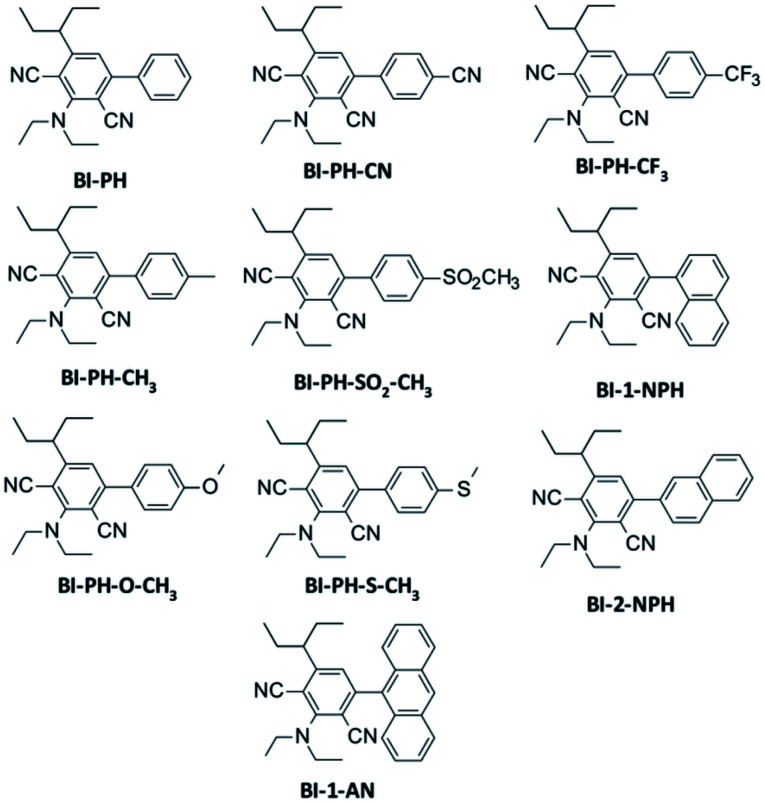
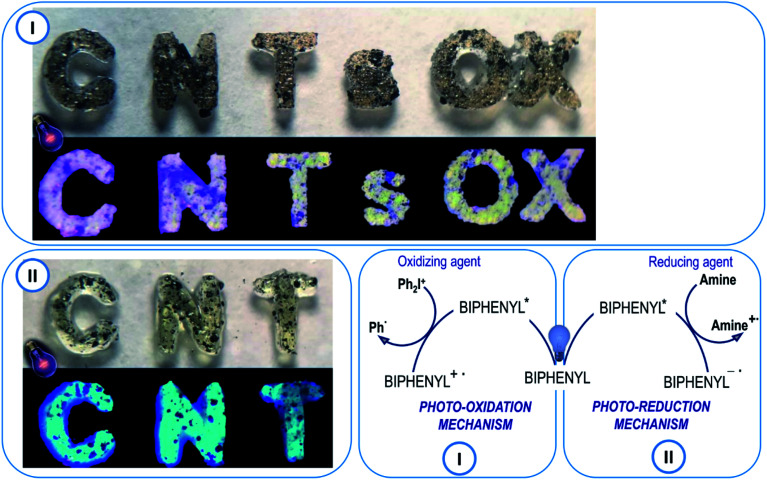
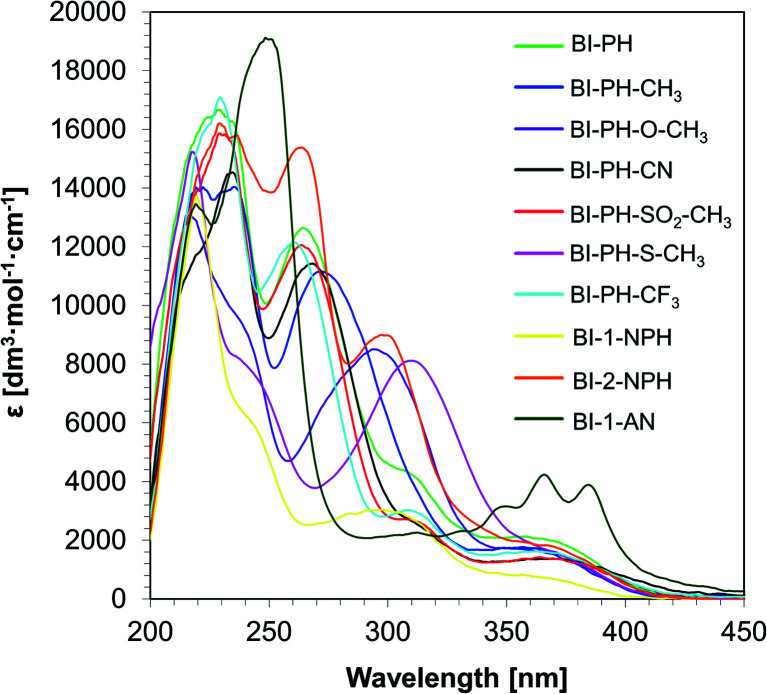
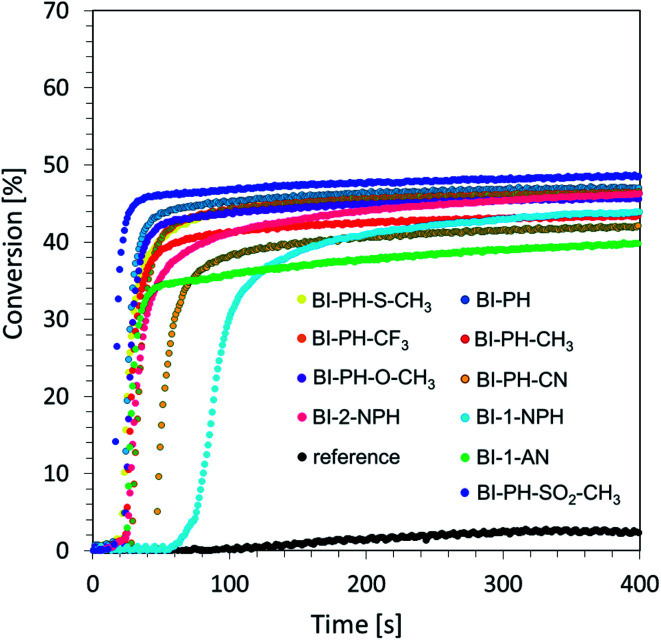
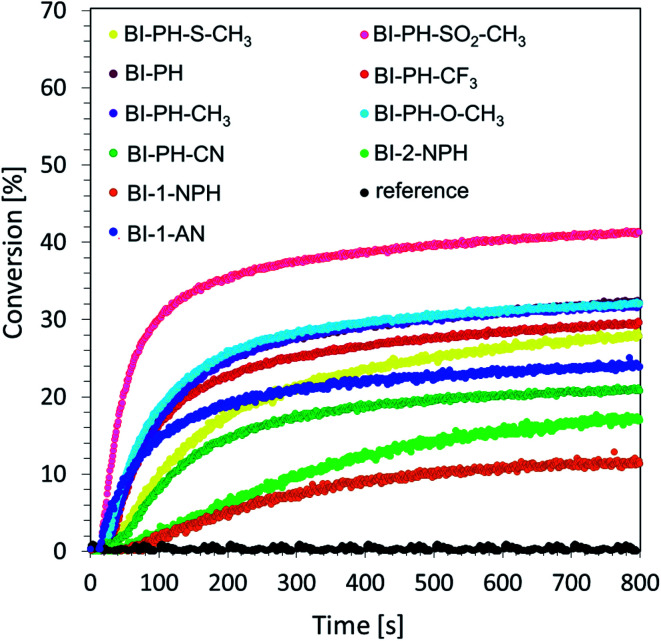
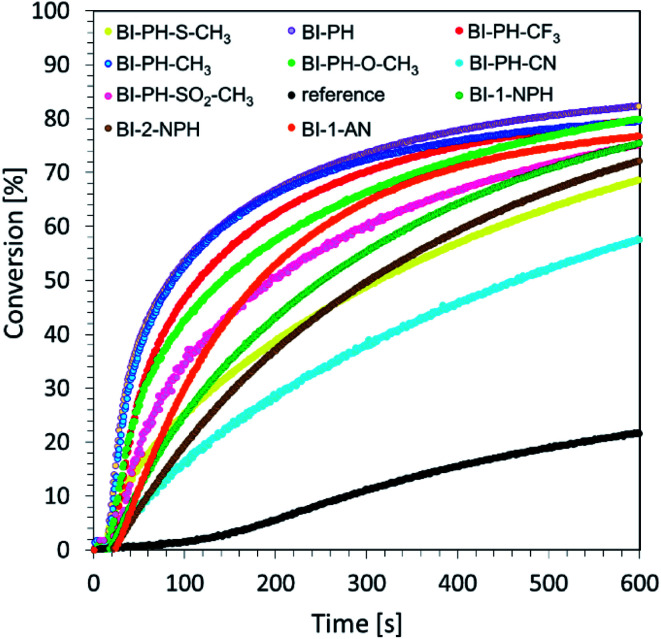
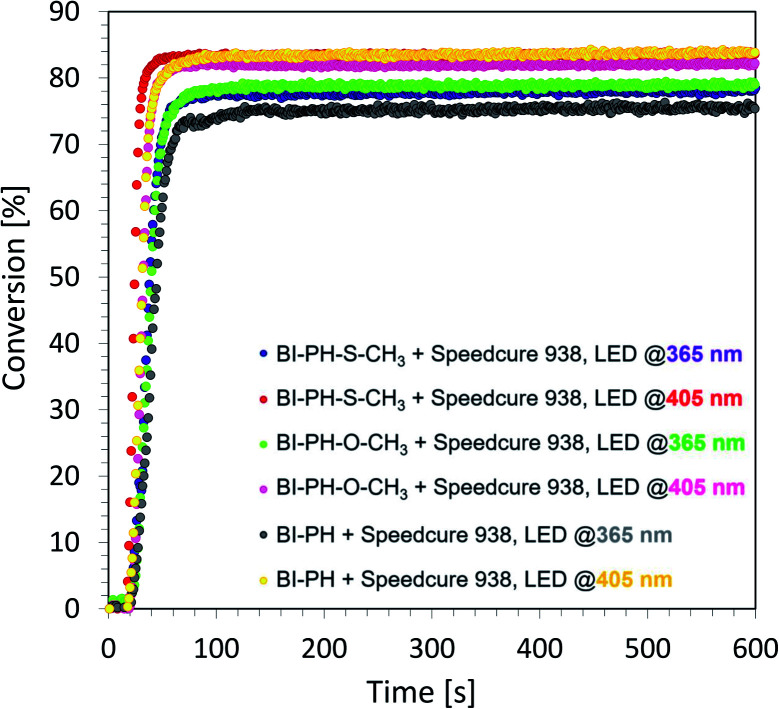
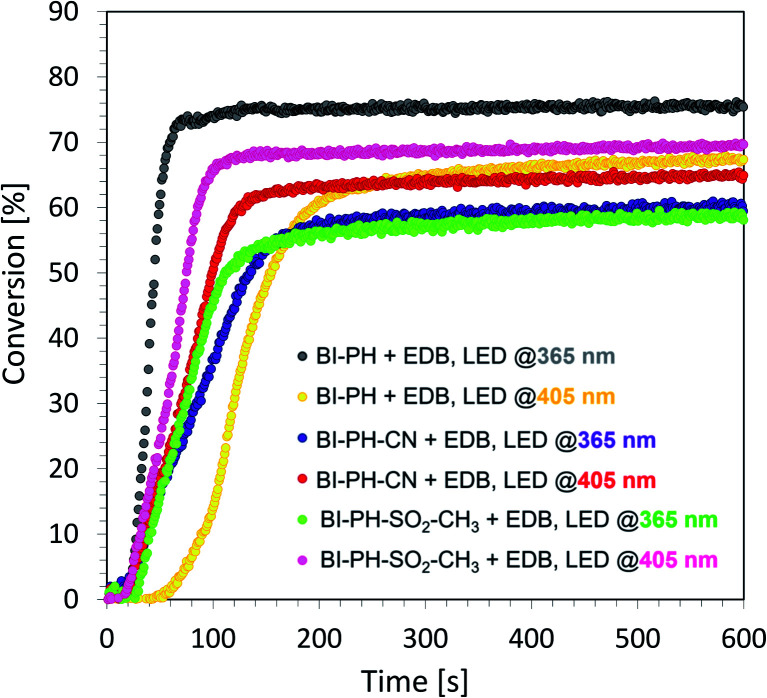
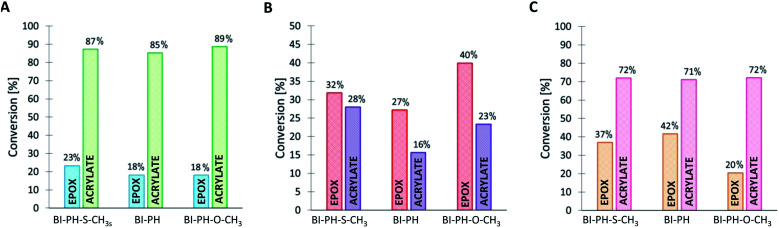
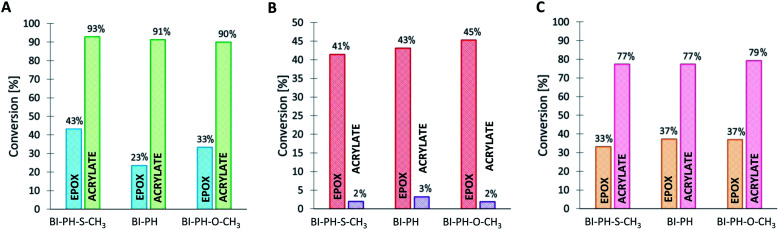
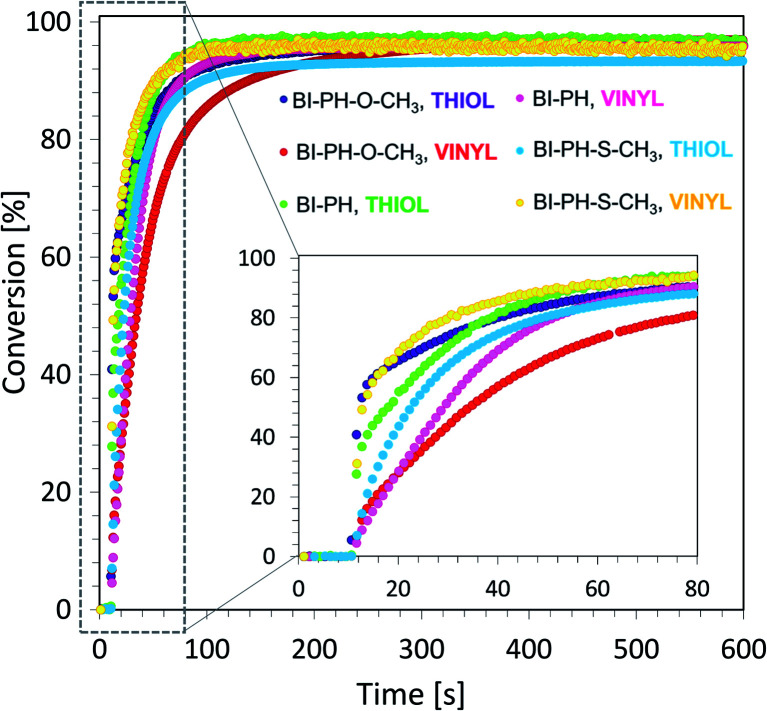
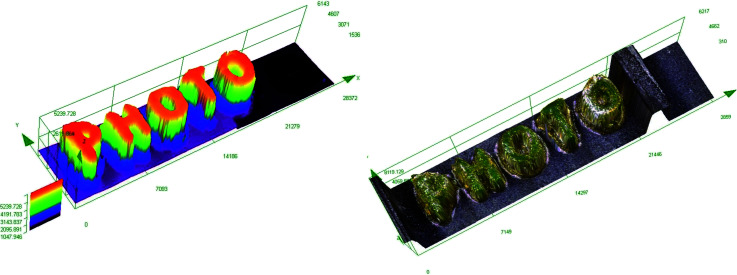
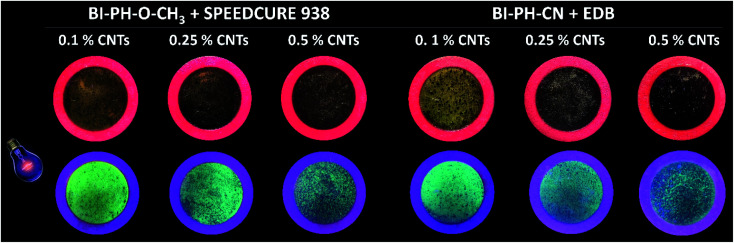
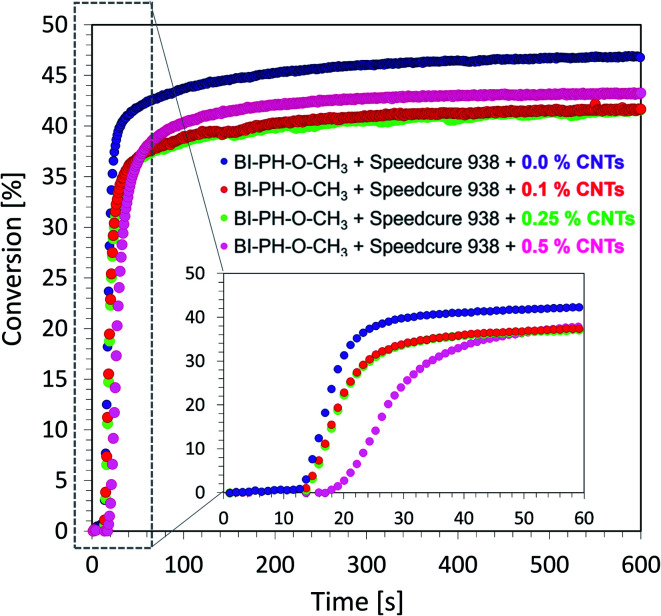
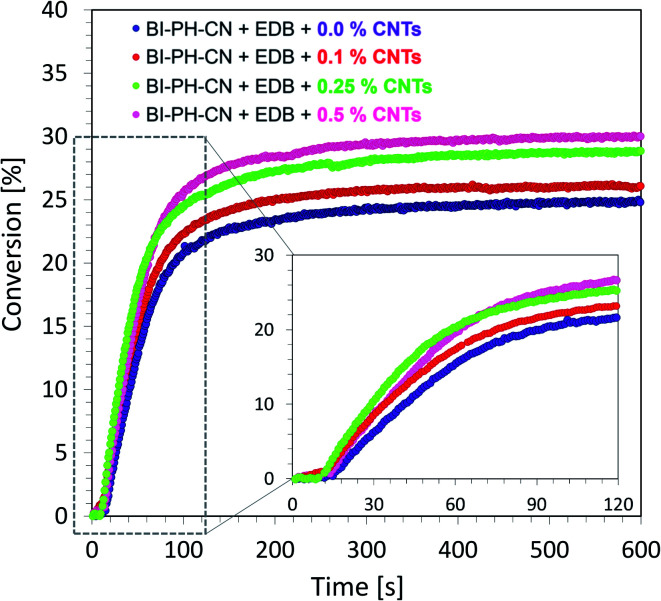
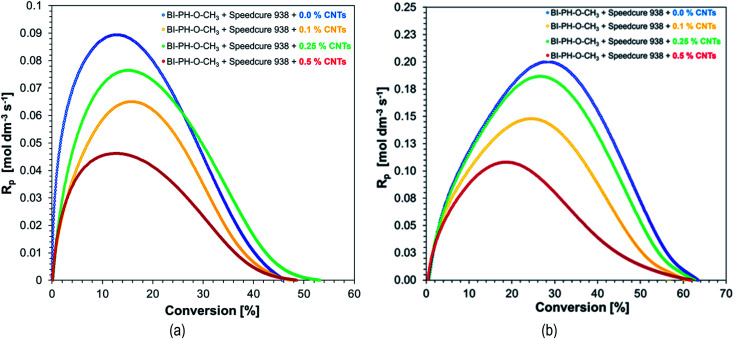
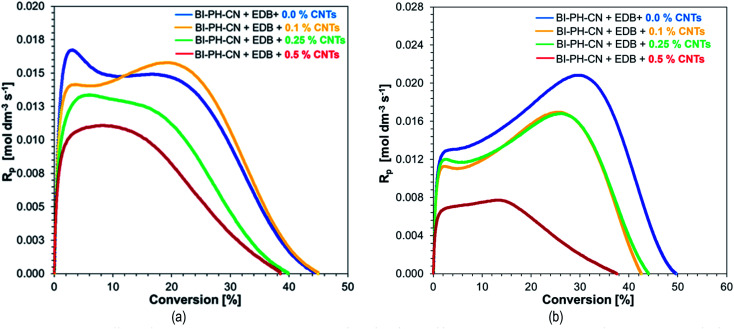
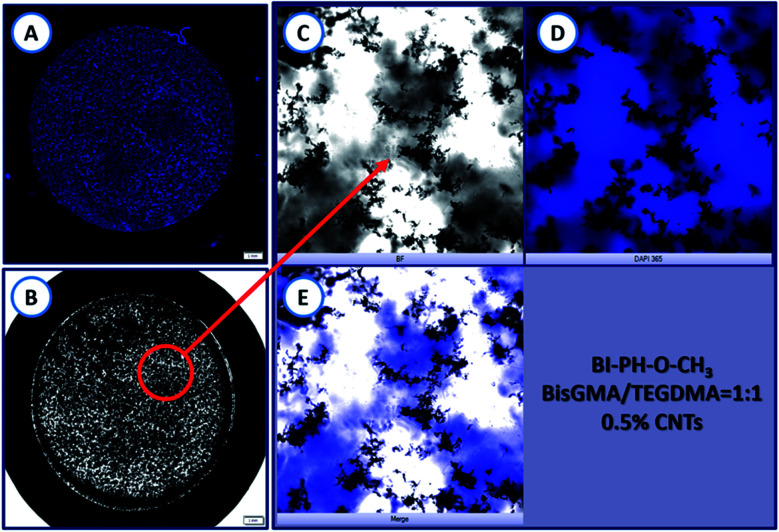
A series of 2-(diethylamino)-4-(1-ethylpropyl)-6-phenyl-benzene-1,3-dicarbonitrile derivatives were investigated in terms of photosensitisation in various photopolymerization processes in UV-A and vis light conditions. A full spectroscopic analysis of the tested compounds was performed. In addition to excellent spectroscopic properties, these compounds enable highly efficient photopolymerization processes, including free-radical, cationic and hybrid photopolymerization. As proven by a real-time FTIR study, these photosensitisers allow the formation of both thin and thick layers from different monomers. Finally, the investigated 2-(diethylamino)-4-(1-ethylpropyl)-6-phenyl-benzene-1,3-dicarbonitrile derivatives were used to obtain multiwalled carbon nanotubes (MWCNTs) composites for which the degree of conversion was determined using real-time FT-IR and Photo-Differential Scanning Calorimetry (Photo-DSC). Selected derivatives were applied as photosensitisers in two-component photoinitiating systems, operating according to the mechanism of photo-oxidation and photo-reduction, for the preparation of photo-cured MWCNTs composites. The importance of the quantity of multiwalled carbon nanotubes (MWCNTs) added to the polymeric matrix on the curing degree is also discussed in this study. The structures of the MWCNTs composites were analysed using an optical and fluorescence microscope. Moreover, this study also examines the applicability of new photoinitiator systems for printing nanocomposites by vat photopolymerization, which has gained increasing attention in recent years. Therefore, photocurable nanocomposite resin based on methacrylates was used for 3D printing in room temperature and atmospheric conditions, under a visible LED with emission at 405 nm, in order to obtain fluorescent photocurable patterns.
研究了一系列2-(二乙氨基)-4-(1-乙基丙基)-6-苯基苯-1,3-二腈衍生物在UV-A和可见光条件下各种光聚合过程中的光敏化情况。对测试化合物进行了全面的光谱分析。除了优异的光谱性能外,这些化合物还能实现高效的光聚合过程,包括自由基、阳离子和混合光聚合。实时傅里叶变换红外光谱(FTIR)研究证明,这些光敏剂能使不同单体形成薄层和厚层。最后,将所研究的2-(二乙氨基)-4-(1-乙基丙基)-6-苯基苯-1,3-二腈衍生物用于制备多壁碳纳米管(MWCNT)复合材料,并使用实时傅里叶变换红外光谱(FT-IR)和光差示扫描量热法(Photo-DSC)测定其转化率。选择的衍生物被用作双组分光引发体系中的光敏剂,该体系根据光氧化和光还原机理运行,用于制备光固化的MWCNT复合材料。本研究还讨论了添加到聚合物基体中的多壁碳纳米管(MWCNT)数量对固化程度的重要性。使用光学显微镜和荧光显微镜对MWCNT复合材料的结构进行了分析。此外,本研究还考察了新型光引发体系在通过光固化聚合印刷纳米复合材料方面的适用性,近年来光固化聚合越来越受到关注。因此,基于甲基丙烯酸酯的光固化纳米复合树脂在室温及大气条件下,于发射波长为405 nm的可见LED光下用于3D打印,以获得荧光光固化图案。