Khan Mohd Jahir, Singh Ramesh, Joshi Khashti Ballabh, Vinayak Vandana
Diatom Nanoengineering and Metabolism, School of Applied Sciences, Dr HariSingh Gour Central University Sagar Madhya Pradesh 470003 India
Department of Chemistry, School of Chemical Science and Technology, Dr HariSingh Gour Central University Sagar Madhya Pradesh 470003 India.
RSC Adv. 2019 Jul 19;9(39):22410-22416. doi: 10.1039/c9ra03821c. eCollection 2019 Jul 17.
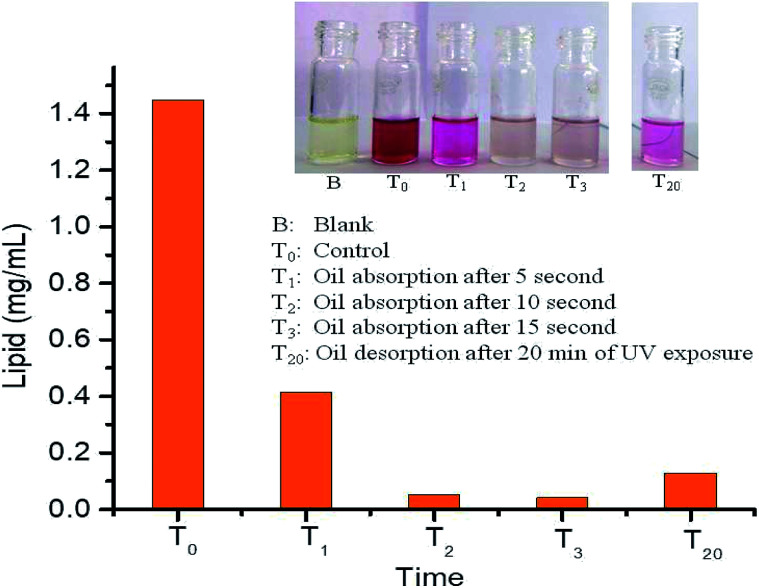
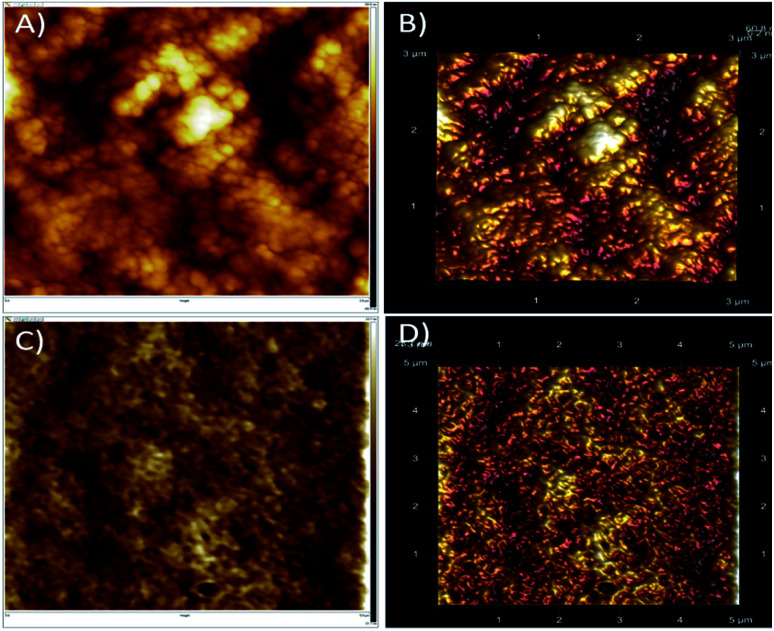
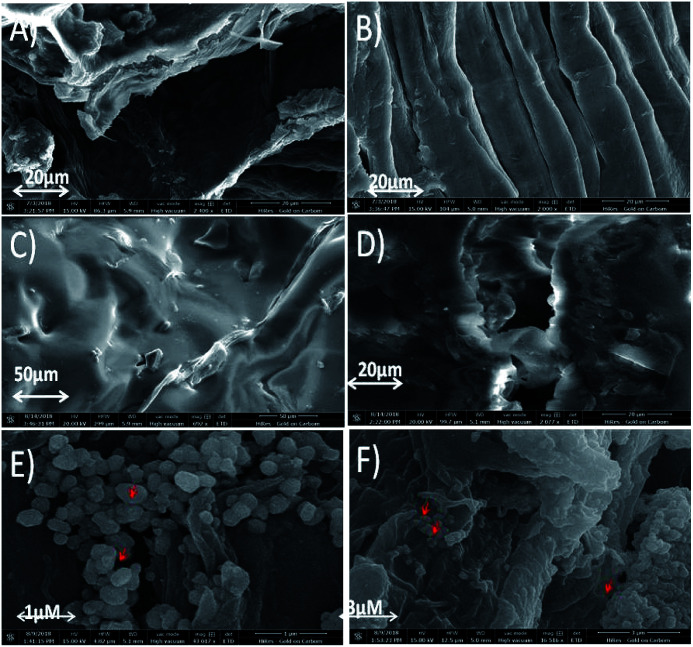
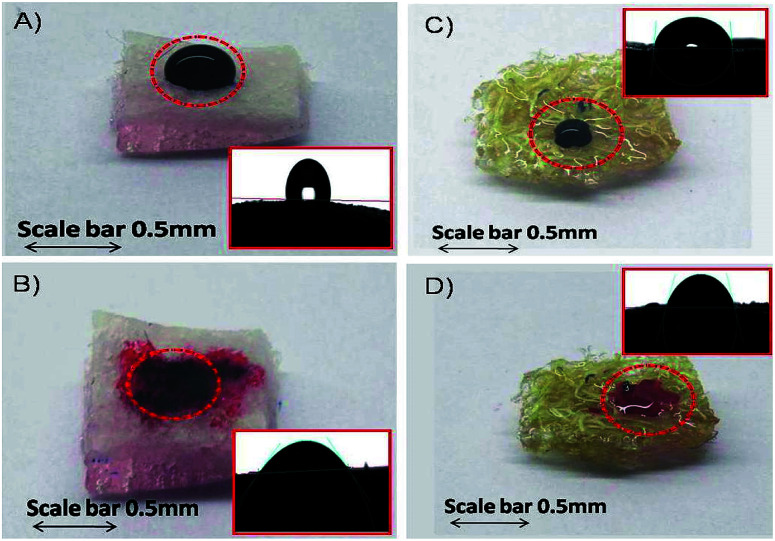
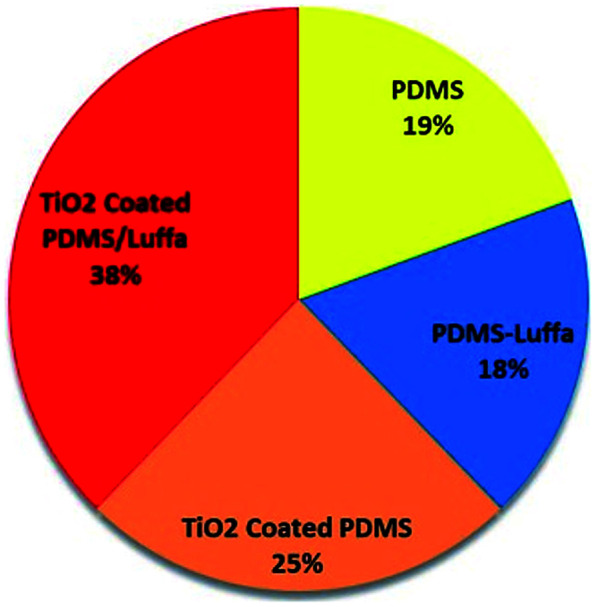
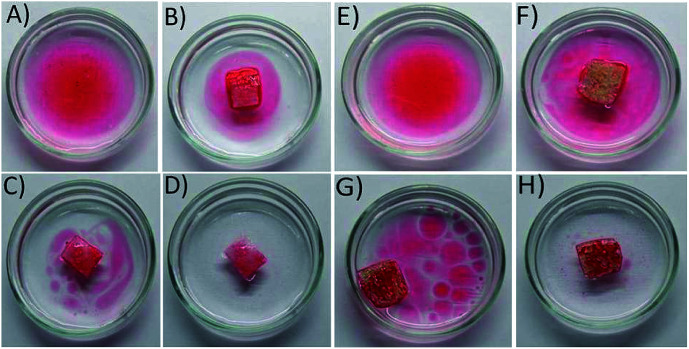
Our previous report(s) demonstrated that piezoelectric disc fabricated diatom solar panels worked as micro resonating devices. Such devices have potential to harvest oils from living diatom cultures. However, it is observed that the collection and separation of oil from culture media using these devices are found to be difficult due to the presence of both living and dead diatom cells, which simultaneously get collected during this process. In this study we made a highly biocompatible nanosponge using TiO nanoparticle doped polydimethylsiloxane (PDMS) and . Such hybrid nanosponge selectively absorbs and desorbs oil on exposure to ultraviolet light. The fabricated PDMS--TiO nanosponge was characterized by Fourier transform infrared spectroscopy, scanning electron microscopy and atomic force microscopy to show the surface characteristics and affinity of nanoparticles to the membranous structure of PDMS-. A maximum 38% oil absorption was found in PDMS--TiO nanosponge which was almost double that of sponges made up of PDMS (19%), PDMS- (18%) and PDMS-TiO coated (24%). Thus PDMS--TiO nanosponge serves as a selective and recyclable oil absorption membranous structure. Furthermore, this hybrid nanosponge exhibited excellent recyclability by repeated absorption-desorption processes on exposure to UV light.
我们之前的报告表明,由压电盘制造的硅藻太阳能板可作为微谐振装置。这类装置有从活硅藻培养物中获取油脂的潜力。然而,据观察,使用这些装置从培养基中收集和分离油脂很困难,因为在此过程中活硅藻细胞和死硅藻细胞会同时被收集。在本研究中,我们使用二氧化钛纳米颗粒掺杂的聚二甲基硅氧烷(PDMS)制备了一种具有高度生物相容性的纳米海绵。这种混合纳米海绵在暴露于紫外光时能选择性地吸收和解吸油脂。通过傅里叶变换红外光谱、扫描电子显微镜和原子力显微镜对制备的PDMS-TiO₂纳米海绵进行表征,以展示纳米颗粒对PDMS-TiO₂膜结构的表面特性和亲和力。在PDMS-TiO₂纳米海绵中发现最大吸油率为38%,几乎是由PDMS(19%)、PDMS-SiO₂(18%)和涂覆PDMS-TiO₂(24%)制成的海绵的两倍。因此,PDMS-TiO₂纳米海绵可作为一种选择性且可回收的吸油膜结构。此外,这种混合纳米海绵在暴露于紫外光时通过重复的吸收-解吸过程表现出优异的可回收性。