Mikhaylova Oxana, Dokuka Sofia
Institute of Education, HSE University, Moscow, Russia.
Front Psychol. 2022 Apr 19;13:848774. doi: 10.3389/fpsyg.2022.848774. eCollection 2022.
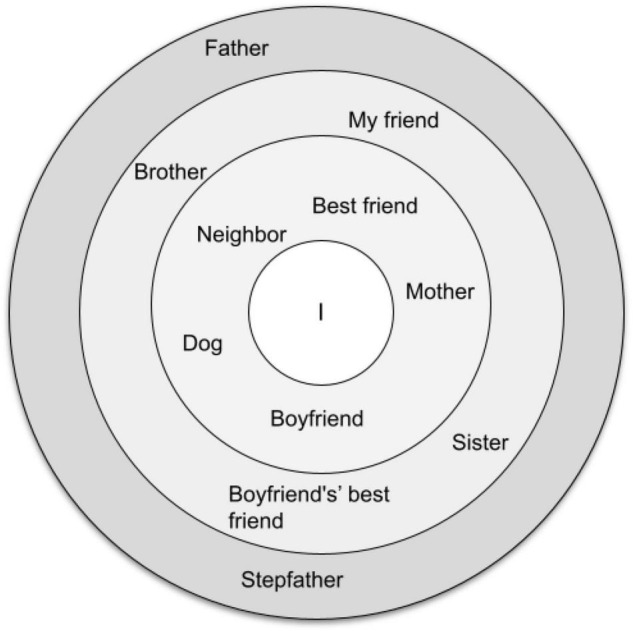
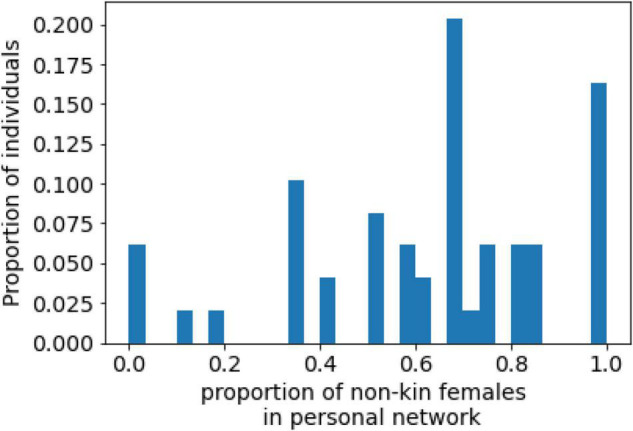
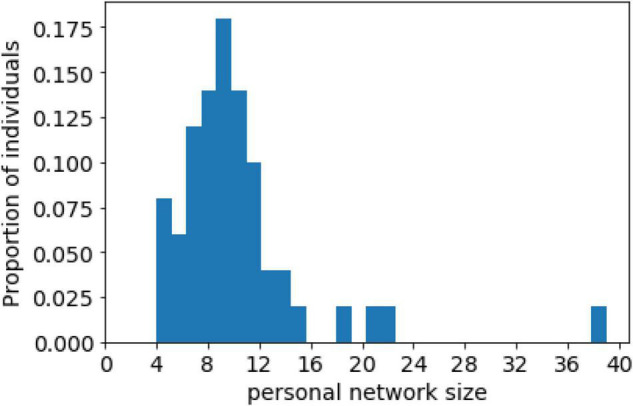
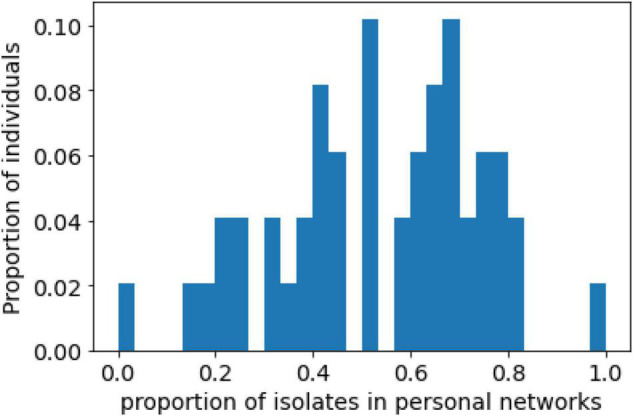
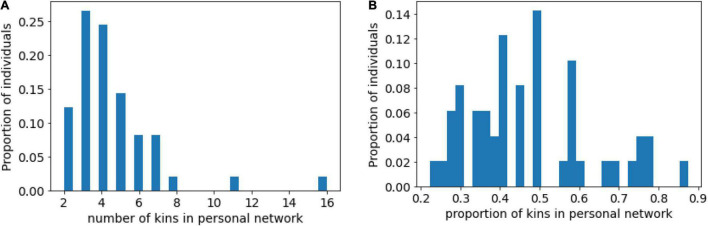
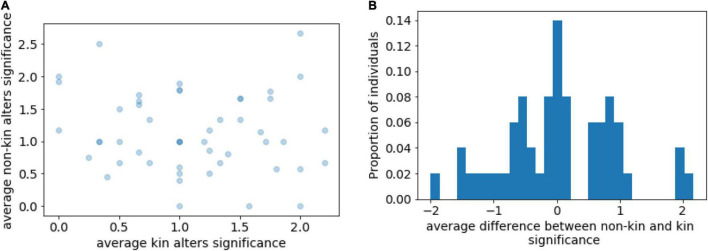
Anorexia is a serious threat to young women's wellbeing worldwide. The effectiveness of mental health intervention and treatment is often evaluated on the basis of changes in the personal networks; however, the development of such measures for young women with anorexia is constrained due to the lack of quantitative descriptions of their social networks. We aim to fill this substantial gap. In this paper, we identify the basic properties of these women's personal networks such as size, structure, and proportion of kin connections. The empirical analysis, using a concentric circles methodology, is based on 50 ego networks constructed on data drawn from interviews with Russian-speaking bloggers who have been diagnosed with anorexia and write about this condition. We conclude that young women with anorexia tend to support a limited number of social ties; they are prone to select women as alters, but do not have a preference to connect to their relatives. Further research is needed to elucidate whether these personal network characteristics are similar among women with anorexia who belong to different age, ethnic, cultural, and income groups.
厌食症对全球年轻女性的健康构成严重威胁。心理健康干预和治疗的效果通常基于个人社交网络的变化来评估;然而,由于缺乏对患有厌食症的年轻女性社交网络的定量描述,此类测量方法的发展受到限制。我们旨在填补这一重大空白。在本文中,我们确定了这些女性个人社交网络的基本属性,如规模、结构和亲属关系比例。实证分析采用同心圆方法,基于从对已被诊断患有厌食症并撰写相关情况的俄语博主访谈中获取的数据构建的50个自我中心网络。我们得出结论,患有厌食症的年轻女性倾向于维持有限数量的社会关系;她们倾向于选择女性作为 alters,但在与亲属建立联系方面没有偏好。需要进一步研究以阐明这些个人社交网络特征在不同年龄、种族、文化和收入群体的厌食症女性中是否相似。