Wang Jiayi, Tao Dongbing, Wang Shan, Li Chen, Li Yanru, Zheng Fenge, Wu Zhaoxia
College of Food Science, Shenyang Agricultural University 120 Dongling Rd. Shenyang 110866 China
Shenyang Product Quality Supervision and Inspection Institute Glide Rd Shenyang 110136 China.
RSC Adv. 2019 Jun 14;9(30):17514-17520. doi: 10.1039/c9ra03290h. eCollection 2019 May 29.
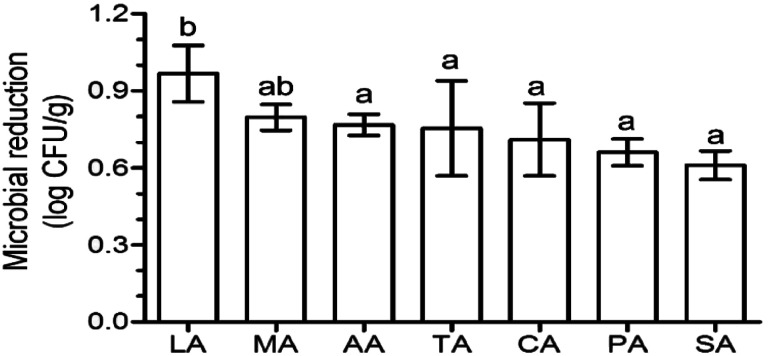
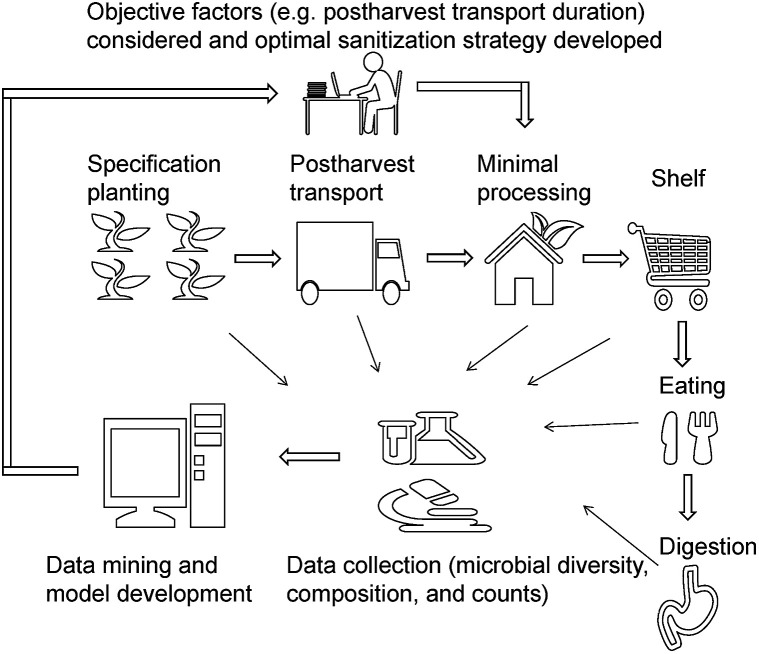
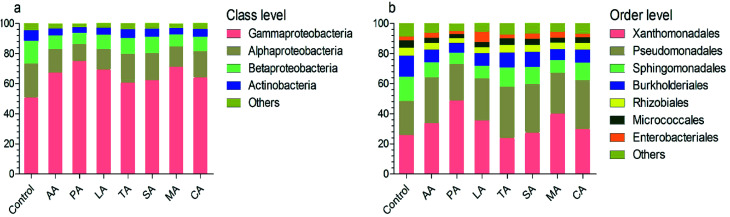
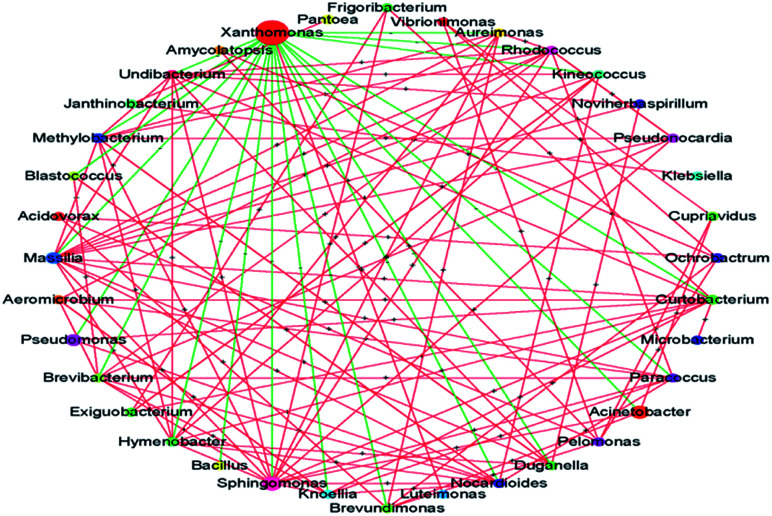
Organic acid disinfection efficacy has been previously estimated by analyzing microbial reduction on fresh produce. However, the effects of organic acids on the fresh produce microbiome are not considered for the evaluation of disinfection efficacy. Here, we studied the effects of seven generally recognized as safe organic acids (lactic, tartaric, acetic, propionic, malic, succinic, and citric acid), on the microbial counts and community on the surface of lettuce. The community was dominated by the following genera: (24.73%), (15.85%), (10.23%), (9.00%), (7.57%), and (6.02%). Organic acid washing did not affect microbial diversity. Lactic acid was the most effective agent causing aerobic plate count reduction of 0.97 log CFU g; additionally, it increased the - abundance from 0.77% to 3.29%. The relative abundance of , a plant pathogen, was significantly increased by malic and propionic acid-propionic acid caused an increase from 24.73% to 47.53%. Microbial interaction analyses revealed the co-exclusion of with the other core taxa, suggesting that the microbial distribution on the lettuce surface after disinfection carries a higher risk of quality loss. Therefore, the difference in disinfection efficacy of sanitizers was reflected in both microbial counts and bacterial community changes. We also propose a potential solution to control fresh produce safety and the rational use of sanitizers by collecting microbial diversity, composition, and count data from planting, transport, minimal processing, shelf and consumer storage, and gut digestion, and then using big data technology to develop a model to provide recommendations for sanitizer selection.
以前曾通过分析新鲜农产品上微生物数量的减少来评估有机酸的消毒效果。然而,在评估消毒效果时,并未考虑有机酸对新鲜农产品微生物群落的影响。在此,我们研究了七种一般认为安全的有机酸(乳酸、酒石酸、乙酸、丙酸、苹果酸、琥珀酸和柠檬酸)对生菜表面微生物数量和群落的影响。该群落主要由以下属组成:(24.73%)、(15.85%)、(10.23%)、(9.00%)、(7.57%)和(6.02%)。有机酸清洗并未影响微生物多样性。乳酸是最有效的消毒剂,可使需氧平板计数减少0.97 log CFU/g;此外,它还使-丰度从0.77%增加到3.29%。苹果酸和丙酸显著增加了植物病原体的相对丰度——丙酸导致其从24.73%增加到47.53%。微生物相互作用分析表明与其他核心分类群相互排斥,这表明消毒后生菜表面的微生物分布存在更高的质量损失风险。因此,消毒剂消毒效果的差异体现在微生物数量和细菌群落变化上。我们还提出了一种潜在的解决方案,通过收集从种植、运输、轻度加工、货架和消费者储存以及肠道消化过程中的微生物多样性、组成和数量数据,然后利用大数据技术开发一个模型,为消毒剂的选择提供建议,以控制新鲜农产品的安全并合理使用消毒剂。