Division of Infectious Diseases, Department of Medicine, School of Medicine, University of Colorado Anschutz Medical Campus, Aurora, CO, United States.
Department of Otolaryngology - Head and Neck Surgery, University of the Philippines College of Medicine - Philippine General Hospital, Manila, Philippines.
Front Cell Infect Microbiol. 2022 Apr 19;12:746428. doi: 10.3389/fcimb.2022.746428. eCollection 2022.
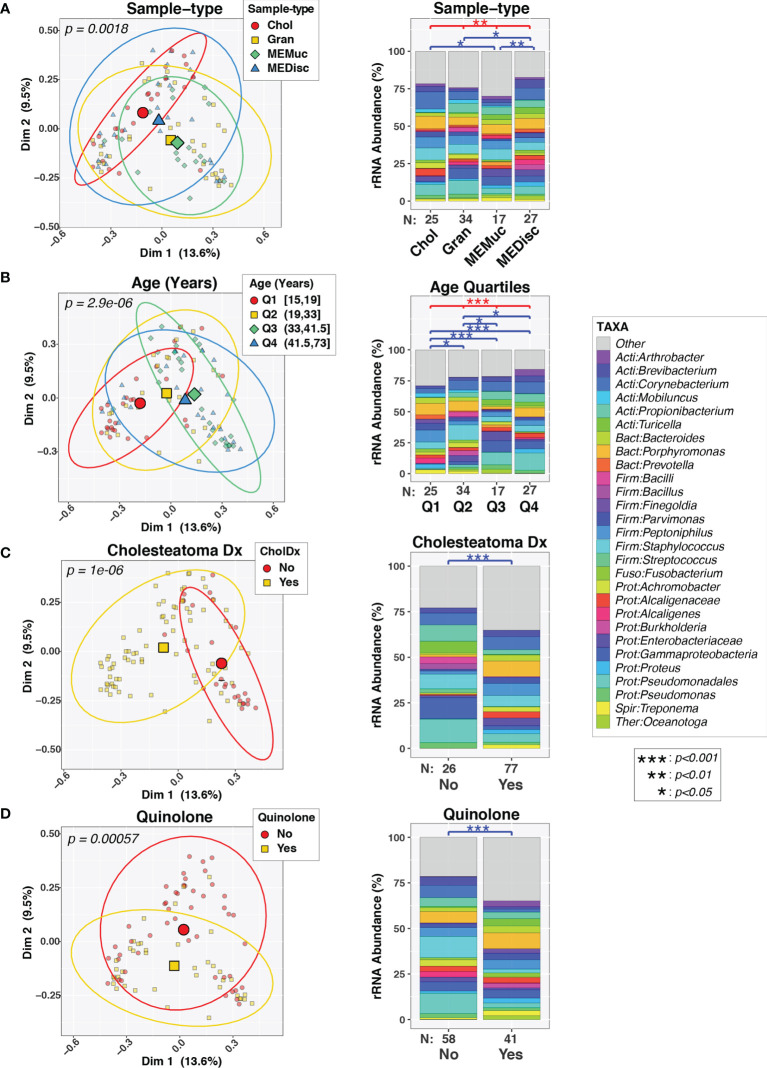
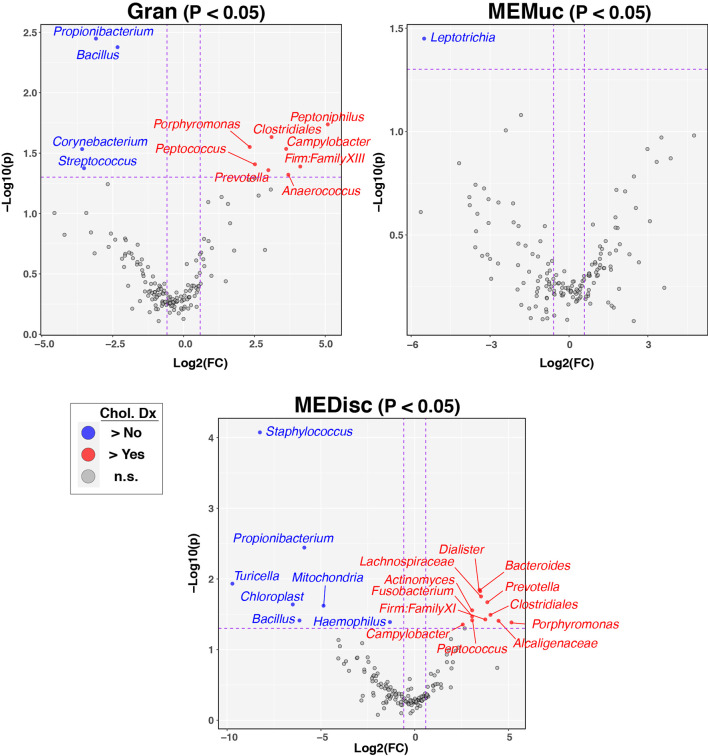
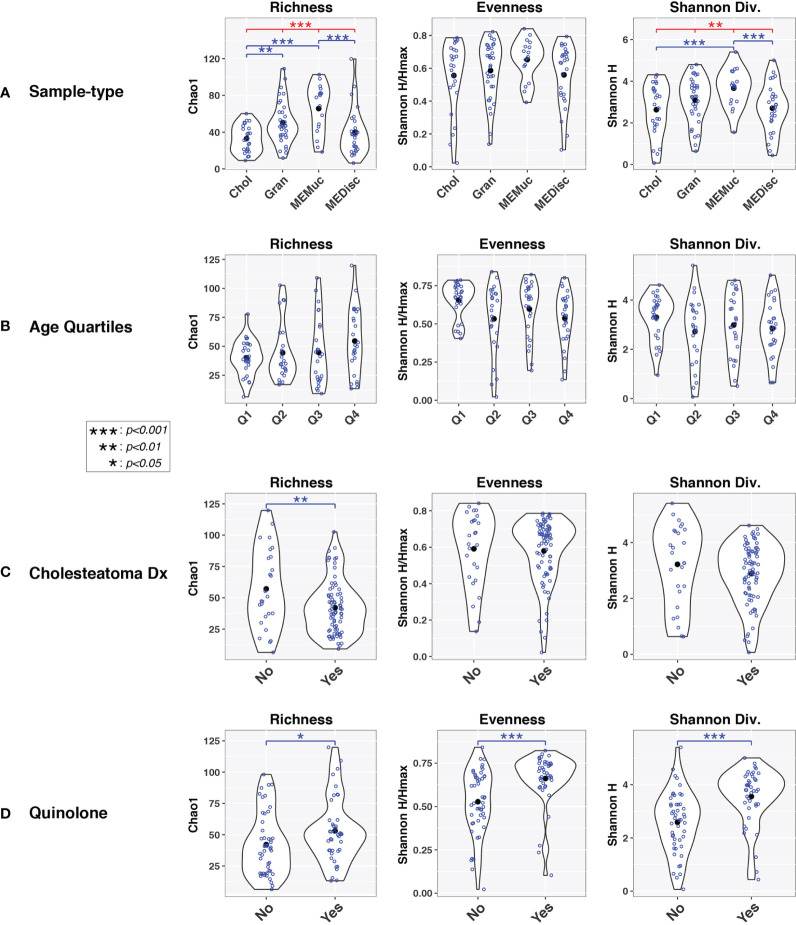
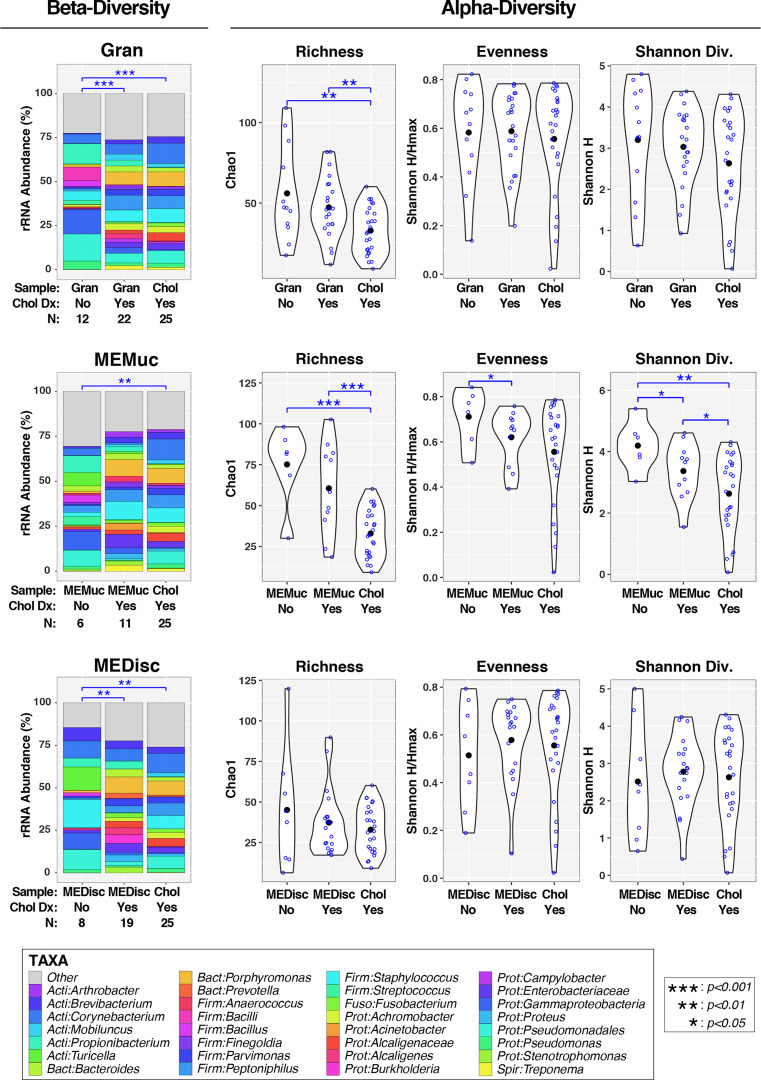
Otitis media (OM), defined as infection or inflammation of the middle ear (ME), remains a major public health problem worldwide. Cholesteatoma is a non-cancerous, cyst-like lesion in the ME that may be acquired due to chronic OM and cause disabling complications. Surgery is required for treatment, with high rates of recurrence. Current antibiotic treatments have been largely targeted to previous culturable bacteria, which may lead to antibiotic resistance or treatment failures. For this study, our goal was to determine the microbiota of cholesteatoma tissue in comparison with other ME tissues in patients with long-standing chronic OM. ME samples including cholesteatoma, granulation tissue, ME mucosa and discharge were collected from patients undergoing tympanomastoidectomy surgery for chronic OM. Bacteria were profiled by 16S rRNA gene sequencing in 103 ME samples from 53 patients. Respiratory viruses were also screened in 115 specimens from 45 patients. Differences in bacterial profiles (beta-diversity) and the relative abundances of individual taxa were observed between cholesteatoma and ME sample-types. Additionally, patient age was associated with differences in overall microbiota composition while numerous individual taxa were differentially abundant across age quartiles. No viruses were identified in screened ME samples. Biodiversity was moderately lower in cholesteatoma and ME discharge compared to ME mucosal tissues. We also present overall bacterial profiles of ME tissues by sample-type, age, cholesteatoma diagnosis and quinolone use, including prevalent bacterial taxa. Our findings will be useful for fine-tuning treatment protocols for cholesteatoma and chronic OM in settings with limited health care resources.
中耳炎(OM),定义为中耳(ME)的感染或炎症,仍然是全球主要的公共卫生问题。胆脂瘤是 ME 中一种非癌性、囊肿样病变,可能由于慢性 OM 而获得,并引起致残性并发症。手术是治疗的必要手段,但复发率很高。目前的抗生素治疗主要针对以前可培养的细菌,这可能导致抗生素耐药或治疗失败。在这项研究中,我们的目标是确定胆脂瘤组织的微生物群与慢性 OM 患者其他 ME 组织的微生物群进行比较。从接受慢性 OM 鼓室成形乳突切除术的患者中收集 ME 样本,包括胆脂瘤、肉芽组织、ME 黏膜和分泌物。通过对 53 名患者的 103 个 ME 样本进行 16S rRNA 基因测序来分析细菌。在 45 名患者的 115 个标本中还筛选了呼吸道病毒。胆脂瘤和 ME 样本类型之间观察到细菌谱(β多样性)和个体分类群相对丰度的差异。此外,患者年龄与总体微生物群落组成的差异相关,而许多个体分类群在年龄四分位数之间存在差异。在筛选的 ME 样本中未发现病毒。与 ME 黏膜组织相比,胆脂瘤和 ME 分泌物中的生物多样性中度降低。我们还按样本类型、年龄、胆脂瘤诊断和喹诺酮类药物使用情况展示了 ME 组织的总体细菌谱,包括常见的细菌分类群。我们的发现将有助于在医疗资源有限的情况下为胆脂瘤和慢性 OM 的治疗方案进行微调。