Ilsouk Mohamed, Raihane Mustapha, Rhouta Benaissa, Meri Remo Merijs, Zicans Janis, Vecstaudža Jana, Lahcini Mohammed
IMED-Lab, Faculty of Sciences and Techniques, Cadi-Ayyad University Av. Abdelkrim Khattabi, BP 549 40000 Marrakech Morocco
Mohammed VI Polytechnic University Lot 660, Hay Moulay Rachid 43150 Ben Guerir Morocco.
RSC Adv. 2020 Oct 8;10(61):37314-37326. doi: 10.1039/d0ra07521c. eCollection 2020 Oct 7.
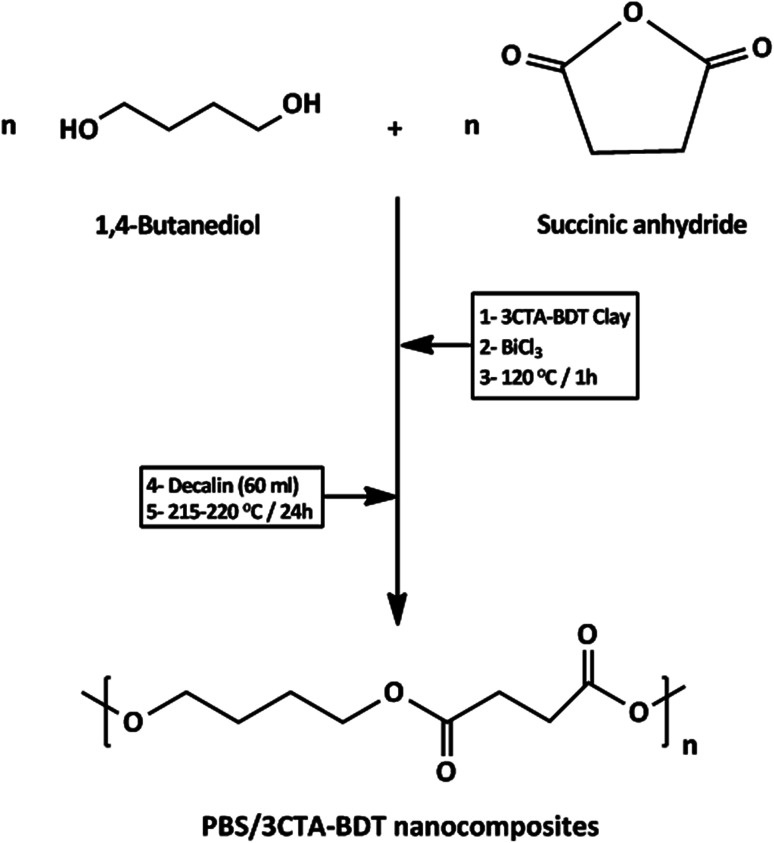
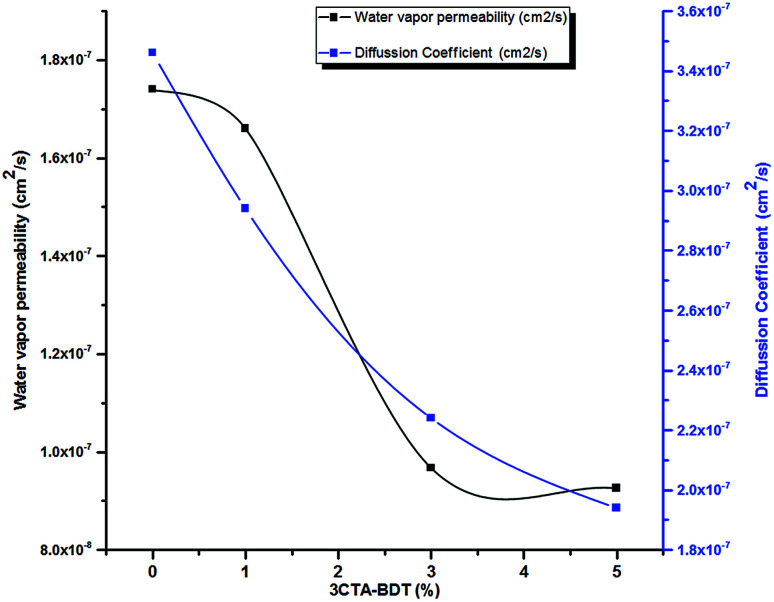
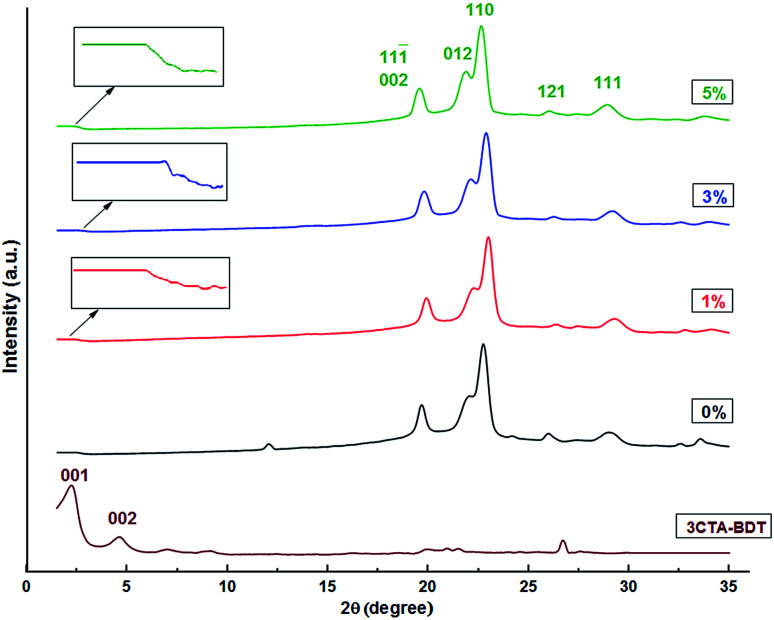
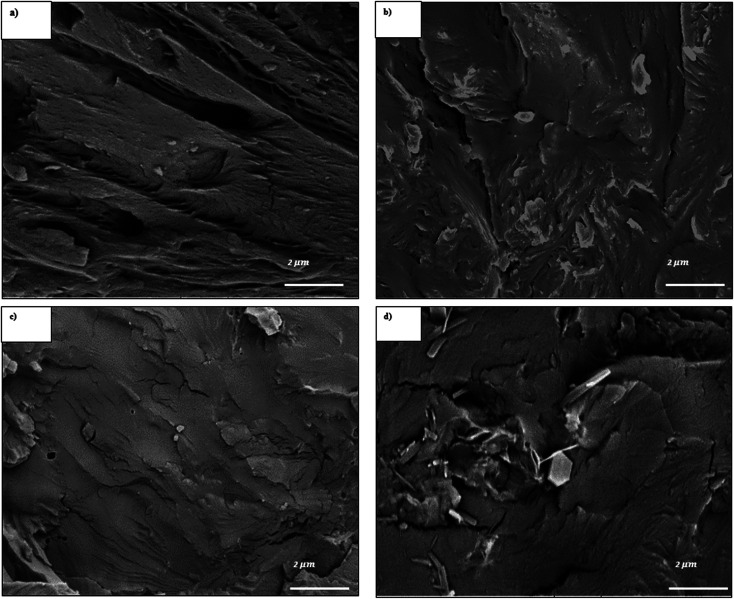
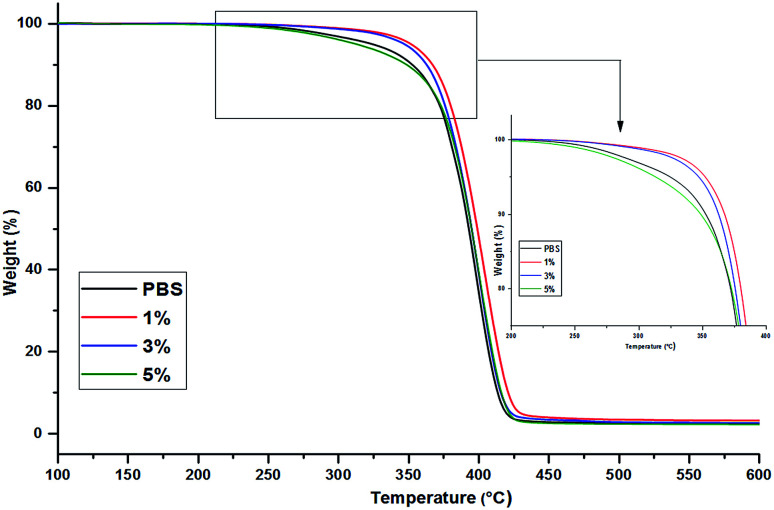
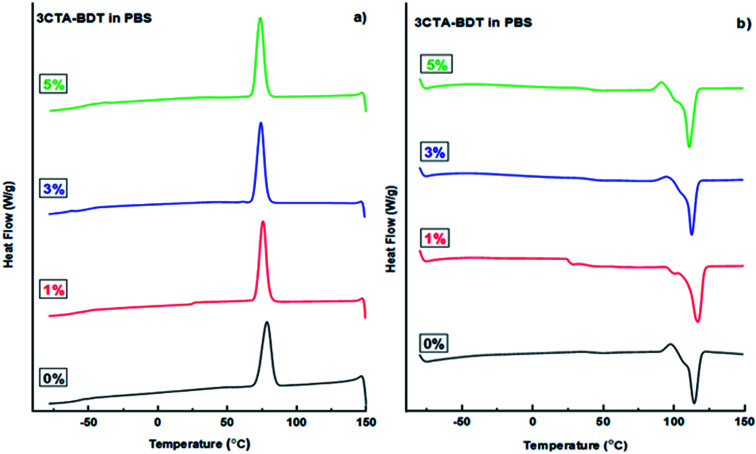
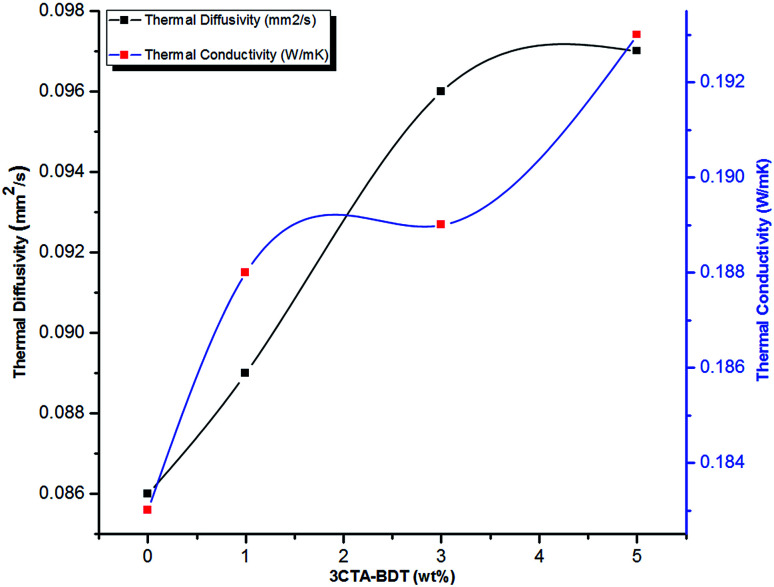
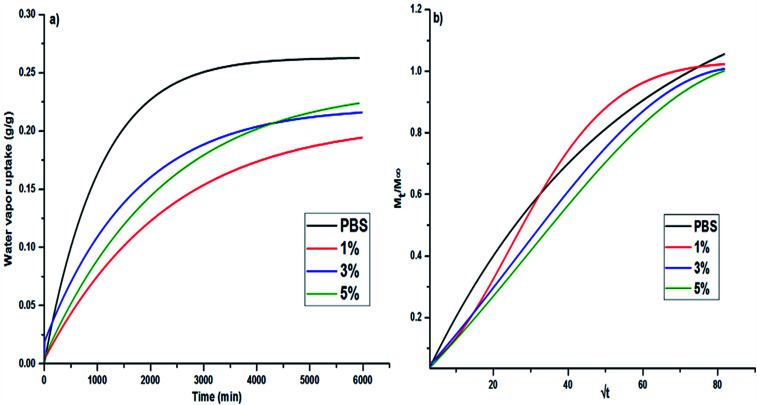
The exploitation of beidellite clay (BDT), used as a nanofiller in the preparation of poly(butylene succinate) (PBS)/organoclay biodegradable nanocomposites, was investigated. A series of bionanocomposites with various loadings of the organoclay (3CTA-BDT) were prepared by polycondensation reaction between succinic anhydride (SuAh) and 1,4-butanediol (1,4-BD) at atmospheric pressure in refluxing decalin with azeotropic removal of water, and the reaction was catalyzed by non-toxic bismuth chloride (BiCl). X-ray diffraction (XRD) and scanning electron microscopy (SEM) results showed that 3CTA-BDT was likely exfoliated and well dispersed in PBS matrix. Thermal properties (TGA, DSC and thermal conductivity), contact angle measurements and water vapor sorption behavior of the corresponding nanocomposites were also discussed. Compared to pure PBS, a significant reduction of the diffusion coefficient and the water vapor permeability (WVP) by 44 and 37%, respectively, was observed by adding only 5 wt% of 3CTA-BDT. These results could make these bionanocomposites suitable materials for food packaging application.
研究了锂皂石粘土(BDT)作为纳米填料在制备聚丁二酸丁二醇酯(PBS)/有机粘土生物可降解纳米复合材料中的应用。通过丁二酸酐(SuAh)与1,4-丁二醇(1,4-BD)在常压下于回流的十氢化萘中进行缩聚反应,并通过无毒的氯化铋(BiCl)催化反应,制备了一系列含有不同负载量有机粘土(3CTA-BDT)的生物纳米复合材料,同时通过共沸脱水除去水。X射线衍射(XRD)和扫描电子显微镜(SEM)结果表明,3CTA-BDT可能以剥离状态很好地分散在PBS基体中。还讨论了相应纳米复合材料的热性能(TGA、DSC和热导率)、接触角测量以及水蒸气吸附行为。与纯PBS相比,仅添加5 wt%的3CTA-BDT时,扩散系数和水蒸气透过率(WVP)分别显著降低了44%和37%。这些结果使得这些生物纳米复合材料成为适用于食品包装应用的材料。