Department of Human Genetics, Leiden University Medical Center, Postzone S4-0P, P.O. Box 9600, 2300RC Leiden, the Netherlands; Centre for Clinical Brain Sciences, University of Edinburgh, Edinburgh, UK; UK Dementia Research Institute at University of Edinburgh, Edinburgh, UK.
Department of Human Genetics, Leiden University Medical Center, Postzone S4-0P, P.O. Box 9600, 2300RC Leiden, the Netherlands.
Stem Cell Reports. 2022 Jun 14;17(6):1351-1365. doi: 10.1016/j.stemcr.2022.04.006. Epub 2022 May 5.
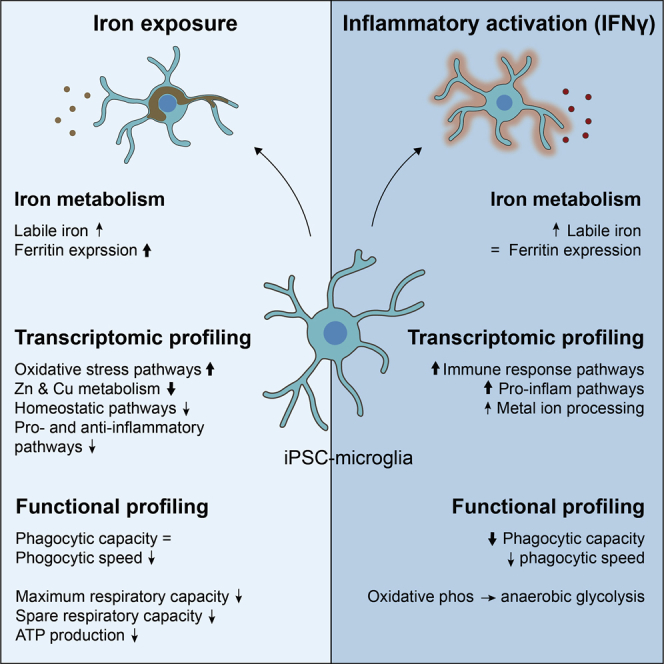
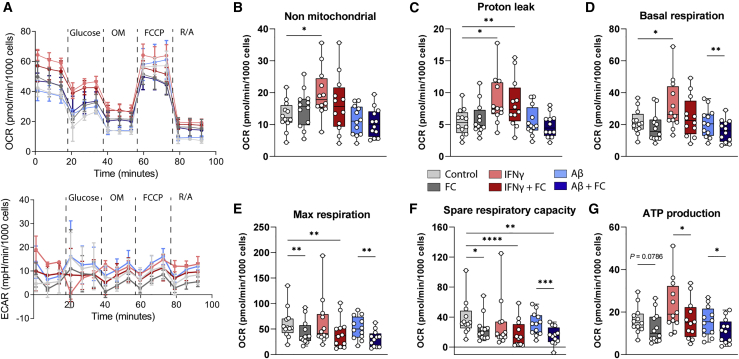
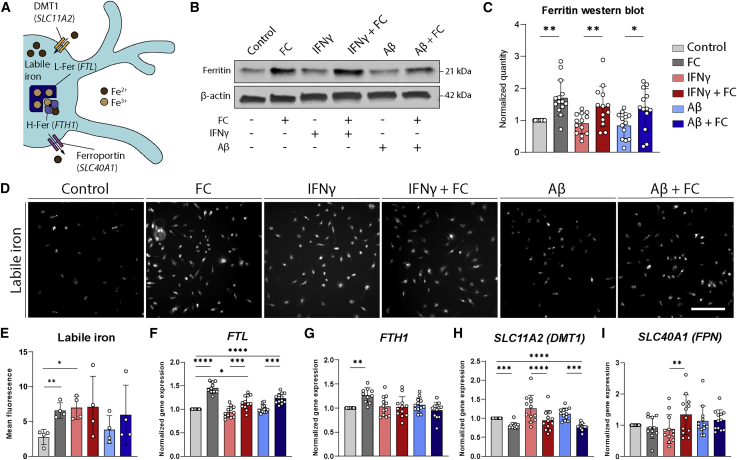
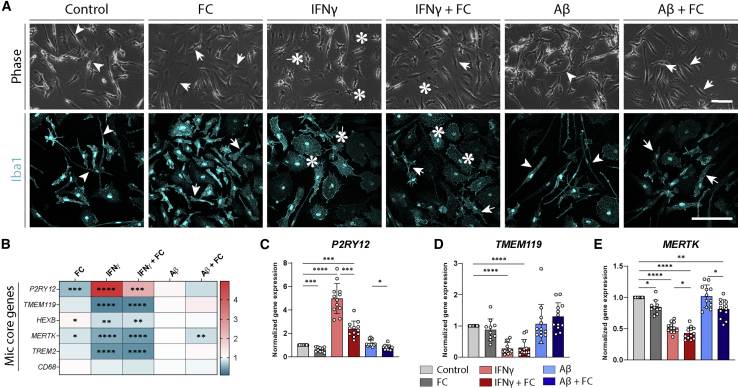
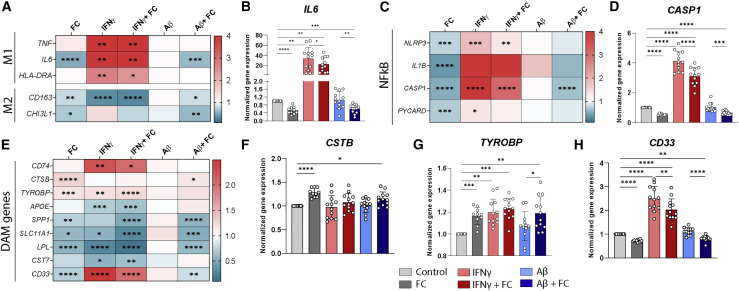
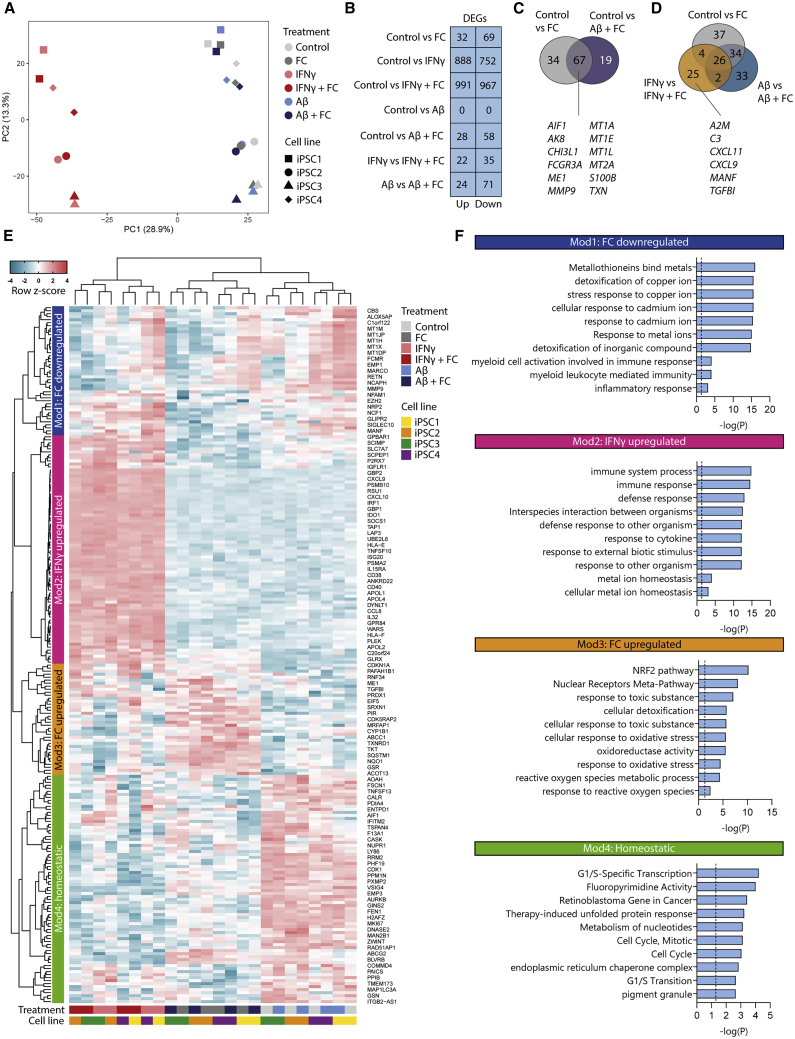
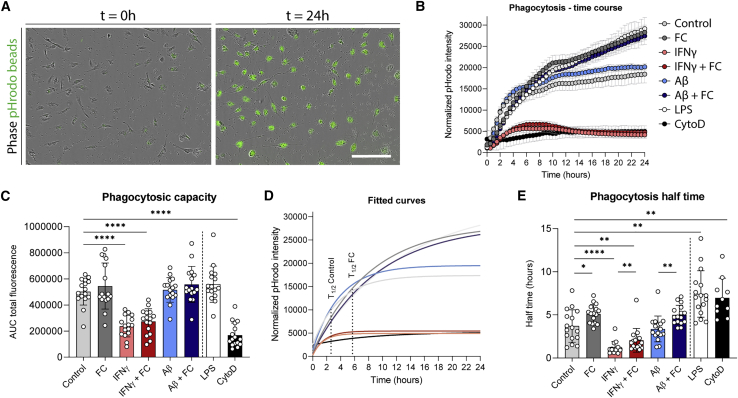
Iron accumulation in microglia has been observed in Alzheimer's disease and other neurodegenerative disorders and is thought to contribute to disease progression through various mechanisms, including neuroinflammation. To study this interaction, we treated human induced pluripotent stem cell-derived microglia (iPSC-MG) with iron, in combination with inflammatory stimuli such as interferon gamma (IFN-γ) and amyloid β. Both IFN-γ and iron treatment increased labile iron levels, but only iron treatment led to a consistent increase of ferritin levels, reflecting long-term iron storage. Therefore, in iPSC-MG, ferritin appeared to be regulated by iron revels rather than inflammation. Further investigation showed that while IFN-γ induced pro-inflammatory activation, iron treatment dampened both classic pro- and anti-inflammatory activation on a transcriptomic level. Notably, iron-loaded microglia showed strong upregulation of cellular stress response pathways, the NRF2 pathway, and other oxidative stress pathways. Functionally, iPSC-MG exhibited altered phagocytosis and impaired mitochondrial metabolism following iron treatment. Collectively, these data suggest that in MG, in contrast to current hypotheses, iron treatment does not result in pro-inflammatory activation, but rather dampens it and induces oxidative stress.
在阿尔茨海默病和其他神经退行性疾病中观察到小胶质细胞中的铁积累,并且认为通过多种机制,包括神经炎症,铁积累有助于疾病进展。为了研究这种相互作用,我们用铁处理人诱导多能干细胞衍生的小胶质细胞(iPSC-MG),并结合干扰素γ(IFN-γ)和淀粉样β等炎症刺激物。IFN-γ 和铁处理均增加了不稳定铁水平,但只有铁处理导致铁蛋白水平持续增加,反映了长期铁储存。因此,在 iPSC-MG 中,铁蛋白似乎受铁含量而不是炎症调节。进一步的研究表明,虽然 IFN-γ 诱导了促炎激活,但铁处理在转录组水平上抑制了经典的促炎和抗炎激活。值得注意的是,负载铁的小胶质细胞表现出强烈的细胞应激反应途径、NRF2 途径和其他氧化应激途径的上调。功能上,铁处理后的 iPSC-MG 表现出吞噬作用改变和线粒体代谢受损。总之,这些数据表明,与当前的假设相反,在 MG 中,铁处理不会导致促炎激活,而是抑制其并诱导氧化应激。