Department of Neurology, The Icahn School of Medicine at Mount Sinai, Box 1137, Mount Sinai Medical Center, New York City, NY, 10029, USA.
Department of Pathology, The Icahn School of Medicine at Mount Sinai, New York City, NY, USA.
Acta Neuropathol Commun. 2022 May 7;10(1):69. doi: 10.1186/s40478-022-01375-y.
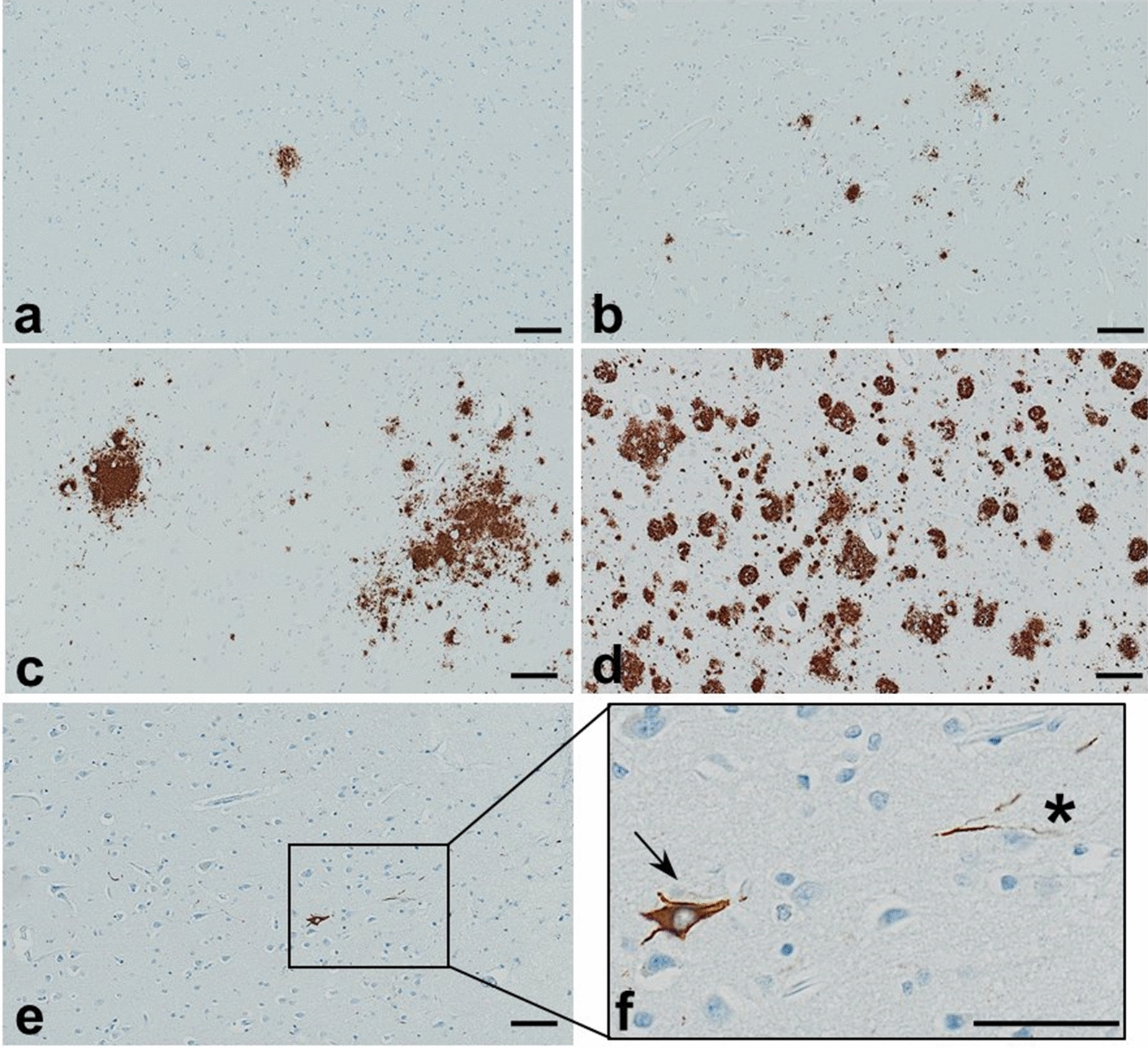
Microglia are implicated in Alzheimer's Disease (AD) pathogenesis. In a middle-aged cohort enriched for neuroinflammation, we asked whether microgliosis was related to neocortical amyloid beta (A[Formula: see text]) deposition and neuronal phosphorylated tau (p-tau), and whether microgliosis predicted cognition. Frontal lobe tissue from 191 individuals autopsied with detectable (HIV-D) and undetectable (HIV-U) HIV infection, and 63 age-matched controls were examined. Immunohistochemistry (IHC) was used to evaluate A[Formula: see text] plaques and neuronal p-tau, and quantitate microgliosis with markers Iba1, CD163, and CD68 in large regions of cortex. Glia in the A[Formula: see text] plaque microenvironment were quantitated by immunofluorescence (IF). The relationship of microgliosis to cognition was evaluated. No relationship between A[Formula: see text] or p-tau accumulation and overall severity of microgliosis was discerned. Individuals with uncontrolled HIV had the greatest microgliosis, but fewer A[Formula: see text] plaques; they also had higher prevalence of APOE [Formula: see text]4 alleles, but died earlier than other groups. HIV group status was the only variable predicting microgliosis over large frontal regions. In contrast, in the A[Formula: see text] plaque microenvironment, APOE [Formula: see text]4 status and sex were dominant predictors of glial infiltrates, with smaller contributions of HIV status. Cognition correlated with large-scale microgliosis in HIV-D, but not HIV-U, individuals. In this autopsy cohort, over large regions of cortex, HIV status predicts microgliosis, whereas in the A[Formula: see text] plaque microenvironment, traditional risk factors of AD (APOE [Formula: see text]4 and sex) are stronger determinants. While microgliosis does not predict neurodegenerative protein deposition, it does predict cognition in HIV-D. Increased neuroinflammation does not initiate amyloid deposition in a younger group with enhanced genetic risk. However, once A[Formula: see text] deposits are established, APOE [Formula: see text]4 predicts increased plaque-associated inflammation.
小胶质细胞被认为与阿尔茨海默病(AD)的发病机制有关。在一个富含神经炎症的中年队列中,我们研究了小胶质细胞增生是否与新皮层淀粉样蛋白β(Aβ)沉积和神经元磷酸化 tau(p-tau)有关,以及小胶质细胞增生是否可以预测认知能力。对 191 名尸检个体(可检测 HIV-D 和不可检测 HIV-U)和 63 名年龄匹配的对照者的额叶组织进行了检查。使用免疫组织化学(IHC)评估 Aβ斑块和神经元 p-tau,并使用 Iba1、CD163 和 CD68 标志物在大脑皮层的大片区域中定量小胶质细胞增生。通过免疫荧光(IF)定量 Aβ斑块微环境中的神经胶质细胞。评估小胶质细胞增生与认知的关系。未发现 Aβ或 p-tau 积累与整体小胶质细胞增生严重程度之间存在相关性。未得到控制的 HIV 个体的小胶质细胞增生最严重,但 Aβ斑块较少;他们也有更高的 APOE ε4 等位基因频率,但比其他组死亡更早。HIV 组状态是唯一可以预测大脑大面积区域小胶质细胞增生的变量。相比之下,在 Aβ斑块微环境中,APOE ε4 状态和性别是胶质浸润的主要预测因素,而 HIV 状态的贡献较小。在 HIV-D 个体中,认知与大规模小胶质细胞增生相关,但在 HIV-U 个体中则不然。在这个尸检队列中,在大脑皮层的大片区域中,HIV 状态预测小胶质细胞增生,而在 Aβ斑块微环境中,AD 的传统危险因素(APOE ε4 和性别)是更强的决定因素。虽然小胶质细胞增生不能预测神经退行性蛋白沉积,但它确实可以预测 HIV-D 患者的认知能力。在具有增强遗传风险的年轻人群中,神经炎症增加不会引发淀粉样蛋白沉积。然而,一旦 Aβ 沉积物建立,APOE ε4 就预示着斑块相关炎症增加。