Braun Anne-Sophie, Feil Katharina, Reiser Elisabeth, Weiss Guenter, von Steuben Thore, Pinggera Germar Michael, Köhn Frank-Michael, Toth Bettina
Universitätsklinik für Gynäkologische Endokrinologie u. Reproduktionsmedizin, Medizinische Universität Innsbruck, Innsbruck, Austria.
Universitätsklinik für Innere Medizin II, Medizinische Universität Innsbruck, Innsbruck, Austria.
Geburtshilfe Frauenheilkd. 2022 May 6;82(5):490-500. doi: 10.1055/a-1750-9284. eCollection 2022 May.
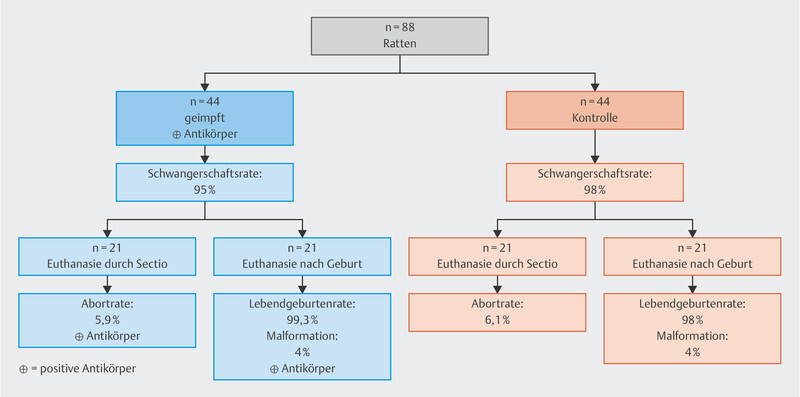
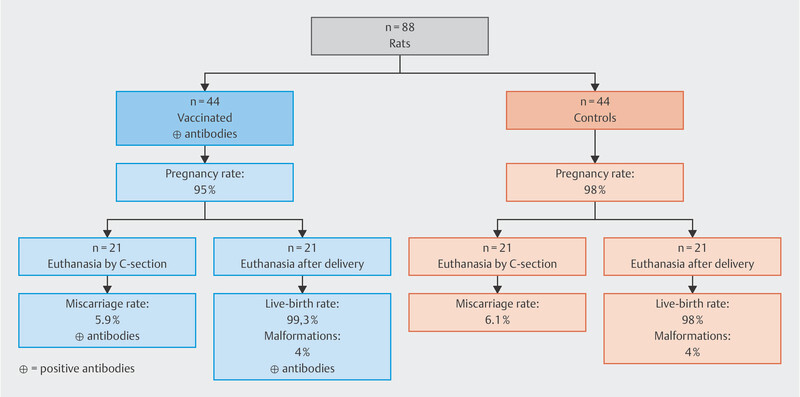
As the COVID-19 pandemic persists and new vaccines are developed, concerns among the general public are growing that both infection with the SARS-CoV-2 virus and vaccinations against the coronavirus (mRNA vaccines) could lead to infertility or higher miscarriage rates. These fears are voiced particularly often by young adults of reproductive age. This review summarizes the current data on the impact of SARS-CoV-2 infection and corona vaccinations on female and male fertility, based on both animal models and human data. A systematic literature search (PubMed, Embase, Web of Science) was carried out using the search terms "COVID 19, SARS-CoV-2, fertility, semen, sperm, oocyte, male fertility, female fertility, infertility". After the search, original articles published between October 2019 and October 2021 were selected and reviewed. Despite the use of very high vaccine doses in animal models, no negative impacts on fertility, the course of pregnancy, or fetal development were detected. In humans, no SARS-CoV-2 RNA was found in the oocytes/follicular fluid of infected women; similarly, no differences with regard to pregnancy rates or percentages of healthy children were found between persons who had recovered from the disease, vaccinated persons, and controls. Vaccination also had no impact on live-birth rates after assisted reproductive treatment. No viral RNA was detected in the semen of the majority of infected or still infectious men; however, a significant deterioration of semen parameters was found during semen analysis, especially after severe viral disease. None of the studies found that corona vaccines had any impact on male fertility. Neither the animal models nor the human data presented in recent studies provide any indications that fertility decreases after being vaccinated against coronavirus. However, there is a growing body of evidence that severe SARS-CoV-2 infection has a negative impact on male fertility and there is clear evidence of an increased risk of complications among pregnant women with SARS-CoV-2 infection. The counseling offered to young adults should therefore take their fears and concerns seriously as well as providing a structured discussion of the current data.
随着新冠疫情持续且新疫苗不断研发,普通民众越来越担心感染严重急性呼吸综合征冠状病毒2(SARS-CoV-2)以及接种新冠病毒疫苗(信使核糖核酸疫苗)会导致不孕或更高的流产率。育龄期年轻人尤其常表达这些担忧。本综述基于动物模型和人类数据,总结了目前关于SARS-CoV-2感染和新冠疫苗接种对男性和女性生育能力影响的数据。使用搜索词“COVID-19、SARS-CoV-2、生育能力、精液、精子、卵母细胞、男性生育能力、女性生育能力、不孕”进行了系统的文献检索(PubMed、Embase、科学网)。检索后,选取并审阅了2019年10月至2021年10月发表的原创文章。尽管在动物模型中使用了非常高的疫苗剂量,但未检测到对生育能力、妊娠过程或胎儿发育有负面影响。在人类中,未在感染女性的卵母细胞/卵泡液中发现SARS-CoV-2 RNA;同样,康复者、接种疫苗者和对照组在妊娠率或健康儿童百分比方面未发现差异。接种疫苗对辅助生殖治疗后的活产率也没有影响。在大多数感染或仍具传染性的男性精液中未检测到病毒RNA;然而,在精液分析过程中发现精液参数显著恶化,尤其是在严重病毒感染疾病后。没有研究发现新冠疫苗对男性生育能力有任何影响。近期研究中的动物模型和人类数据均未表明接种新冠疫苗后生育能力会下降。然而,越来越多的证据表明,严重的SARS-CoV-2感染会对男性生育能力产生负面影响,并且有明确证据表明感染SARS-CoV-2的孕妇出现并发症的风险增加。因此,向年轻人提供的咨询应认真对待他们的恐惧和担忧,并对当前数据进行有条理的讨论。