Mohammadi Ziarani Ghodsi, Malmir Masoumeh, Lashgari Negar, Badiei Alireza
Department of Chemistry, Alzahra University Vanak Square, P. O. Box 1993893973 Tehran Iran
School of Chemistry, College of Science, University of Tehran 14155-6455 Tehran Iran.
RSC Adv. 2019 Aug 13;9(43):25094-25106. doi: 10.1039/c9ra01589b. eCollection 2019 Aug 8.
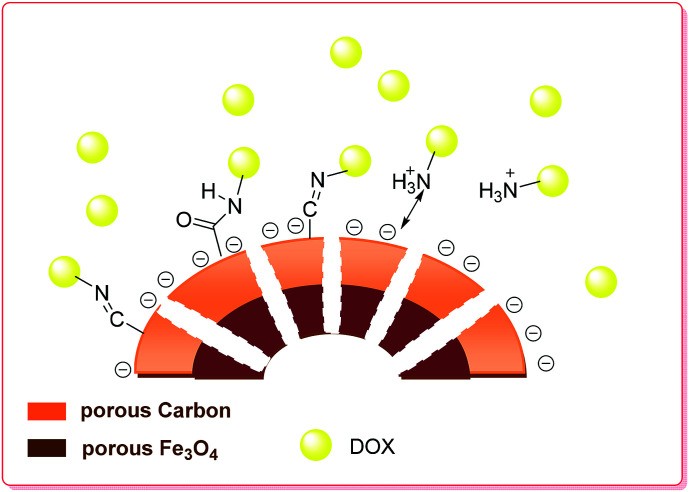
The increasing number of scientific publications focusing on nanomaterials in the biomedical field indicates growing interest from the broader scientific community. Nanomedicine is a modern science, and research continues into the application of nanoscale materials for the therapy and diagnosis of damaged tissues. In this regard, substantial progress has been made in the synthesis of magnetic materials with desired sizes, morphologies, chemical compositions, and surface chemistry. Among these, magnetic iron oxide nanoparticles have demonstrated great promise as unique carriers in the delivery of chemical drugs due to their combinations of hollow structures. Importantly, due to the combination of the ability to respond to an external magnetic field and the rich possibilities of their coatings, magnetic materials are universal tools for the magnetic separation of small molecules, biomolecules, and cells. This review provides an overview of the synthesis and biological applications of hollow magnetic nanoparticles in drug delivery systems.
越来越多聚焦于生物医学领域纳米材料的科学出版物表明,更广泛的科学界对此兴趣日增。纳米医学是一门现代科学,对于纳米级材料在受损组织治疗和诊断方面应用的研究仍在继续。在这方面,在合成具有所需尺寸、形态、化学成分和表面化学性质的磁性材料方面已取得了实质性进展。其中,磁性氧化铁纳米颗粒因其空心结构的组合,在化学药物递送中作为独特载体展现出了巨大潜力。重要的是,由于具备响应外部磁场的能力以及其涂层的丰富可能性,磁性材料是用于小分子、生物分子和细胞磁分离的通用工具。本综述概述了空心磁性纳米颗粒在药物递送系统中的合成及生物学应用。