Rasoulinezhad Ehsan, Taghizadeh-Hesary Farhad
Faculty of World Studies, University of Tehran, Tehran, Iran.
Social Science Research Institute, Tokai University, Hiratsuka-shi, Kanagawa-ken 2591292 Japan.
Energy Effic. 2022;15(2):14. doi: 10.1007/s12053-022-10021-4. Epub 2022 Feb 11.
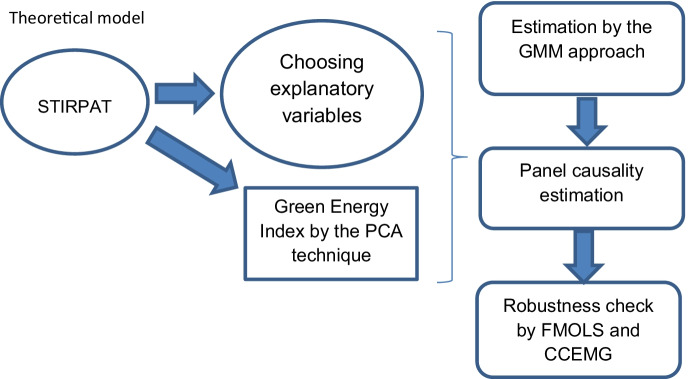
Deploying green energy is, directly and indirectly, related to energy- and environment-related sustainable development goals (SDGs). This study uses the stochastic impact by regression on the population, affluence, and technology (STIRPAT) model to examine the relationship between CO emissions, energy efficiency, green energy index (GEI), and green finance in the top ten economies that support green finance. The results show that green bonds are a suitable method to promote green energy projects and reduce CO emissions significantly. At the same time, there is no causal linkage between these variables in the short term. Therefore, to achieve sustainable economic growth for environmental issues, governments should implement supportive policies with a long-term approach to boost private participation in the investment of green energy projects. This policy may be applicable during and in the post the COVID-19 era when green projects have more difficulties accessing finance.
部署绿色能源直接或间接地与能源和环境相关的可持续发展目标(SDGs)相关。本研究使用随机影响回归人口、富裕程度和技术(STIRPAT)模型,来检验支持绿色金融的十大经济体中碳排放、能源效率、绿色能源指数(GEI)和绿色金融之间的关系。结果表明,绿色债券是促进绿色能源项目并显著减少碳排放的合适方法。同时,短期内这些变量之间不存在因果联系。因此,为实现环境问题的可持续经济增长,政府应实施长期支持政策,以促进私人部门参与绿色能源项目投资。在新冠疫情期间及之后,当绿色项目在获取资金方面面临更多困难时,这一政策可能适用。