Haider Imran, Ur Rehman Hasseb
Department of Agronomy, Faculty of Agricultural Sciences and Technology, Bahauddin Zakariya University, Multan, Pakistan.
Saudi J Biol Sci. 2022 Apr;29(4):2210-2218. doi: 10.1016/j.sjbs.2021.11.040. Epub 2021 Nov 24.
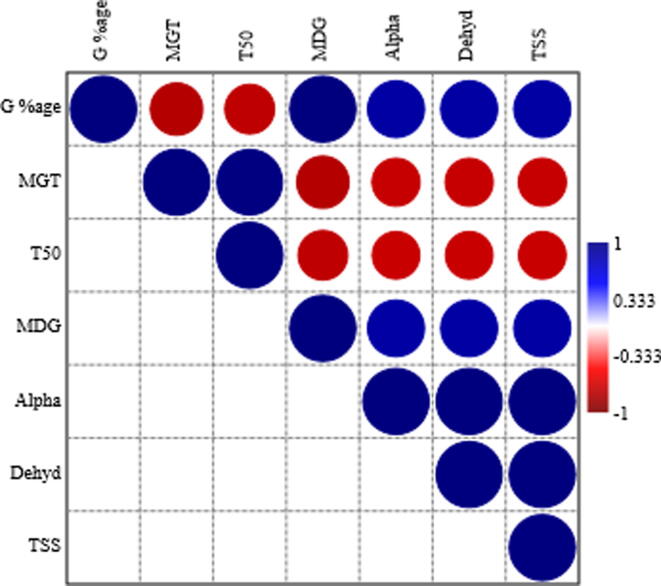
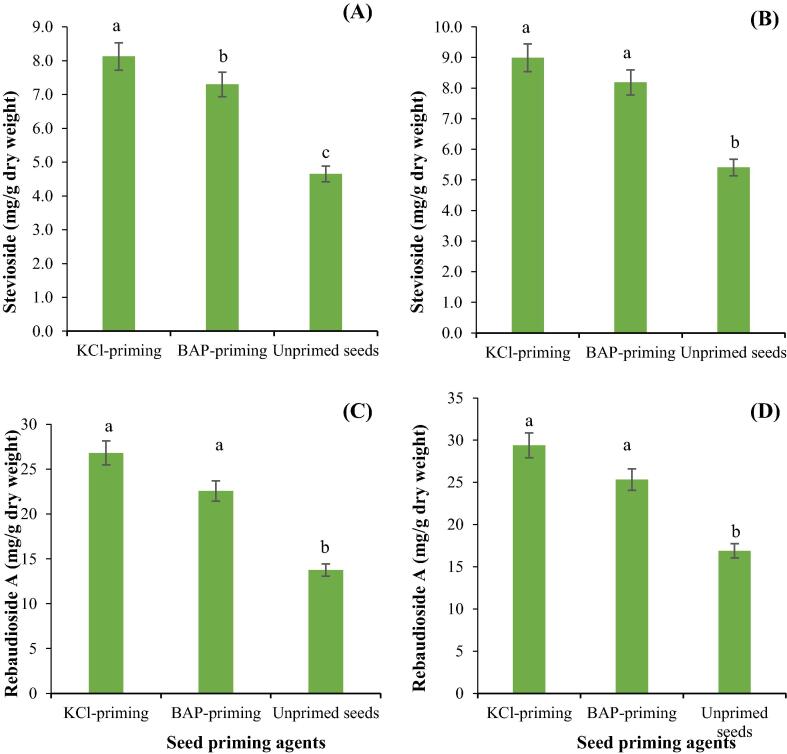
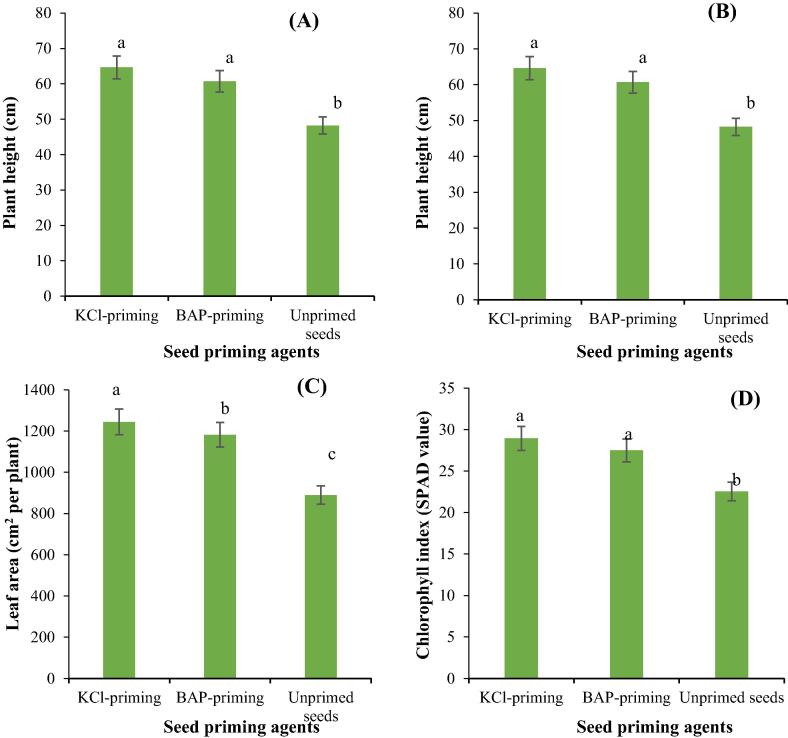
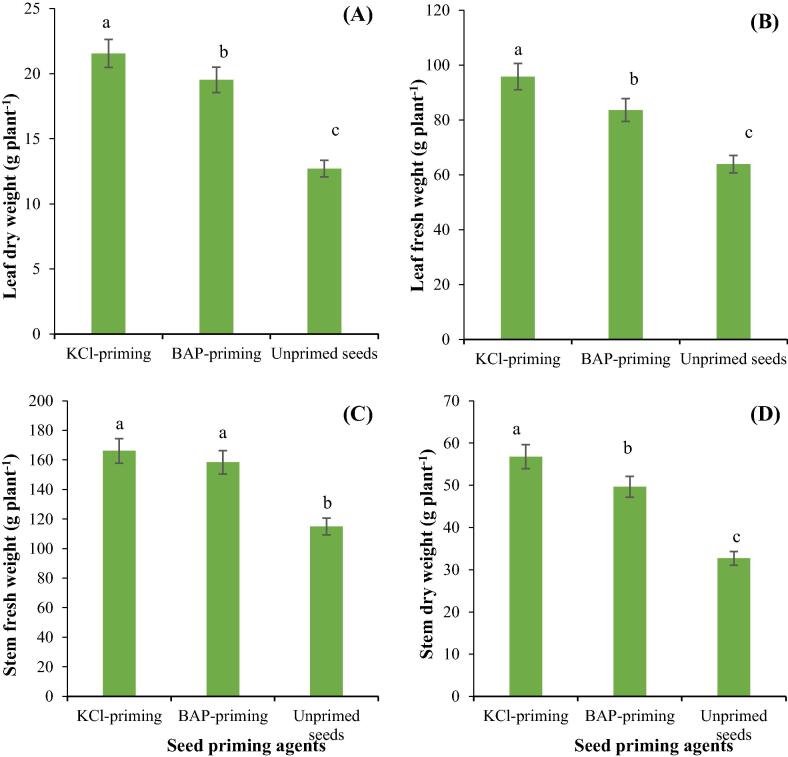
( Bertoni) is an alternative sugar crop currently gaining importance in several geographic regions of the world. Generally, crop is propagated by seeds; however, low seed germination hinders the adaptability of the crop in different cropping systems. Seed priming with different compounds improves germination of several arable crops under stressful and benign environmental conditions. This study evaluated the role of different seed priming agents and priming durations on stand establishment, allometric and yield-related traits, and steviol glycosides contents of in two different experiments. The first experiment consisted of five different seed priming agents (i.e., hydropriming with distilled water, ascorbic acid, potassium chloride, benzyl amine purine and unprimed seeds) and five priming durations (0, 8, 16, 24 and 32 h). Seed priming with potassium chloride (KCl) and benzyl amine purine (BAP) for 32 h improved stand establishment and biochemical attributes of seeds. Therefore, these two seed priming agents along with unprimed seeds were included in the second experiment to quantify their impact on allometric and yield-related traits and steviol glycosides contents. Seed priming with both KCl and BAP resulted in better allometric traits (plant height, number of leaves per plant, leaf area and chlorophyll index) compared with unprimed seeds. Similarly, seed priming with KCl resulted in higher fresh and dry biomass production of stem and leaves. Nonetheless, higher stevioside and rebaudioside A contents were recorded for the seeds primed with KCl, whereas unprimed seeds resulted in the lowest values. It is concluded that seeds must be primed with KCl for 32 h before sowing to get higher seed germination, leaf yield and steviol glycosides contents. Nonetheless, the role of KCl priming in improving abiotic stress tolerance of must be explored in the future studies.
(甜叶菊)是一种替代性糖料作物,目前在世界几个地理区域正变得越来越重要。一般来说,该作物通过种子繁殖;然而,种子发芽率低阻碍了其在不同种植系统中的适应性。用不同化合物进行种子引发可提高几种可耕作物在胁迫和适宜环境条件下的发芽率。本研究在两个不同实验中评估了不同种子引发剂和引发持续时间对甜叶菊的立苗、异速生长及产量相关性状以及甜菊糖苷含量的作用。第一个实验包括五种不同的种子引发剂(即用蒸馏水进行水引发、抗坏血酸、氯化钾、苄氨基嘌呤以及未引发种子)和五个引发持续时间(0、8、16、24和32小时)。用氯化钾(KCl)和苄氨基嘌呤(BAP)引发种子32小时可提高甜叶菊种子的立苗率和生化特性。因此,在第二个实验中纳入了这两种种子引发剂以及未引发种子,以量化它们对异速生长及产量相关性状和甜菊糖苷含量的影响。与未引发种子相比,用KCl和BAP引发种子均产生了更好的异速生长性状(株高、单株叶片数、叶面积和叶绿素指数)。同样,用KCl引发种子导致茎叶的鲜重和干重产量更高。尽管如此,用KCl引发的种子记录到更高的甜菊糖苷和莱鲍迪苷A含量,而未引发种子的含量最低。得出的结论是,甜叶菊种子在播种前必须用KCl引发32小时,以获得更高的种子发芽率、叶片产量和甜菊糖苷含量。尽管如此,KCl引发在提高甜叶菊非生物胁迫耐受性方面的作用必须在未来研究中加以探索。