Department of Clinical Microbiology, Umeå Universitygrid.12650.30, Umeå, Sweden.
Laboratory for Molecular Infection Medicine Sweden (MIMS), Umeå Universitygrid.12650.30, Umeå, Sweden.
mBio. 2022 Jun 28;13(3):e0089222. doi: 10.1128/mbio.00892-22. Epub 2022 May 9.
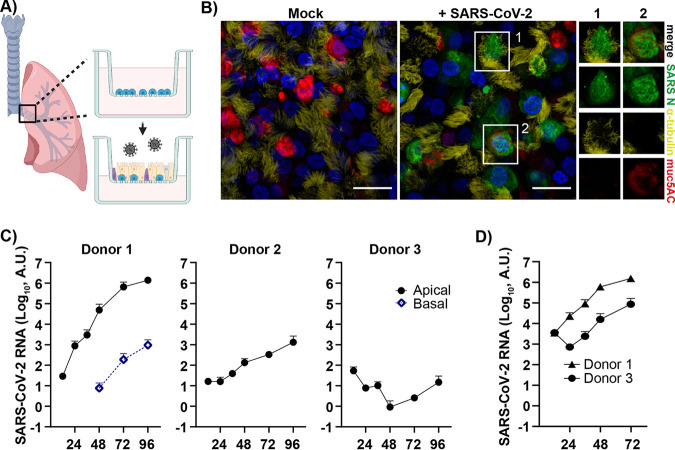
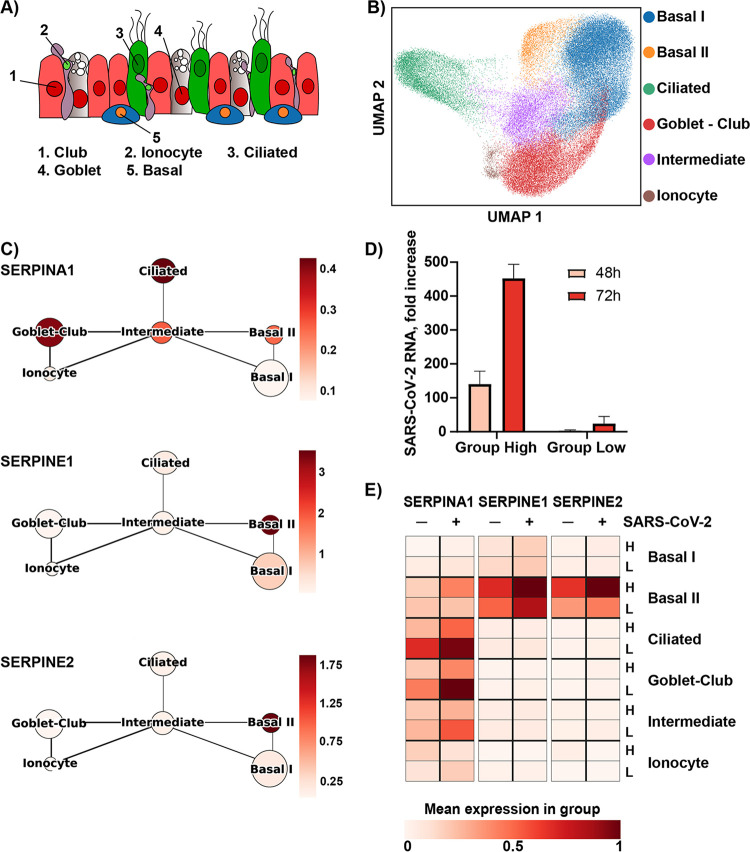
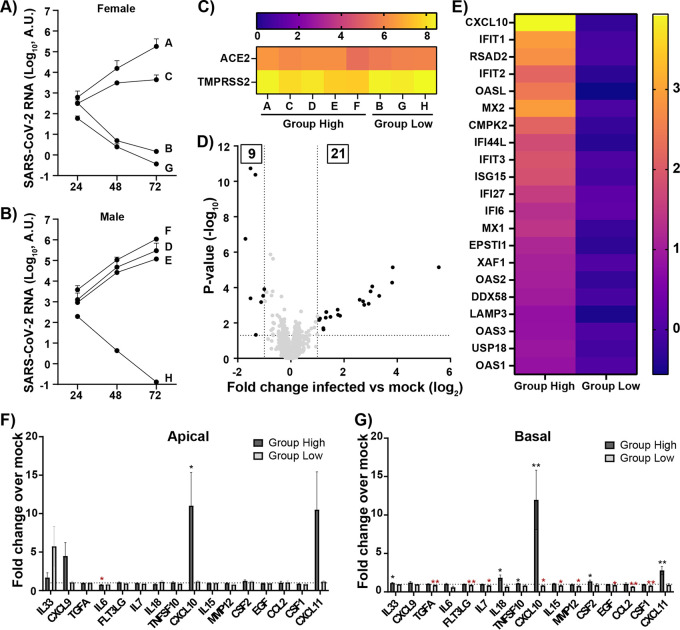
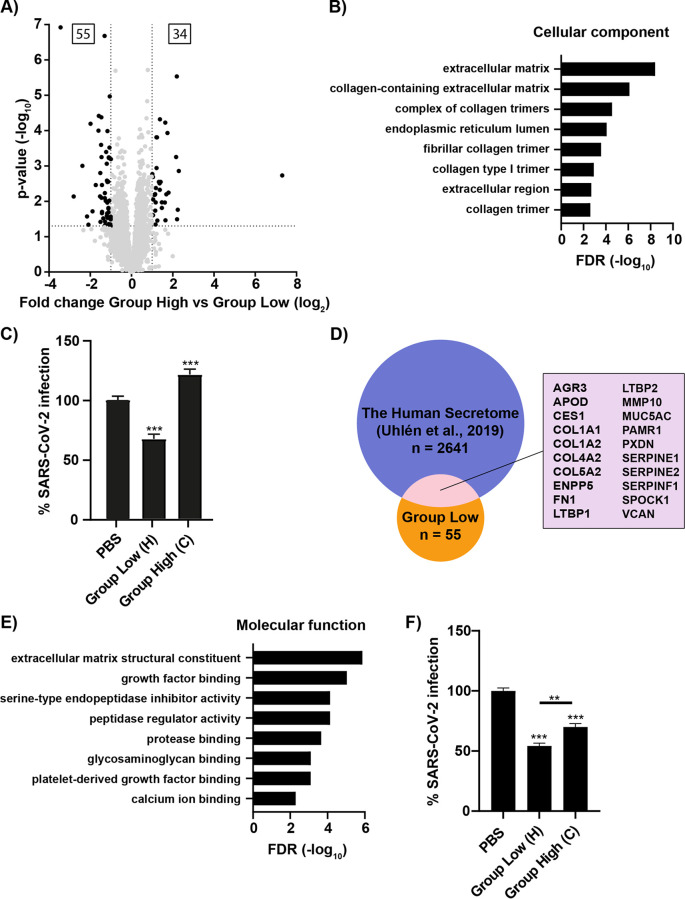
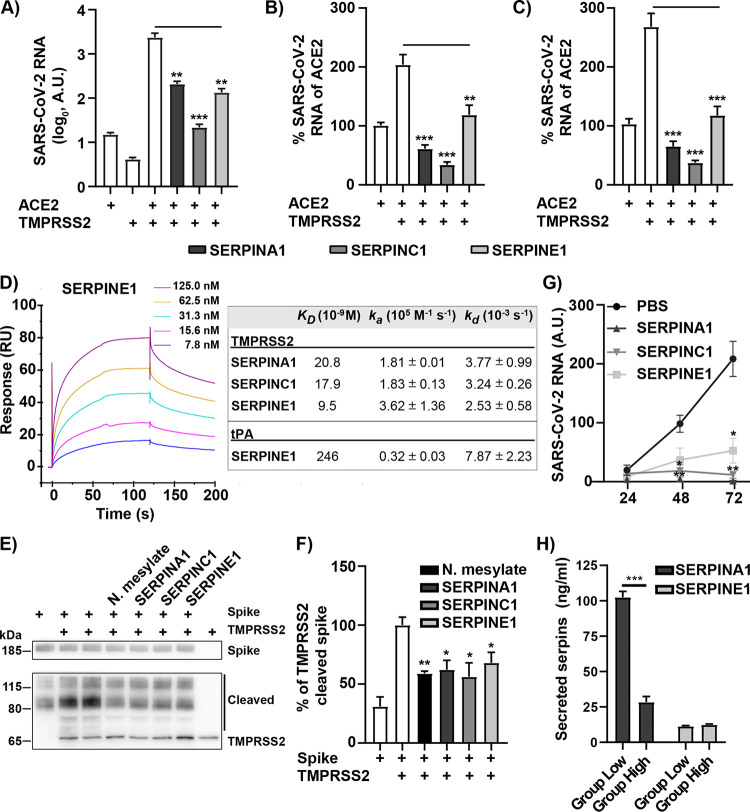
The coronavirus disease 2019, COVID-19, is a complex disease with a wide range of symptoms from asymptomatic infections to severe acute respiratory syndrome with lethal outcome. Individual factors such as age, sex, and comorbidities increase the risk for severe infections, but other aspects, such as genetic variations, are also likely to affect the susceptibility to SARS-CoV-2 infection and disease severity. Here, we used a human 3D lung cell model based on primary cells derived from multiple donors to identity host factors that regulate SARS-CoV-2 infection. With a transcriptomics-based approach, we found that less susceptible donors show a higher expression level of serine protease inhibitors SERPINA1, SERPINE1, and SERPINE2, identifying variation in cellular serpin levels as restricting host factors for SARS-CoV-2 infection. We pinpoint their antiviral mechanism of action to inhibition of the cellular serine protease, TMPRSS2, thereby preventing cleavage of the viral spike protein and TMPRSS2-mediated entry into the target cells. By means of single-cell RNA sequencing, we further locate the expression of the individual serpins to basal, ciliated, club, and goblet cells. Our results add to the importance of genetic variations as determinants for SARS-CoV-2 susceptibility and suggest that genetic deficiencies of cellular serpins might represent risk factors for severe COVID-19. Our study further highlights TMPRSS2 as a promising target for antiviral intervention and opens the door for the usage of locally administered serpins as a treatment against COVID-19. Identification of host factors affecting individual SARS-CoV-2 susceptibility will provide a better understanding of the large variations in disease severity and will identify potential factors that can be used, or targeted, in antiviral drug development. With the use of an advanced lung cell model established from several human donors, we identified cellular protease inhibitors, serpins, as host factors that restrict SARS-CoV-2 infection. The antiviral mechanism was found to be mediated by the inhibition of a serine protease, TMPRSS2, which results in a blockage of viral entry into target cells. Potential treatments with these serpins would not only reduce the overall viral burden in the patients, but also block the infection at an early time point, reducing the risk for the hyperactive immune response common in patients with severe COVID-19.
新型冠状病毒疾病 2019(COVID-19)是一种复杂的疾病,其症状范围广泛,从无症状感染到致命性的严重急性呼吸综合征不等。个体因素如年龄、性别和合并症会增加严重感染的风险,但其他方面,如遗传变异,也可能影响对 SARS-CoV-2 感染的易感性和疾病的严重程度。在这里,我们使用了一种基于来自多个供体的原代细胞的人 3D 肺细胞模型,来确定调节 SARS-CoV-2 感染的宿主因素。通过基于转录组学的方法,我们发现感染性较低的供体表现出更高水平的丝氨酸蛋白酶抑制剂 SERPINA1、SERPINE1 和 SERPINE2,这表明细胞丝氨酸蛋白酶水平的变异是限制 SARS-CoV-2 感染的宿主因素。我们确定了它们的抗病毒作用机制是抑制细胞丝氨酸蛋白酶 TMPRSS2,从而阻止病毒刺突蛋白的切割和 TMPRSS2 介导的进入靶细胞。通过单细胞 RNA 测序,我们进一步将个体丝氨酸蛋白酶的表达定位到基底细胞、纤毛细胞、杯状细胞和分泌细胞。我们的结果增加了遗传变异作为 SARS-CoV-2 易感性决定因素的重要性,并表明细胞丝氨酸蛋白酶的遗传缺陷可能是 COVID-19 严重程度的危险因素。我们的研究进一步强调了 TMPRSS2 作为抗病毒干预的有前途的靶标,并为局部应用丝氨酸蛋白酶作为 COVID-19 治疗方法开辟了道路。鉴定影响个体 SARS-CoV-2 易感性的宿主因素将更好地了解疾病严重程度的巨大差异,并确定可用于抗病毒药物开发的潜在因素。通过使用从几个人类供体建立的先进的肺细胞模型,我们确定了细胞蛋白酶抑制剂丝氨酸蛋白酶抑制剂(serpins)是限制 SARS-CoV-2 感染的宿主因素。抗病毒机制被发现是通过抑制丝氨酸蛋白酶 TMPRSS2 介导的,这导致病毒进入靶细胞受阻。这些丝氨酸蛋白酶的潜在治疗方法不仅可以降低患者体内的总体病毒负担,而且可以在早期阻断感染,降低 COVID-19 患者中常见的过度活跃的免疫反应的风险。