Cui Xin-Wu, Li Kang-Ning, Yi Ai-Jiao, Wang Bin, Wei Qi, Wu Ge-Ge, Dietrich Christoph F
Department of Medical Ultrasound, Tongji Hospital, Tongji Medical College, Huazhong University of Science and Technology, Wuhan, Hubei Province, China.
Department of Ultrasound, The First People's Hospital of Yueyang, Yueyang, Hunan Province, China.
Endosc Ultrasound. 2022 Jul-Aug;11(4):252-274. doi: 10.4103/EUS-D-21-00151.
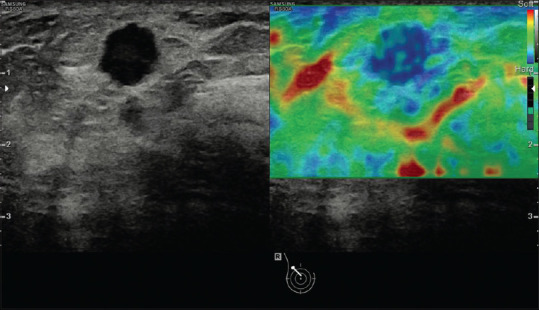
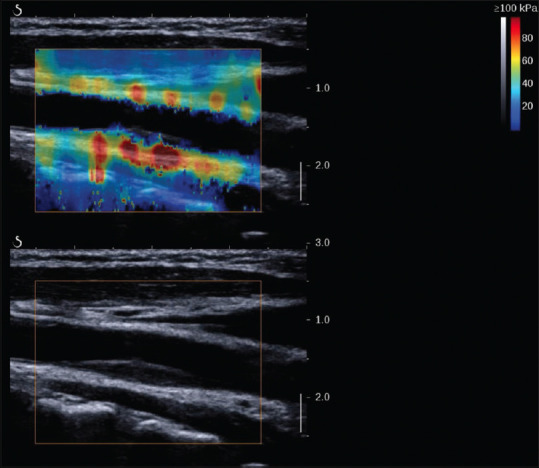
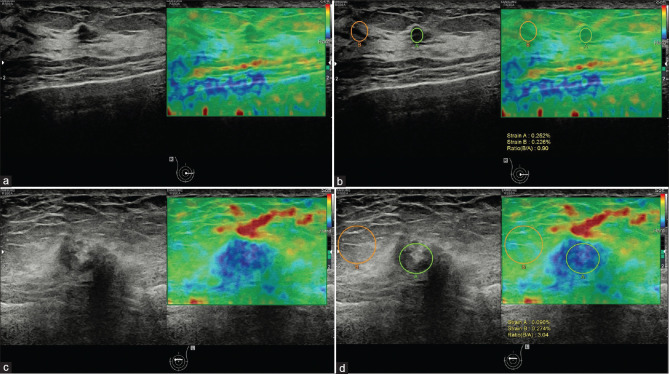
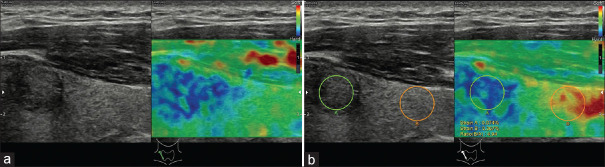
Physicians have used palpation as a diagnostic examination to understand the elastic properties of pathology for a long time since they realized that tissue stiffness is closely related to its biological characteristics. US elastography provided new diagnostic information about elasticity comparing with the morphological feathers of traditional US, and thus expanded the scope of the application in clinic. US elastography is now widely used in the field of diagnosis and differential diagnosis of abnormality, evaluating the degree of fibrosis and assessment of treatment response for a range of diseases. The World Federation of Ultrasound Medicine and Biology divided elastographic techniques into strain elastography (SE), transient elastography and acoustic radiation force impulse (ARFI). The ARFI techniques can be further classified into point shear wave elastography (SWE), 2D SWE, and 3D SWE techniques. The SE measures the strain, while the shear wave-based techniques (including TE and ARFI techniques) measure the speed of shear waves in tissues. In this review, we discuss the various techniques separately based on their basic principles, clinical applications in various organs, and advantages and limitations and which might be most appropriate given that the majority of doctors have access to only one kind of machine.
自从医生们认识到组织硬度与其生物学特性密切相关以来,他们长期以来一直将触诊作为一种诊断检查方法来了解病变的弹性特性。与传统超声的形态学特征相比,超声弹性成像提供了有关弹性的新诊断信息,从而扩大了其临床应用范围。目前,超声弹性成像广泛应用于各种疾病的异常诊断与鉴别诊断、纤维化程度评估以及治疗反应评估等领域。世界超声医学与生物学联合会将弹性成像技术分为应变弹性成像(SE)、瞬时弹性成像和声学辐射力脉冲(ARFI)。ARFI技术可进一步分为点剪切波弹性成像(SWE)、二维SWE和三维SWE技术。SE测量应变,而基于剪切波的技术(包括TE和ARFI技术)测量组织中的剪切波速度。在本综述中,我们将根据各种技术的基本原理、在各个器官中的临床应用、优缺点,以及鉴于大多数医生只能使用一种机器的情况下哪种技术可能最合适,分别对这些技术进行讨论。