Shaanxi Key Laboratory of Genetic Engineering for Plant Breeding, College of Agronomy, Northwest A&F University, Yangling, 712100, Shaanxi, China.
BMC Plant Biol. 2022 May 10;22(1):235. doi: 10.1186/s12870-022-03584-y.
Sheath blight is an important disease caused by Rhizoctonia cerealis that affects wheat yields worldwide. No wheat varieties have been identified with high resistance or immunity to sheath blight. Understanding the sheath blight resistance mechanism is essential for controlling this disease. In this study, we investigated the response of wheat to Rhizoctonia cerealis infection by analyzing the cytological changes and transcriptomes of common wheat 7182 with moderate sensitivity to sheath blight and H83 with moderate resistance.
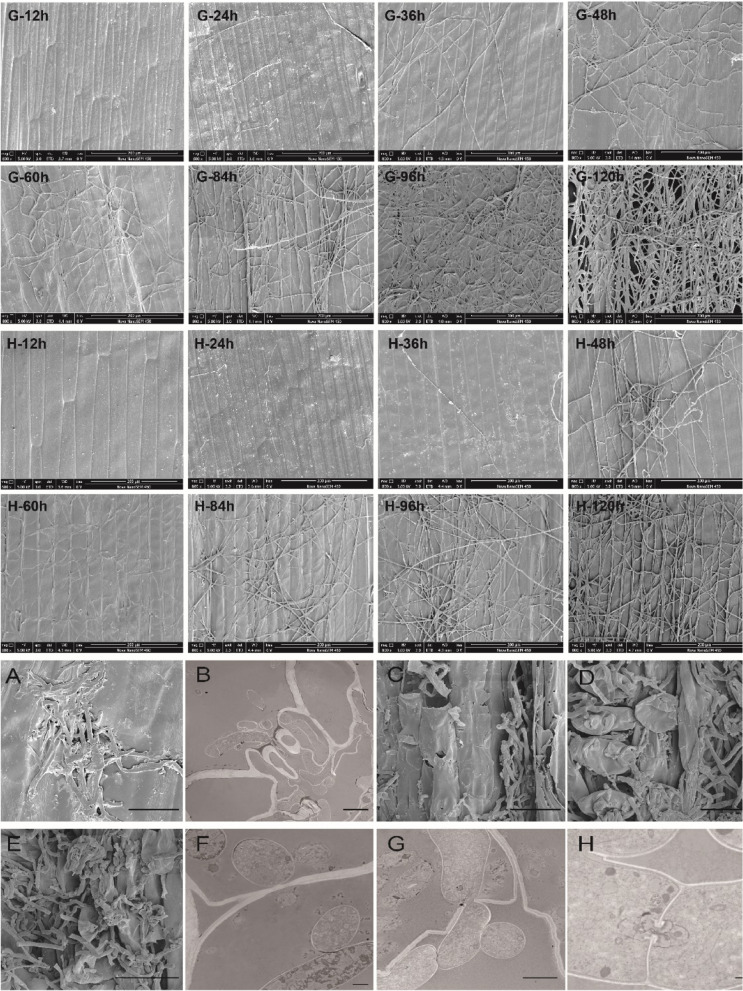
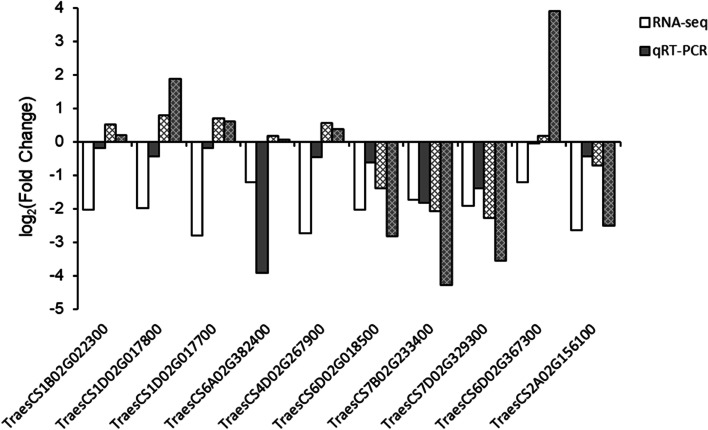
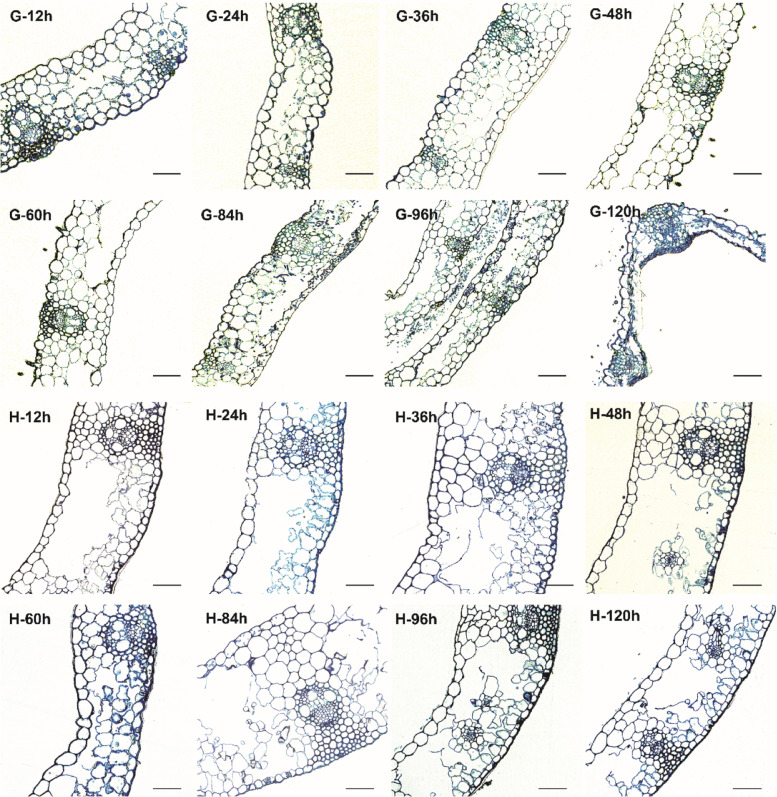
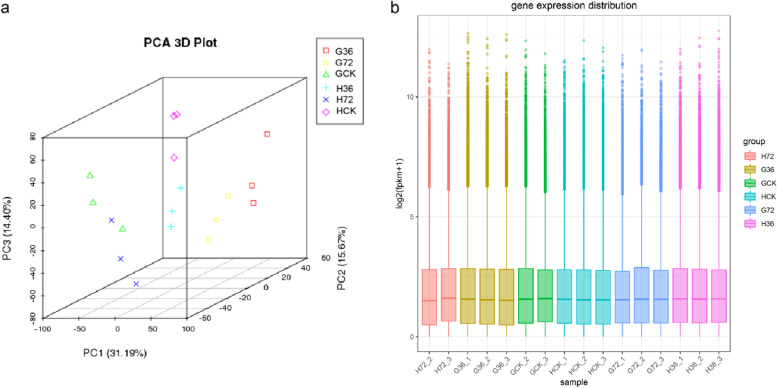
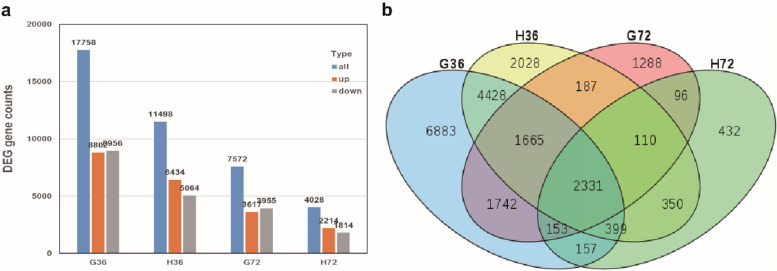
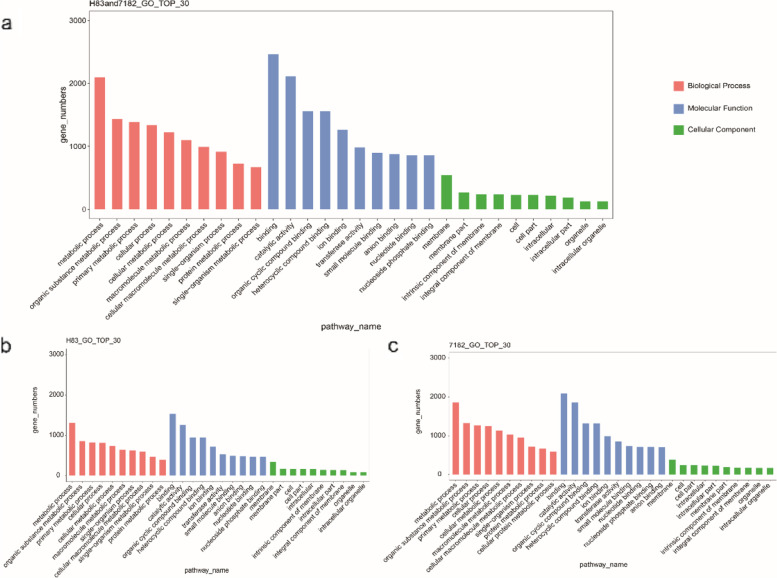
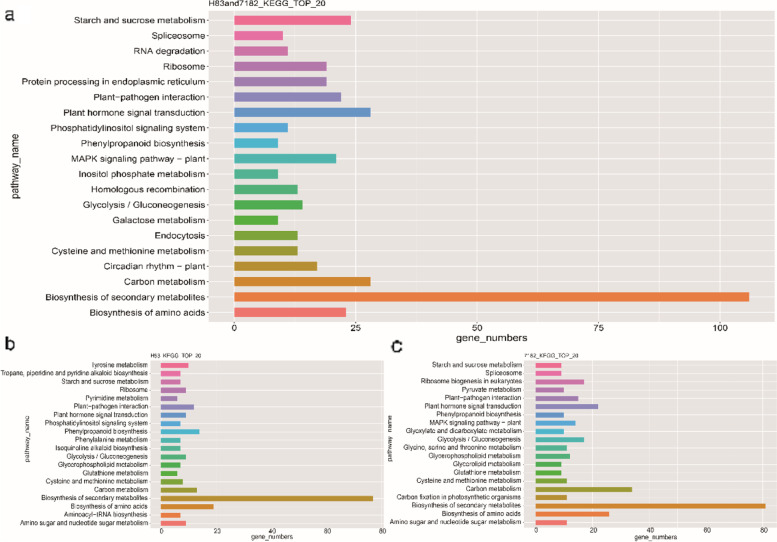
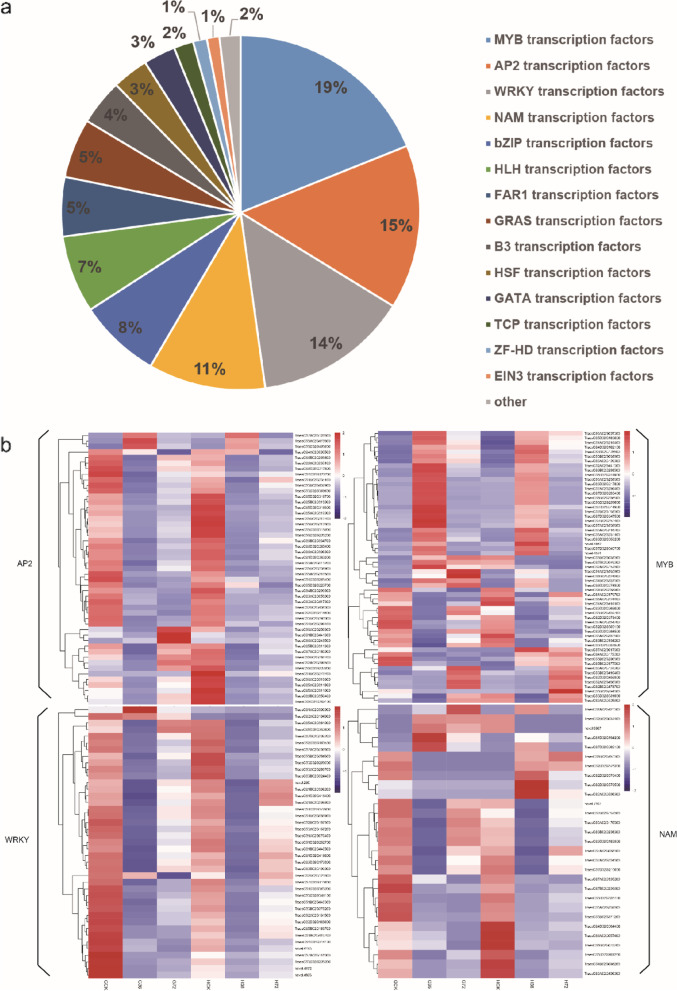
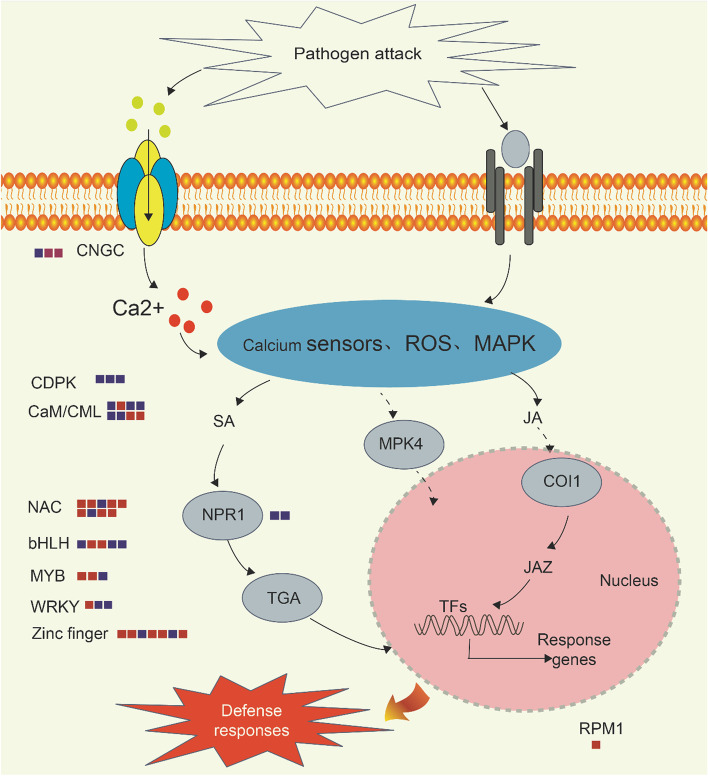
The cytological observation showed that the growth of Rhizoctonia cerealis on the surface and its expansion inside the leaf sheath tissue were more rapid in the susceptible material. According to the transcriptome sequencing results, a total of 88685 genes were identified in both materials, including 20156 differentially expressed genes (DEGs) of which 12087 was upregulated genes and 8069 was downregulated genes. At 36 h post-inoculation, compared with the uninfected control, 11498 DEGs were identified in resistant materials, with 5064 downregulated genes and 6434 upregulated genes, and 13058 genes were detected in susceptible materials, with 6759 downregulated genes and 6299 upregulated genes. At 72 h post-inoculation, compared with the uninfected control, 6578 DEGs were detected in resistant materials, with 2991 downregulated genes and 3587 upregulated genes, and 7324 genes were detected in susceptible materials, with 4119 downregulated genes and 3205 upregulated genes. Functional annotation and enrichment analysis showed that the main pathways enriched for the DEGs included biosynthesis of secondary metabolites, carbon metabolism, plant hormone signal transduction, and plant-pathogen interaction. In particular, phenylpropane biosynthesis pathway is specifically activated in resistant variety H83 after infection. Many DEGs also belonged to the MYB, AP2, NAC, and WRKY transcription factor families.
Thus, we suggest that the normal functioning of plant signaling pathways and differences in the expression of key genes and transcription factors in some important metabolic pathways may be important for defending wheat against sheath blight. These findings may facilitate further exploration of the sheath blight resistance mechanism in wheat and the cloning of related genes.
茎基腐病是一种由立枯丝核菌引起的重要病害,影响全球小麦产量。尚未发现对茎基腐病具有高抗性或免疫力的小麦品种。了解茎基腐病的抗性机制对于控制该病害至关重要。本研究通过分析中感品种 7182 和中抗品种 H83 受立枯丝核菌侵染后的细胞学变化和转录组,研究了小麦对立枯丝核菌的响应。
细胞学观察表明,在感病材料中,立枯丝核菌在表面的生长及其在叶鞘组织内的扩展更为迅速。根据转录组测序结果,在两种材料中共鉴定出 88685 个基因,其中 20156 个差异表达基因(DEGs),其中 12087 个上调基因和 8069 个下调基因。在接种后 36 h,与未感染对照相比,在抗性材料中鉴定出 11498 个 DEGs,其中 5064 个下调基因和 6434 个上调基因,在感病材料中检测到 13058 个基因,其中 6759 个下调基因和 6299 个上调基因。在接种后 72 h,与未感染对照相比,在抗性材料中检测到 6578 个 DEGs,其中 2991 个下调基因和 3587 个上调基因,在感病材料中检测到 7324 个基因,其中 4119 个下调基因和 3205 个上调基因。功能注释和富集分析表明,DEGs 主要富集的途径包括次生代谢物的生物合成、碳代谢、植物激素信号转导和植物-病原体相互作用。特别是,苯丙烷生物合成途径在感染后在抗性品种 H83 中特异性激活。许多 DEGs 还属于 MYB、AP2、NAC 和 WRKY 转录因子家族。
因此,我们认为植物信号通路的正常功能以及一些重要代谢途径中关键基因和转录因子表达的差异可能对抗御小麦茎基腐病至关重要。这些发现可能有助于进一步探索小麦茎基腐病的抗性机制和相关基因的克隆。