Bioproductivity Informatics Research Team, RIKEN Center for Sustainable Resource Science, 1-7-22 Suehiro-cho, Tsurumi, Yokohama, 230-0045, Japan.
Kihara Institute for Biological Research, Yokohama City University, 641-12 Maioka-cho, Totsuka, Yokohama, 244-0813, Japan.
Plant J. 2020 Nov;104(4):995-1008. doi: 10.1111/tpj.14976. Epub 2020 Sep 19.
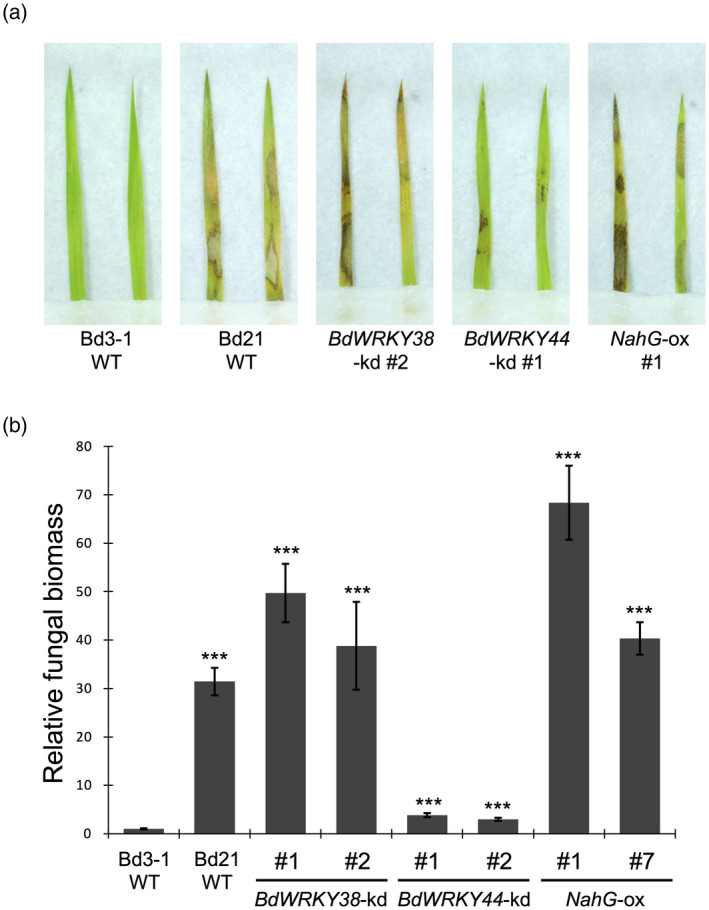
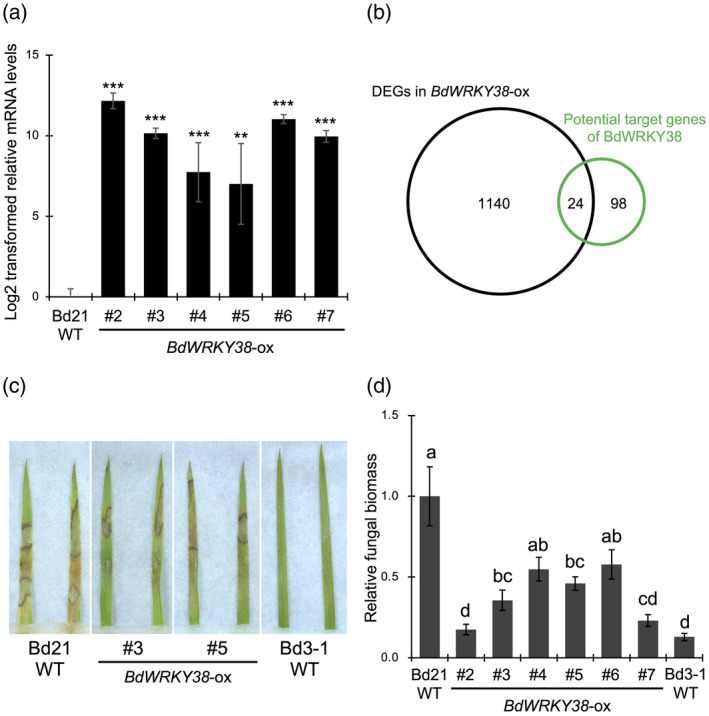
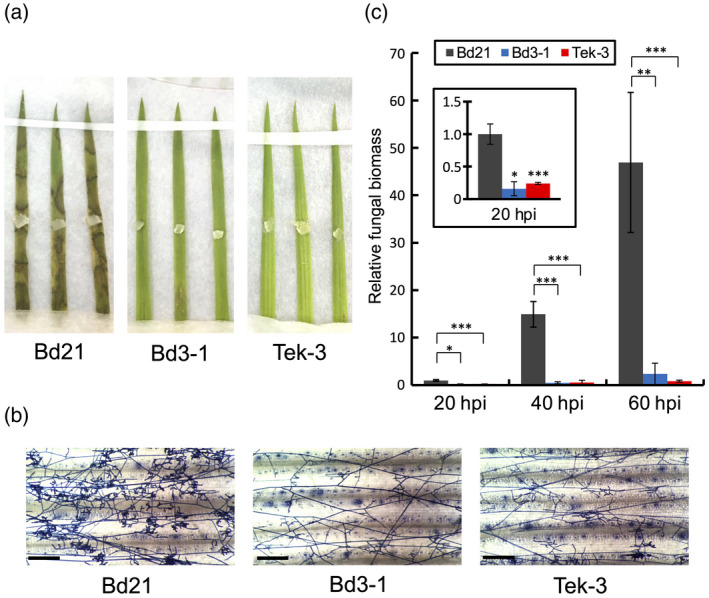
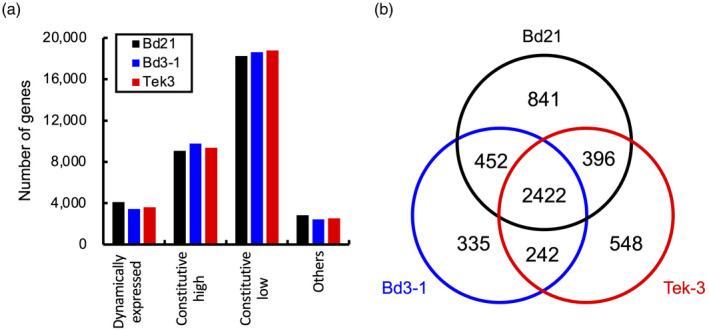
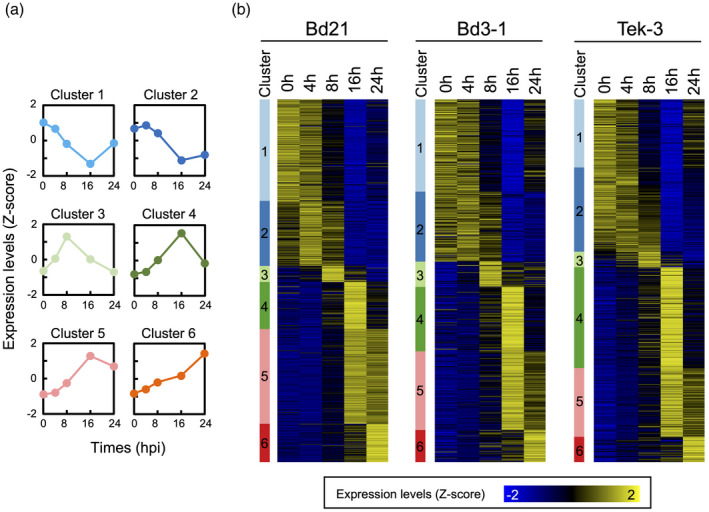
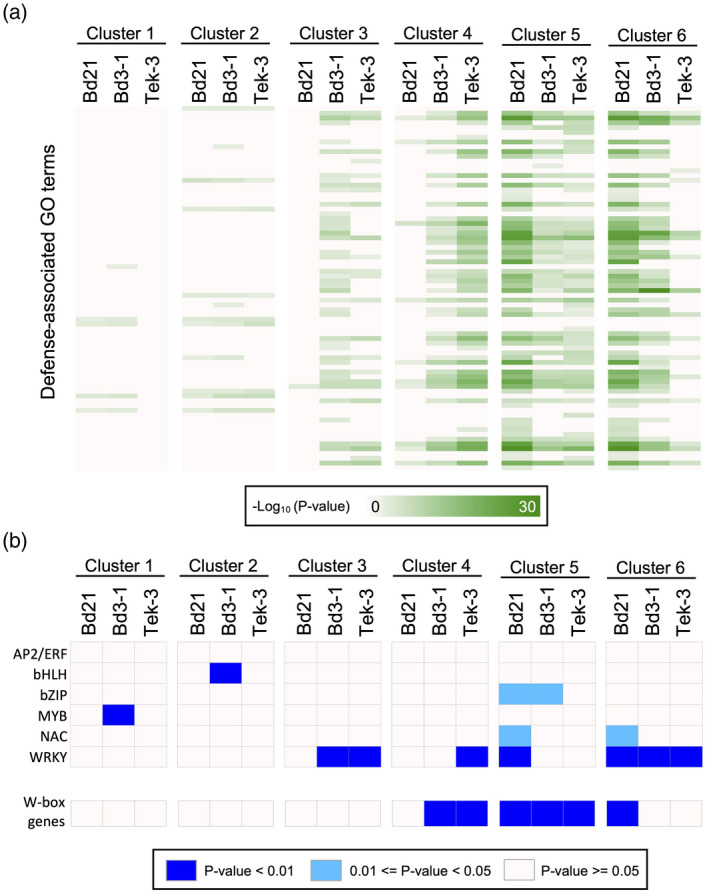
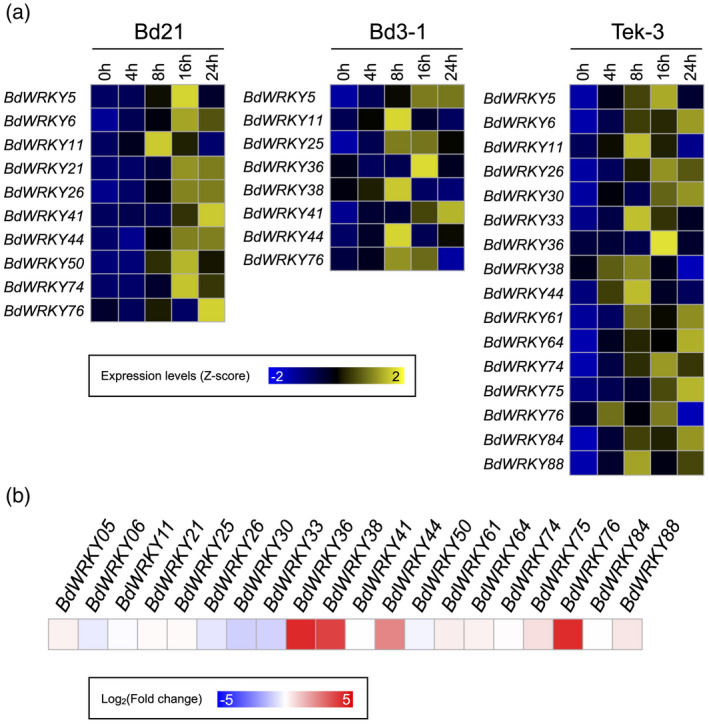
Rhizoctonia solani is a soil-borne necrotrophic fungus that causes sheath blight in grasses. The basal resistance of compatible interactions between R. solani and rice is known to be modulated by some WRKY transcription factors (TFs). However, genes and defense responses involved in incompatible interaction with R. solani remain unexplored, because no such interactions are known in any host plants. Recently, we demonstrated that Bd3-1, an accession of the model grass Brachypodium distachyon, is resistant to R. solani and, upon inoculation with the fungus, undergoes rapid induction of genes responsive to the phytohormone salicylic acid (SA) that encode the WRKY TFs BdWRKY38 and BdWRKY44. Here, we show that endogenous SA and these WRKY TFs positively regulate this accession-specific R. solani resistance. In contrast to a susceptible accession (Bd21), the infection process in the resistant accessions Bd3-1 and Tek-3 was suppressed at early stages before the development of fungal biomass and infection machinery. A comparative transcriptome analysis during pathogen infection revealed that putative WRKY-dependent defense genes were induced faster in the resistant accessions than in Bd21. A gene regulatory network (GRN) analysis based on the transcriptome dataset demonstrated that BdWRKY38 was a GRN hub connected to many target genes specifically in resistant accessions, whereas BdWRKY44 was shared in the GRNs of all three accessions. Moreover, overexpression of BdWRKY38 increased R. solani resistance in Bd21. Our findings demonstrate that these resistant accessions can activate an incompatible host response to R. solani, and BdWRKY38 regulates this response by mediating SA signaling.
立枯丝核菌是一种土壤传播的坏死真菌,可引起禾本科植物纹枯病。已知立枯丝核菌与水稻的亲和互作的基础抗性受一些 WRKY 转录因子(TFs)调节。然而,与立枯丝核菌的非亲和互作中涉及的基因和防御反应仍未被探索,因为在任何宿主植物中都不知道这种相互作用。最近,我们证明模式禾本科植物短柄草 Bd3-1 对立枯丝核菌具有抗性,并且在接种真菌后,会迅速诱导对植物激素水杨酸(SA)有反应的基因,这些基因编码 WRKY TF BdWRKY38 和 BdWRKY44。在这里,我们表明内源性 SA 和这些 WRKY TFs 正向调节这种特定于 accession 的立枯丝核菌抗性。与易感 accession(Bd21)相比,在真菌生物量和感染机制发展之前的早期阶段,抗性 accession(Bd3-1 和 Tek-3)的感染过程被抑制。在病原体感染过程中的比较转录组分析表明,在抗性 accession 中,假定的 WRKY 依赖性防御基因比在 Bd21 中更快地被诱导。基于转录组数据集的基因调控网络(GRN)分析表明,BdWRKY38 是一个 GRN 枢纽,与抗性 accession 中的许多靶基因特异性连接,而 BdWRKY44 在所有三个 accession 的 GRNs 中共享。此外,BdWRKY38 的过表达增加了 Bd21 对立枯丝核菌的抗性。我们的研究结果表明,这些抗性 accession 可以激活对立枯丝核菌的不相容宿主反应,并且 BdWRKY38 通过介导 SA 信号来调节这种反应。