Sharma Arvind, Pham Michael N, Reyes Jeremiah B, Chana Randeep, Yim Won C, Heu Chan C, Kim Donghun, Chaverra-Rodriguez Duverney, Rasgon Jason L, Harrell Robert A, Nuss Andrew B, Gulia-Nuss Monika
Department of Biochemistry and Molecular Biology, University of Nevada, Reno, NV 89557, USA.
Department of Entomology, The Center for Infectious Disease Dynamics, and the Huck Institutes of the Life Sciences, The Pennsylvania State University, University Park, PA 16802, USA.
iScience. 2022 Feb 15;25(3):103781. doi: 10.1016/j.isci.2022.103781. eCollection 2022 Mar 18.
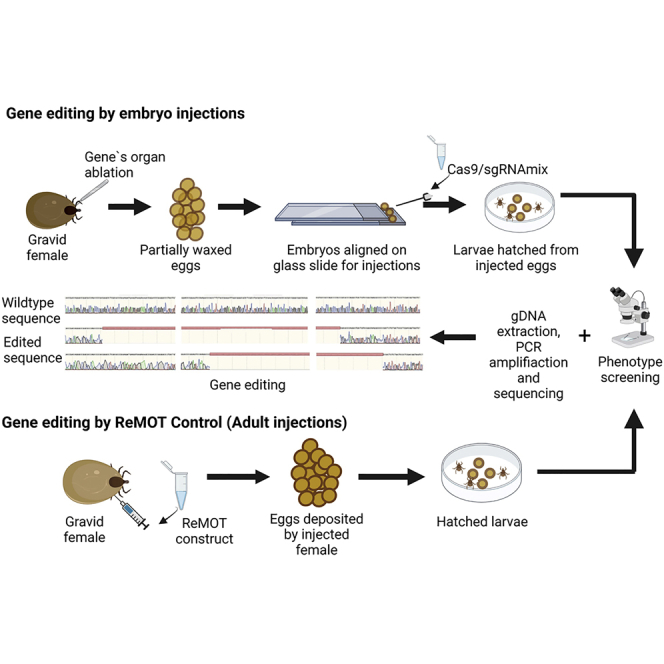
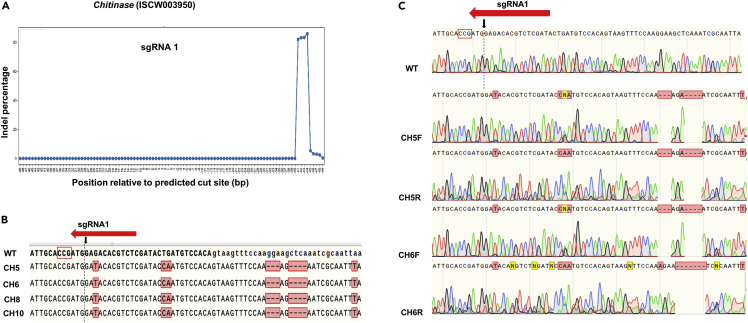
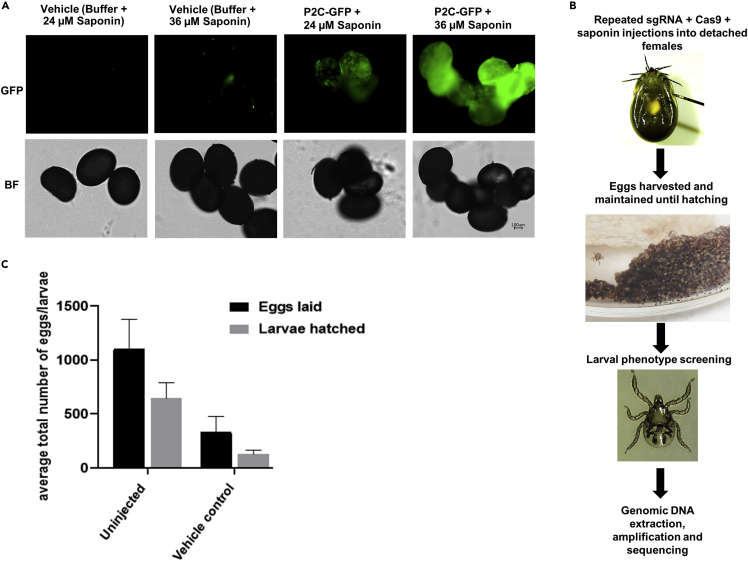
Despite their capacity to acquire and pass on an array of debilitating pathogens, research on ticks has lagged behind other arthropod vectors, such as mosquitoes, largely because of challenges in applying available genetic and molecular tools. CRISPR-Cas9 is transforming non-model organism research; however, successful gene editing has not yet been reported in ticks. Technical challenges for injecting tick embryos to attempt gene editing have further slowed research progress. Currently, no embryo injection protocol exists for any chelicerate species, including ticks. Herein, we report a successful embryo injection protocol for the black-legged tick, , and the use of this protocol for genome editing with CRISPR-Cas9. We also demonstrate that the ReMOT Control technique could be successfully used to generate genome mutations outside Insecta. Our results provide innovative tools to the tick research community that are essential for advancing our understanding of the molecular mechanisms governing pathogen transmission by tick vectors and the underlying biology of host-vector-pathogen interactions.
尽管蜱虫有能力获取并传播一系列使人衰弱的病原体,但对蜱虫的研究却落后于其他节肢动物传播媒介,如蚊子,这主要是由于应用现有遗传和分子工具存在挑战。CRISPR-Cas9正在改变非模式生物的研究;然而,蜱虫中尚未有成功进行基因编辑的报道。注射蜱虫胚胎以尝试基因编辑的技术挑战进一步减缓了研究进展。目前,包括蜱虫在内的任何螯肢动物物种都没有胚胎注射方案。在此,我们报告了一种成功的黑腿蜱胚胎注射方案,以及使用该方案通过CRISPR-Cas9进行基因组编辑的情况。我们还证明,ReMOT Control技术可成功用于在昆虫纲之外产生基因组突变。我们的结果为蜱虫研究界提供了创新工具,这些工具对于增进我们对蜱虫传播媒介传播病原体的分子机制以及宿主-媒介-病原体相互作用的基础生物学的理解至关重要。