Department of Mathematical Demography and Statistics, International Institute for Population Studies, Mumbai, India.
BMC Womens Health. 2022 May 10;22(1):151. doi: 10.1186/s12905-022-01736-8.
Contraceptive knowledge and use has been an emerging topic of interest in adolescents in Asia. This study quantified the contribution of the socioeconomic determinants of inequality in contraceptive use among currently married female adolescents (15-24) in four south Asian countries: India, Bangladesh, Nepal and Pakistan.
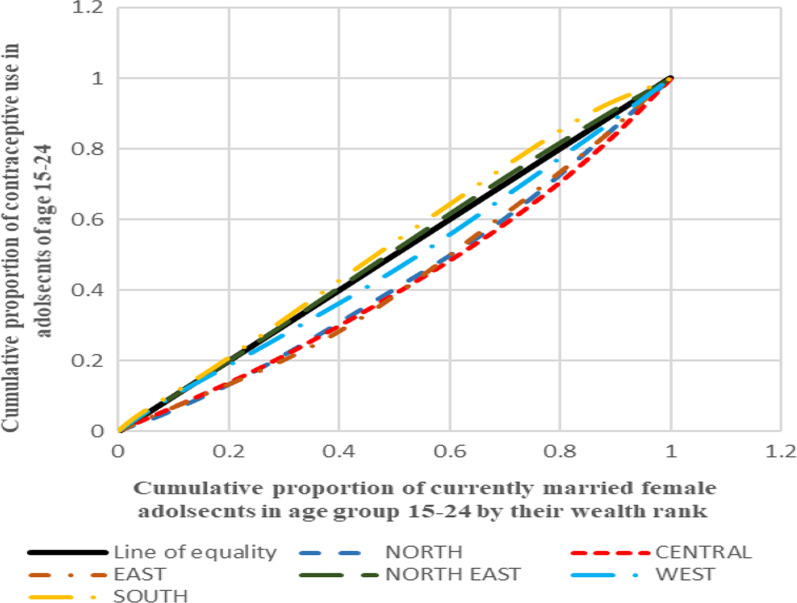
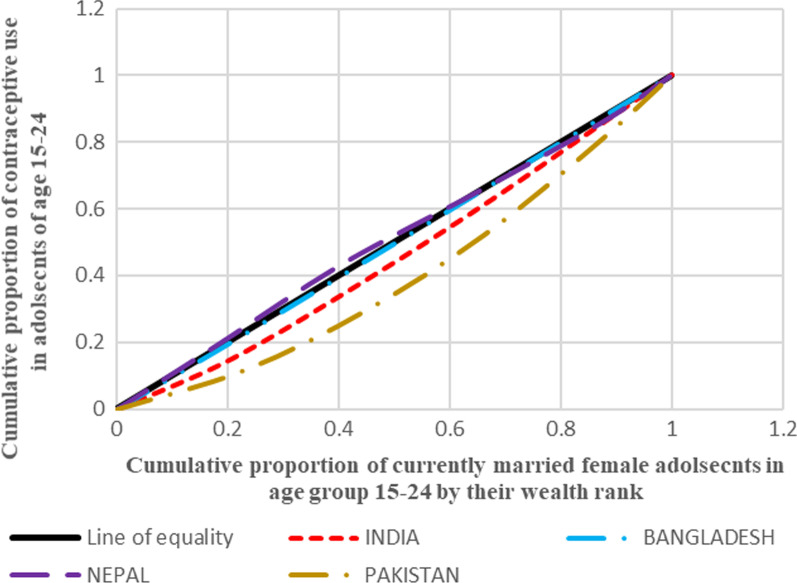
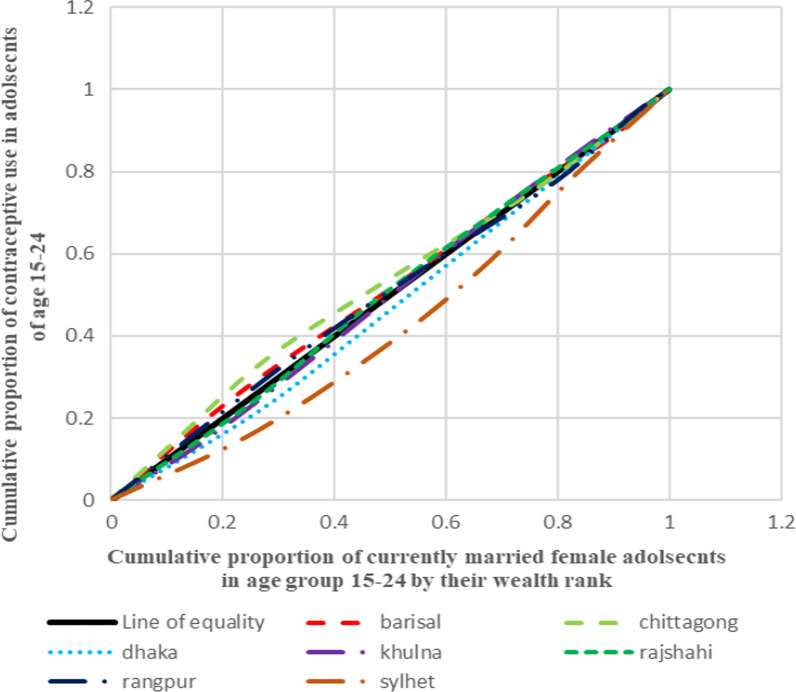
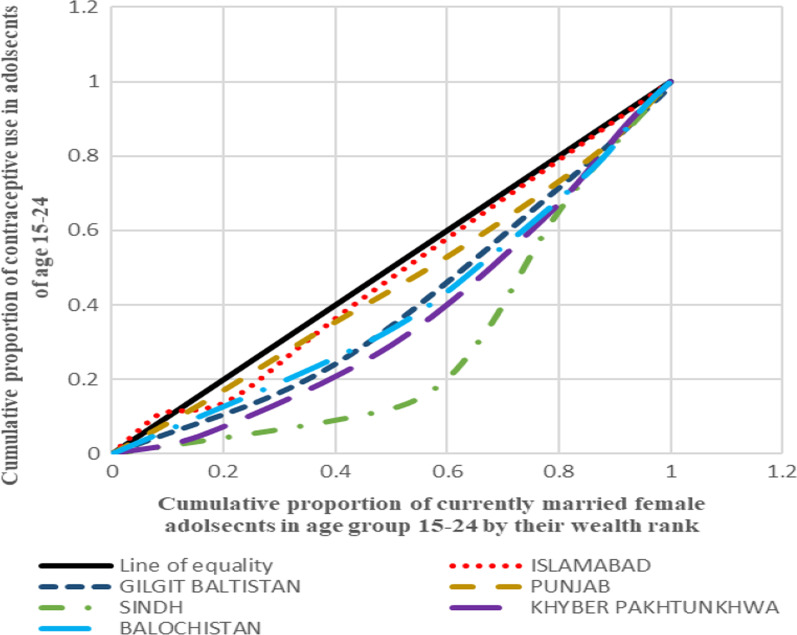
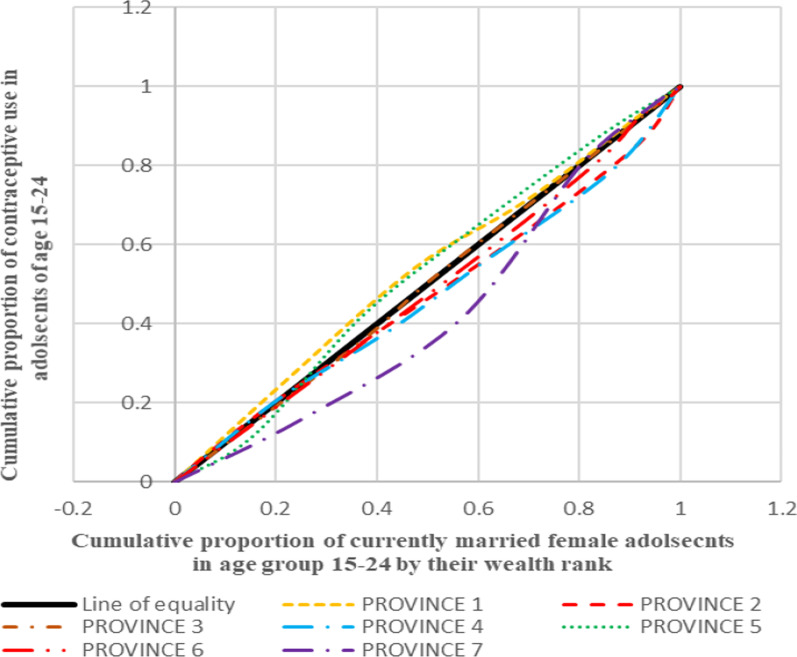
The data of Demographic Health Survey (DHS) for four South Asian countries, i.e. India (NFHS 2015-16), Nepal (DHS 2016), Bangladesh (DHS 2014) and Pakistan (DHS 2012-2013) has been used for examining the contraceptive use and inherent socioeconomic inequality. After employing logistic regression, concentration curves based on decomposition analysis have been made to analyse the socioeconomic inequality.
The results reveal that the use of contraception among female adolescents remains low and factors like education, employment, having one or more children, media exposure were positively associated with it. In terms of socioeconomic inequality, a significant amount of variation has been observed across the countries. In India, poor economic status (95.23%), illiteracy (51.29%) and rural residence (23.06%) contributed maximum in explaining the socioeconomic inequality in contraceptive use among female adolescents. For Bangladesh, the largest contributors to inequalities were rural residence (260%), illiteracy (146.67%) while birth order 3 + (- 173.33%) contributed negatively. Illiteracy (50%), poor economic status (47.83%) and rural residence (16.30%) contributed maximum to the inequalities in contraceptive use in Pakistan while birth order 3 + (- 9.78%) contributed negatively. In Nepal, the important operators of inequalities were unemployment (105.26%), birth order 3 + (52.63%) and poor economic status (47.37%), while rural residence contributed negatively (- 63.16%) to inequalities in contraceptive use.
Using a cross country perspective, this study presents an socioeconomic inequality analysis in contraceptive use and the important factors involved in the same. Since the factors contributing to inequalities in contraceptive use vary across countries, there is a need to imply country-specific initiatives which will look after the special needs of this age-group.
避孕知识和使用在亚洲青少年中是一个新兴的研究课题。本研究量化了四个南亚国家(印度、孟加拉国、尼泊尔和巴基斯坦)目前已婚青少年(15-24 岁)中避孕使用的社会经济决定因素不平等的程度。
本研究使用了来自四个南亚国家的人口与健康调查(DHS)的数据,即印度(NFHS 2015-16)、尼泊尔(DHS 2016)、孟加拉国(DHS 2014)和巴基斯坦(DHS 2012-2013),以检查避孕使用情况和内在的社会经济不平等。在使用逻辑回归后,我们根据分解分析制作了集中曲线,以分析社会经济不平等。
结果表明,青少年女性的避孕使用率仍然较低,而教育、就业、已有一个或多个孩子、媒体接触等因素与之呈正相关。就社会经济不平等而言,各国之间存在着显著的差异。在印度,贫困经济状况(95.23%)、文盲(51.29%)和农村居住(23.06%)对解释青少年女性避孕使用中的社会经济不平等做出了最大贡献。对于孟加拉国,不平等的最大贡献因素是农村居住(260%)、文盲(146.67%),而出生顺序 3+(-173.33%)则呈负贡献。文盲(50%)、贫困经济状况(47.83%)和农村居住(16.30%)对巴基斯坦避孕使用中的不平等做出了最大贡献,而出生顺序 3+(-9.78%)则呈负贡献。在尼泊尔,不平等的重要因素是失业(105.26%)、出生顺序 3+(52.63%)和贫困经济状况(47.37%),而农村居住则对避孕使用中的不平等做出了负贡献(-63.16%)。
本研究从跨国角度展示了避孕使用的社会经济不平等分析以及其中涉及的重要因素。由于导致避孕使用不平等的因素在各国之间存在差异,因此需要实施针对具体国家的举措,以满足这一年龄组的特殊需求。