Zhang Kai, Arranja Alexandra, Chen Hongyu, Mytnyk Serhii, Wang Yiming, Oldenhof Sander, van Esch Jan H, Mendes Eduardo
Advanced Soft Matter Group, Department of Chemical Engineering, Delft University of Technology Delft 2629 HZ The Netherlands
Department of Radiology and Nuclear Medicine, University Medical Center Utrecht Utrecht 3584 CX The Netherlands.
RSC Adv. 2018 Jun 13;8(39):21777-21785. doi: 10.1039/c8ra03527j.
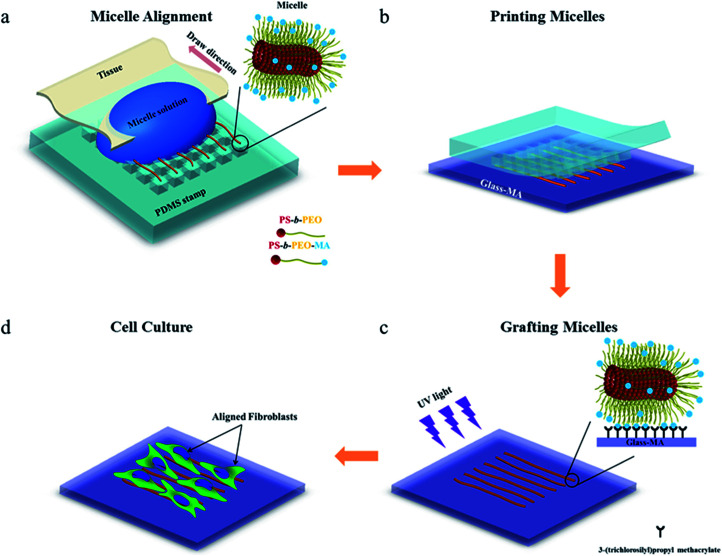
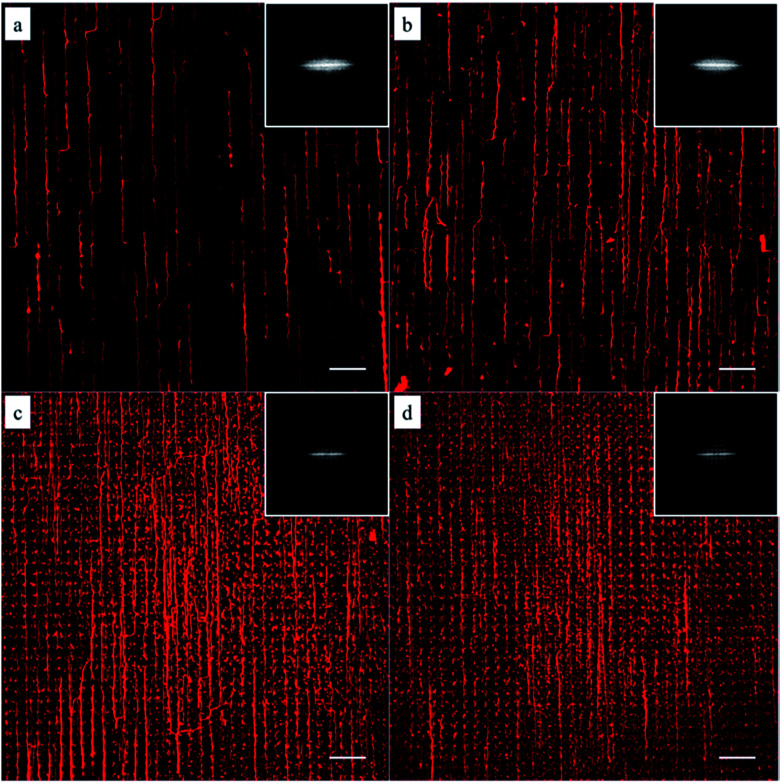
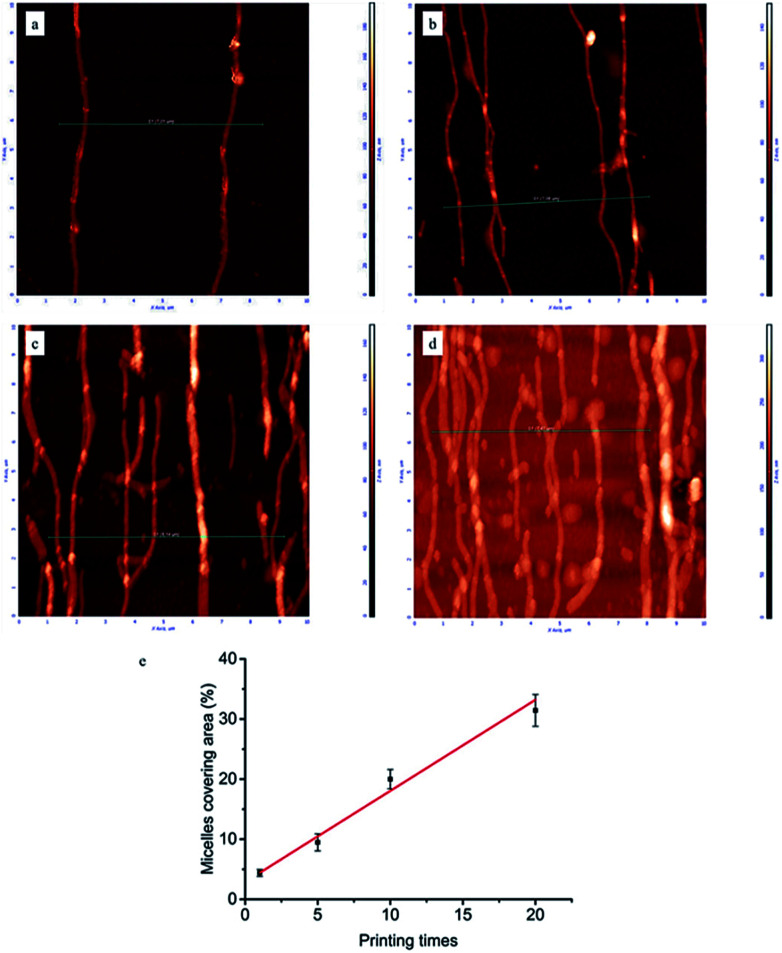
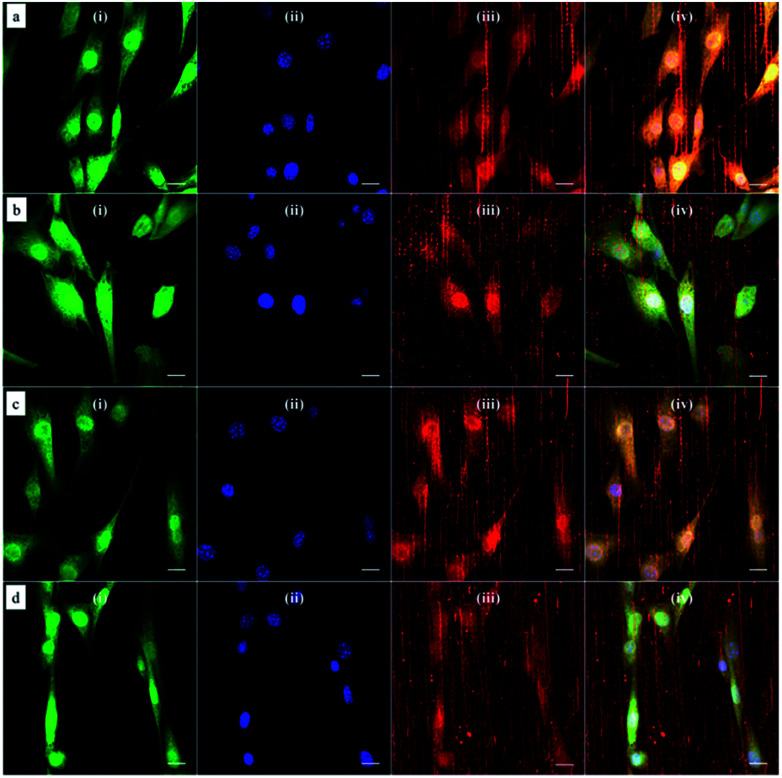
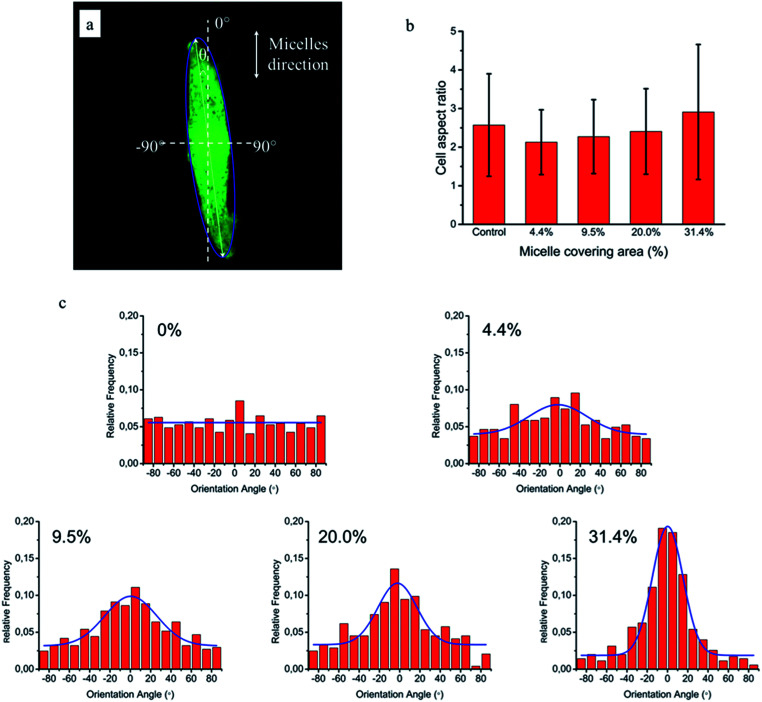
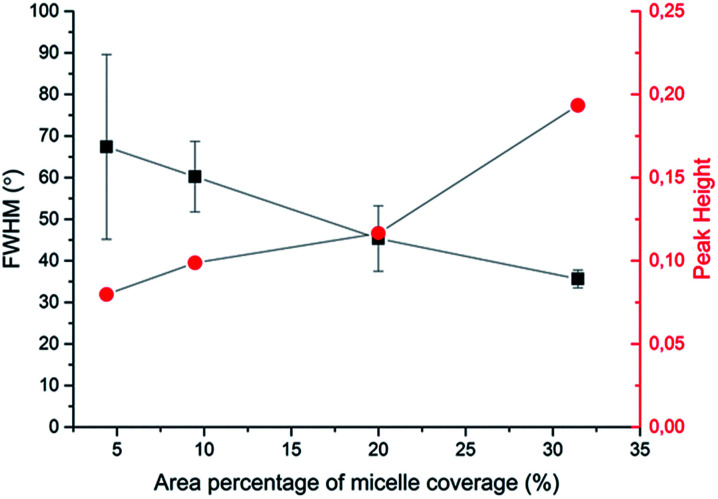
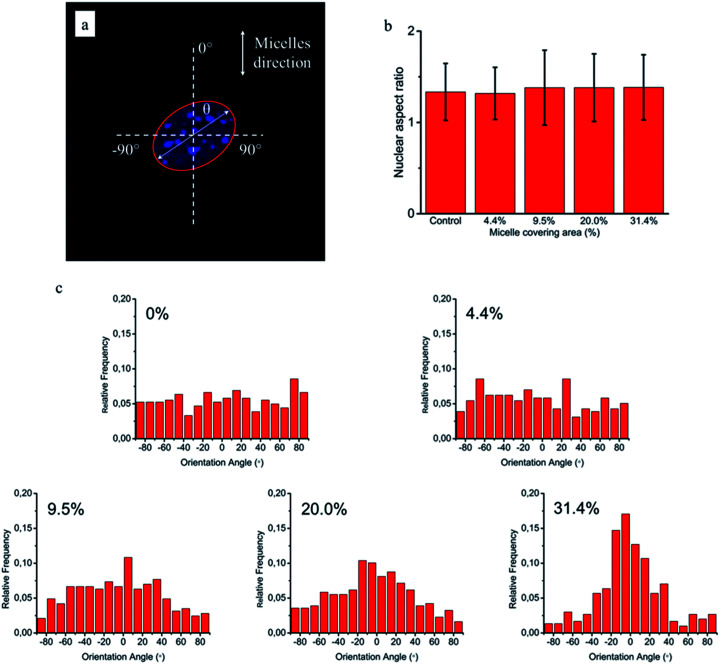
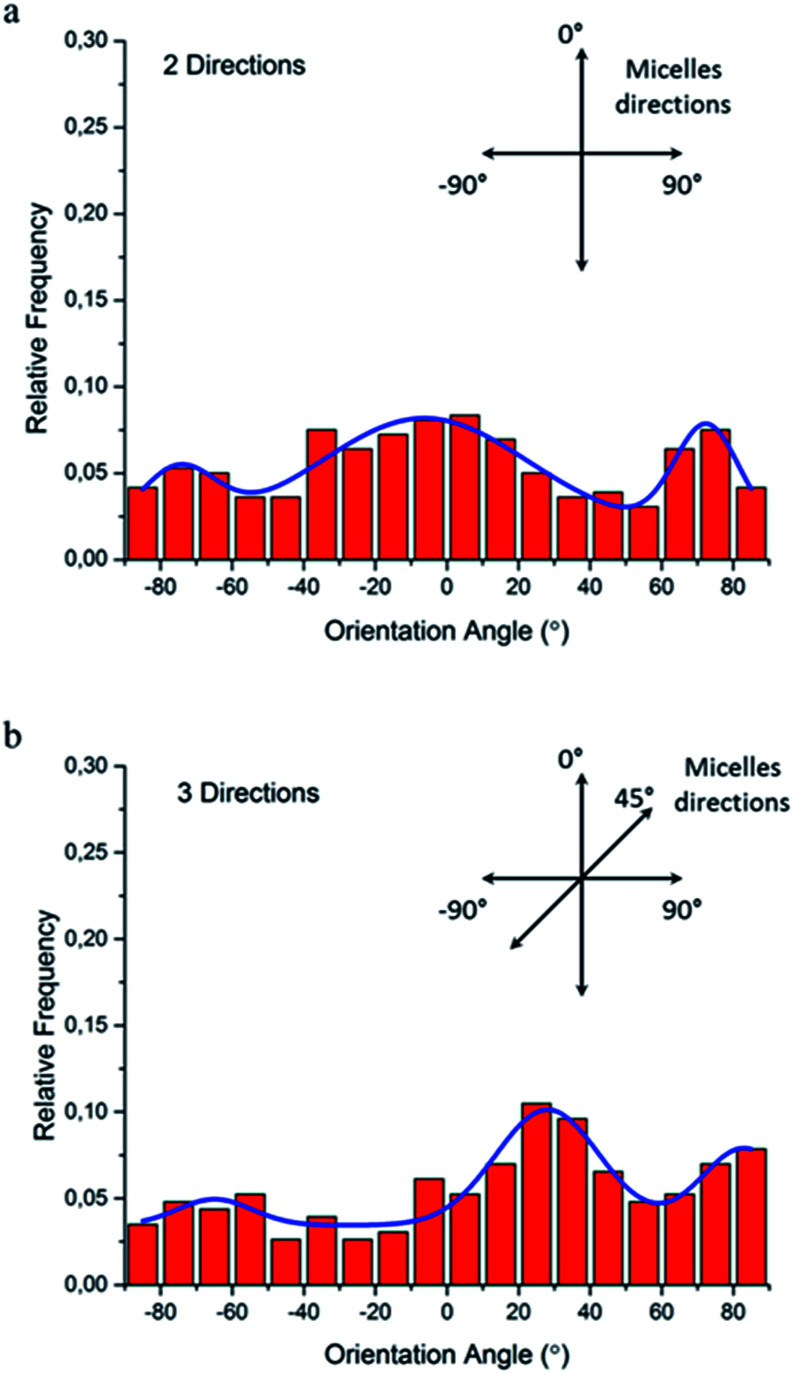
The last decade has witnessed great progress in understanding and manipulating self-assembly of block copolymers in solution. A wide variety of micellar structures can be created and many promising applications in bioscience have been reported. In particular, nano-fibrous micelles provide a great platform to mimic the filamentous structure of native extracellular matrix (ECM). However, the evaluation of this kind of filomicellar system with potential use in tissue engineering is virtually unexplored. The question behind it, such as if the block copolymer nano-fibrous micelles can regulate cellular response, has lingered for many years because of the difficulties in preparation and 3D manipulation of these tiny objects. Here, by using a combination approach of self-assembly of block copolymers and soft lithography, we establish a novel and unique nano-fibrous 2D platform of organized micelles and demonstrate that patterned micelles enable control over the cellular alignment behavior. The area density and orientation of fibrous micelles determine the alignment degree and directionality of cells, respectively. Furthermore, when cells were cultured on multi-directionally aligned micelles, a competitive response was observed. Due to the virtually infinite possibilities of functionalization of the micelle corona, our work opens a new route to further mimic the native fibrous networks with artificial micelles containing various functionalities.
在过去十年中,人们对溶液中嵌段共聚物的自组装的理解和操控取得了巨大进展。可以创造出各种各样的胶束结构,并且已经报道了许多在生物科学领域有前景的应用。特别地,纳米纤维胶束提供了一个很好的平台来模拟天然细胞外基质(ECM)的丝状结构。然而,对于这种在组织工程中具有潜在用途的丝状胶束系统的评估实际上尚未得到探索。其背后的问题,比如嵌段共聚物纳米纤维胶束是否能调节细胞反应,由于制备和对这些微小物体进行三维操控的困难,已经存在多年。在这里,通过结合嵌段共聚物自组装和软光刻的方法,我们建立了一个新颖独特的有组织胶束的纳米纤维二维平台,并证明图案化胶束能够控制细胞的排列行为。纤维状胶束的面积密度和取向分别决定了细胞的排列程度和方向性。此外,当细胞在多方向排列的胶束上培养时,观察到了一种竞争反应。由于胶束冠层功能化的可能性几乎是无限的,我们的工作开辟了一条新途径,以进一步用含有各种功能的人工胶束模拟天然纤维网络。