Qin Qingdong, Wu Xian, Chen Liwei, Jiang Zhongshuai, Xu Yan
School of Civil Engineering, Southeast University Nanjing 210096 China
College of Biology and the Environment, Nanjing Forestry University Nanjing 210037 China.
RSC Adv. 2018 Jan 8;8(4):1744-1752. doi: 10.1039/c7ra12402c. eCollection 2018 Jan 5.
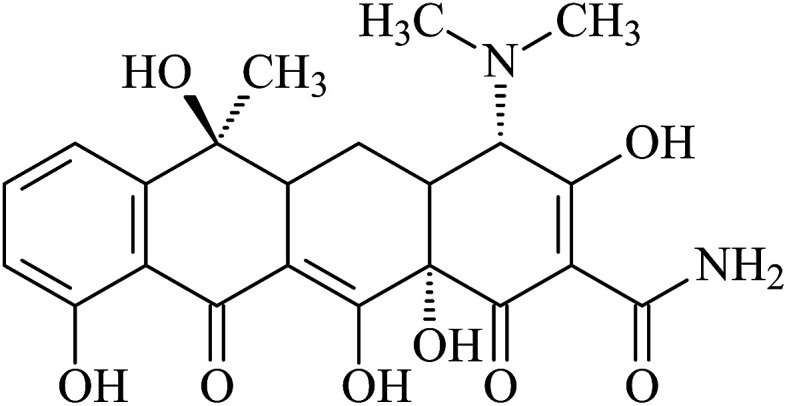
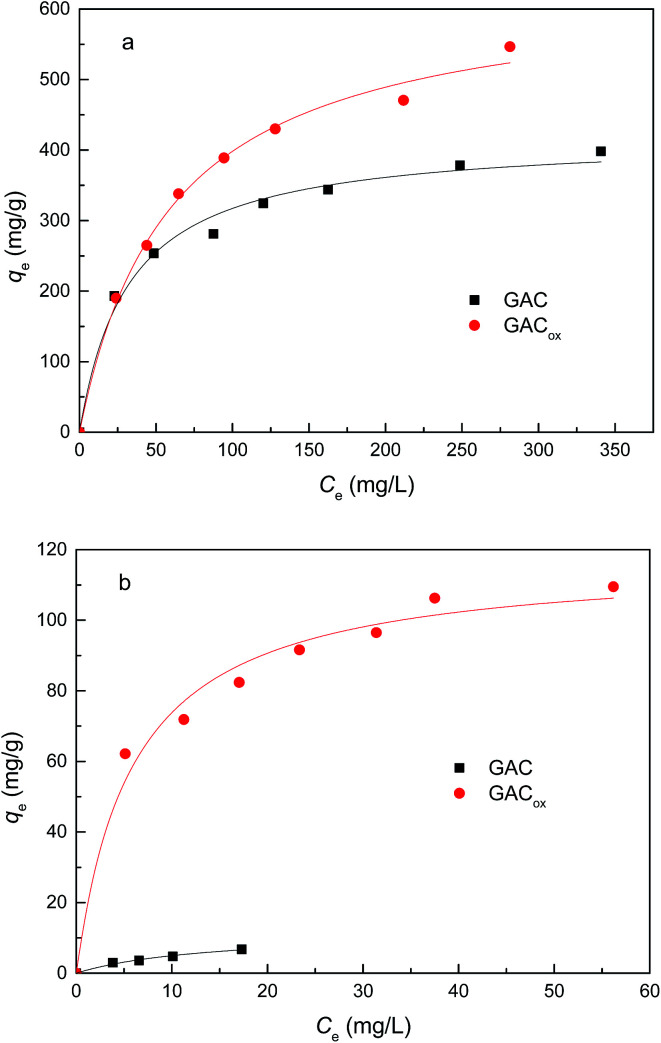
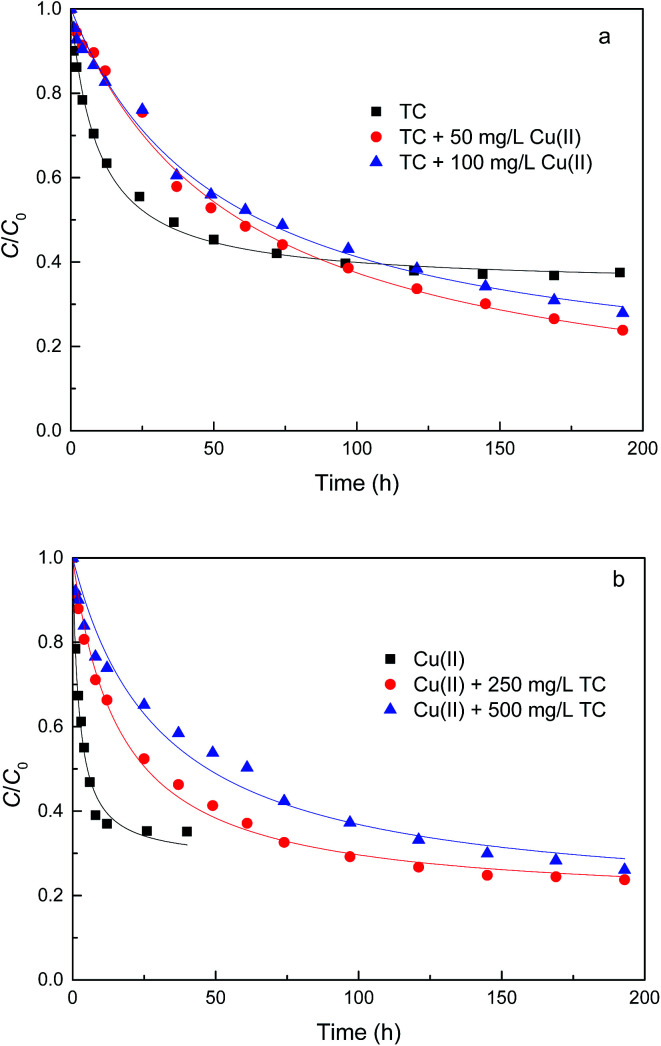
Co-contamination of antibiotics and heavy metals prevails in the environment. To overcome the obstacle of low metal uptake on activated carbon and to achieve simultaneous removal of tetracycline (TC) and Cu(ii) from water, coconut shell based granular activated carbon (GAC) treated with nitric acid was utilized. GAC property characterization showed that oxidation treatment distinctly decreased the surface area of GAC and significantly increased the content of oxygen containing functional groups. The oxidized GAC exhibited greater adsorption capacity for individual TC and Cu(ii). Kinetics studies demonstrated that although the overall removal rate of coexisting TC and Cu(ii) decreased, the ultimate removal efficiency was further enhanced in the binary system. The adsorption isotherms were well described by Langmuir and Freundlich models. Moreover, the maximum adsorption capacities of coexisting TC and Cu(ii) with oxidized GAC kept increasing within a pH range of 3.0-6.0, indicating an electrostatic repulsion mechanism as well as a competition for adsorption sites. Fourier transform infrared spectroscopy (FTIR) and X-ray photoelectron spectroscopy (XPS) analysis revealed that the enhanced removal of TC and Cu(ii) was very likely as a result of coadsorption by forming TC-Cu(ii) complexes bridging between the adsorbate and the adsorbent.
抗生素和重金属在环境中普遍存在共污染现象。为克服活性炭对金属吸附量低的障碍,并实现从水中同时去除四环素(TC)和铜(II),采用了经硝酸处理的椰壳基颗粒活性炭(GAC)。GAC性能表征表明,氧化处理显著降低了GAC的表面积,并显著增加了含氧官能团的含量。氧化后的GAC对单独的TC和铜(II)表现出更大的吸附容量。动力学研究表明,虽然共存的TC和铜(II)的总去除率降低,但在二元体系中最终去除效率进一步提高。吸附等温线可用Langmuir和Freundlich模型很好地描述。此外,在pH值为3.0 - 6.0范围内,氧化后的GAC对共存的TC和铜(II)的最大吸附容量持续增加,表明存在静电排斥机制以及对吸附位点的竞争。傅里叶变换红外光谱(FTIR)和X射线光电子能谱(XPS)分析表明,TC和铜(II)去除率的提高很可能是由于形成了吸附质与吸附剂之间桥连的TC - 铜(II)络合物而发生共吸附的结果。