Gao Fenglei, Wu Jing, Yao Yao, Zhang Yu, Liao Xianjiu, Geng Deqin, Tang Daoquan
Jiangsu Key Laboratory of New Drug Research and Clinical Pharmacy, School of Pharmacy, Xuzhou Medical University 221004 Xuzhou China
School of Pharmacy, Youjiang Medical University for Nationalities Baise 533000 China
RSC Adv. 2018 Aug 6;8(49):28161-28171. doi: 10.1039/c8ra05193c. eCollection 2018 Aug 2.
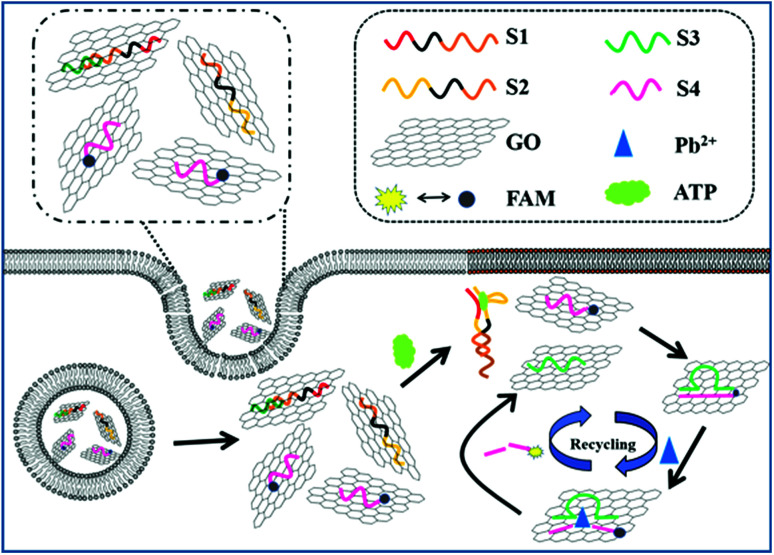
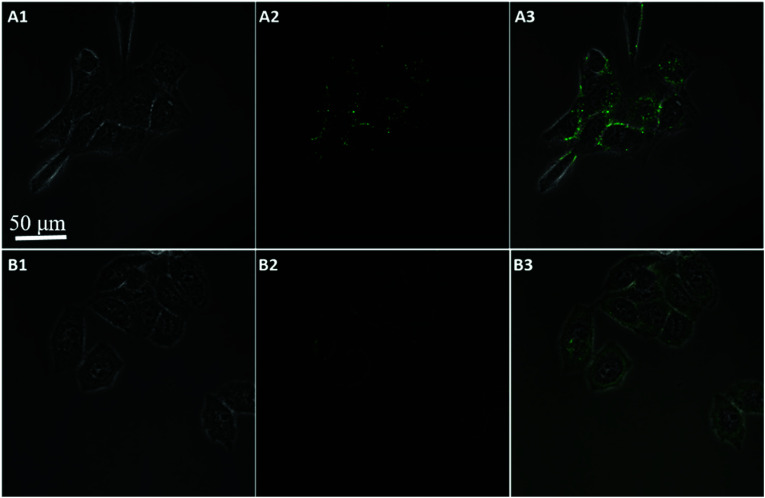
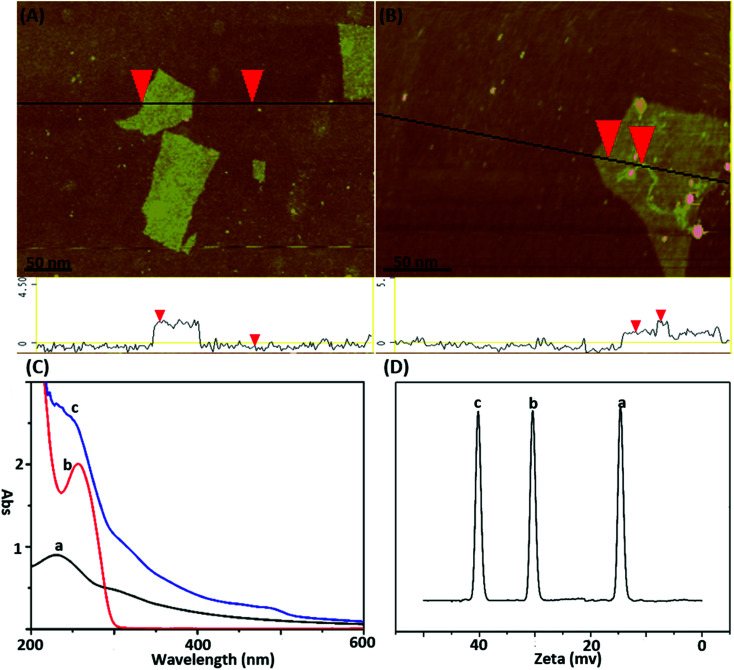
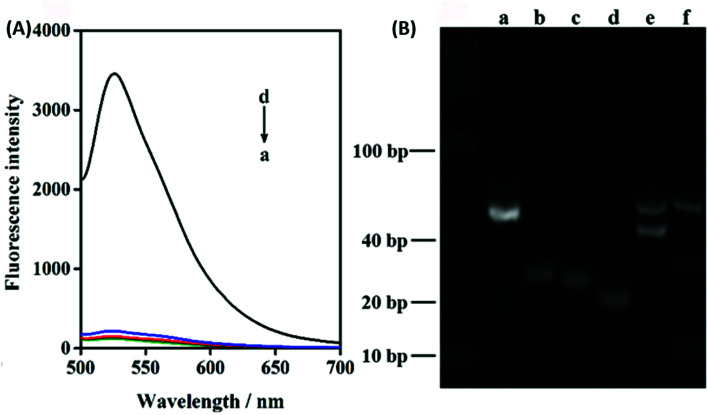
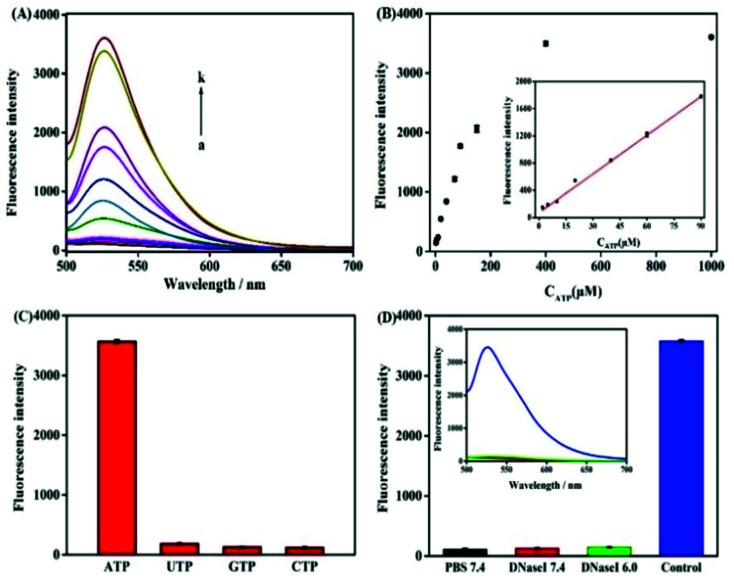
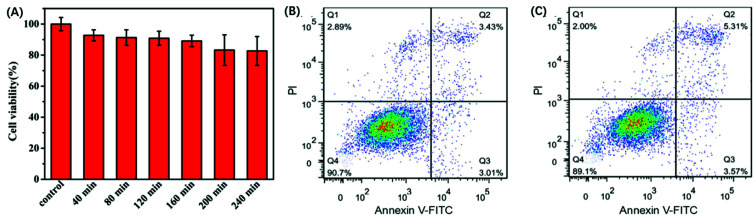
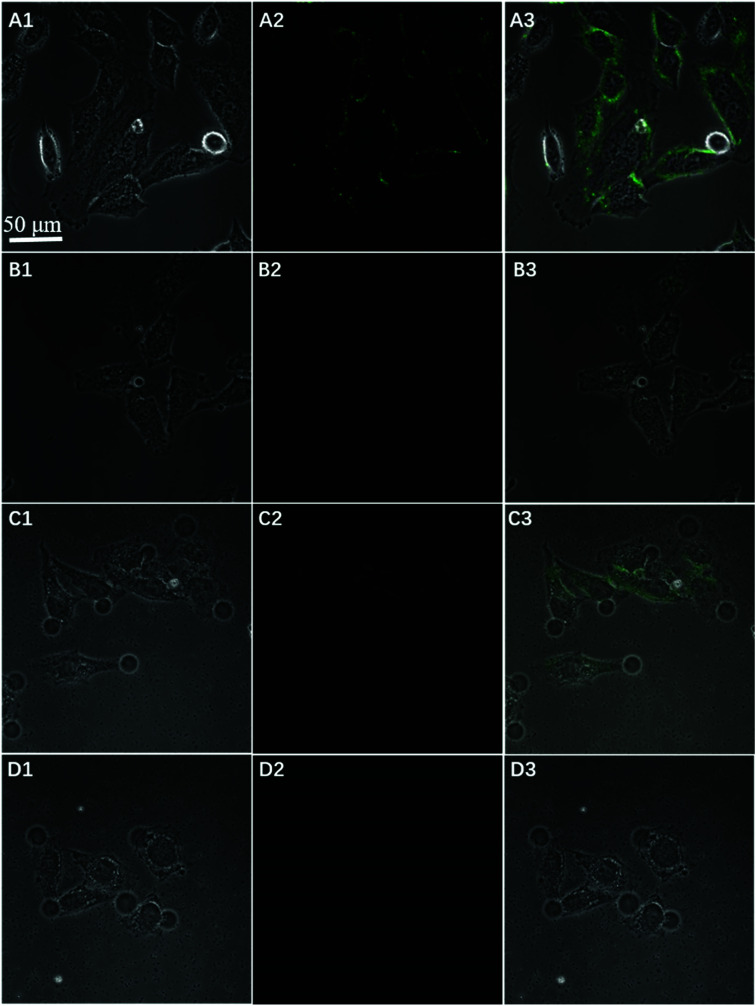
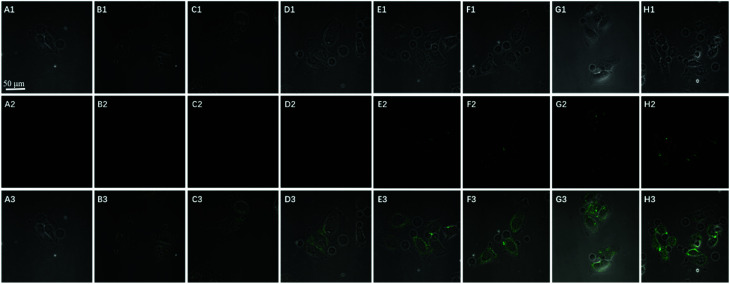
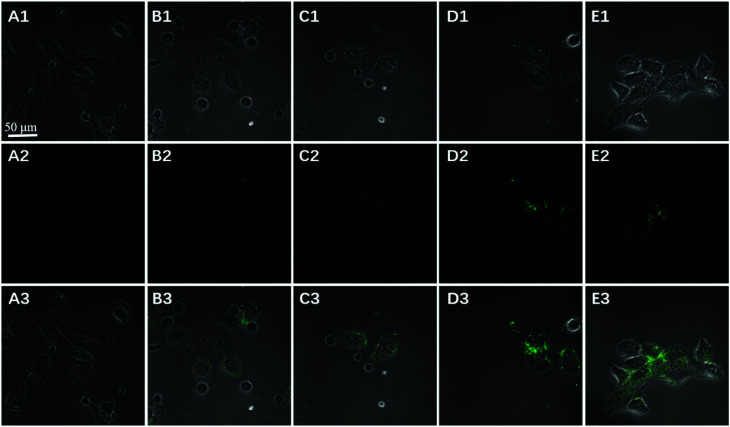
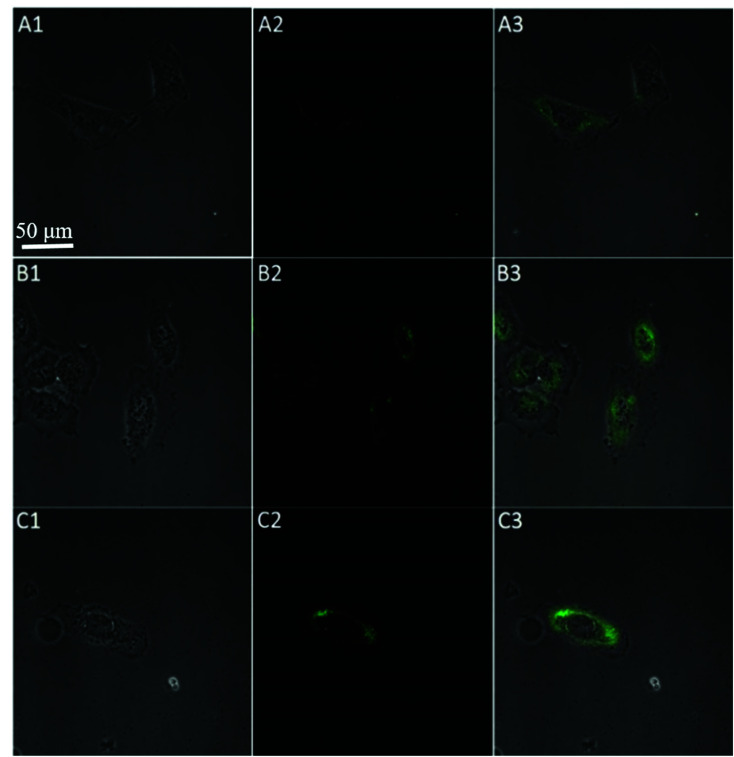
We developed a novel strategy for ATP detection and imaging in living cells based on integrating proximity hybridization-induced strand displacement and metal ion-dependent DNAzyme recycling amplification. Four DNA oligonucleotides were used in the sensing system including two aptamer probes, enzymatic sequences and FAM-linked substrate strands. Upon the addition of ATP, the proximity binding of two aptamers to ATP led to the release of the enzymatic sequences, which hybridized with the FAM-linked substrate strand on the graphene oxide (GO) surface to form the ion-dependent DNAzyme. Subsequent catalytic cleavage of the DNAzyme by the corresponding metal ions results in recycling of the enzymatic sequences and cyclic cleavage of the substrate strand, liberating many short FAM-linked oligonuleotide fragments separated from the GO surface, which results in fluorescence enhancement due to the weak affinity of the short FAM-linked oligonuleotide fragment to GO. The amount of produced short FAM-linked oligonuleotide fragments is positively related to the concentration of ATP. This means that one target binding could result in cleaving multiplex fluorophore labelled substrate strands, which provided effective signal amplification. The vivo studies suggested that the nanoprobe was efficiently delivered into living cells and worked for specific, high-contrast imaging of target ATP. More importantly, this target-responsive nanoscissor model is an important approach for intracellular amplified detection and imaging of various analytes by selecting appropriate affinity ligands.
我们基于整合邻近杂交诱导的链置换和金属离子依赖性脱氧核酶循环扩增,开发了一种用于活细胞中ATP检测和成像的新策略。传感系统中使用了四种DNA寡核苷酸,包括两个适体探针、酶序列和FAM连接的底物链。加入ATP后,两个适体与ATP的邻近结合导致酶序列的释放,该酶序列与氧化石墨烯(GO)表面上的FAM连接的底物链杂交形成离子依赖性脱氧核酶。随后,相应的金属离子对脱氧核酶的催化切割导致酶序列的循环和底物链的循环切割,释放出许多与GO表面分离的短FAM连接的寡核苷酸片段,由于短FAM连接的寡核苷酸片段与GO的弱亲和力,导致荧光增强。产生的短FAM连接的寡核苷酸片段的数量与ATP的浓度呈正相关。这意味着一个靶标结合可以导致切割多个荧光团标记的底物链,从而提供有效的信号放大。体内研究表明,该纳米探针能够有效地递送至活细胞中,并用于靶标ATP的特异性、高对比度成像。更重要的是,这种靶标响应性纳米剪刀模型是通过选择合适的亲和配体对细胞内各种分析物进行扩增检测和成像的重要方法。