Radhakrishnan K, Panneerselvam P
Department of Chemistry, SRM Institute of Science and Technology Kattankulathur-603 203 Tamil Nadu India
RSC Adv. 2018 Aug 29;8(53):30455-30467. doi: 10.1039/c8ra05861j. eCollection 2018 Aug 24.
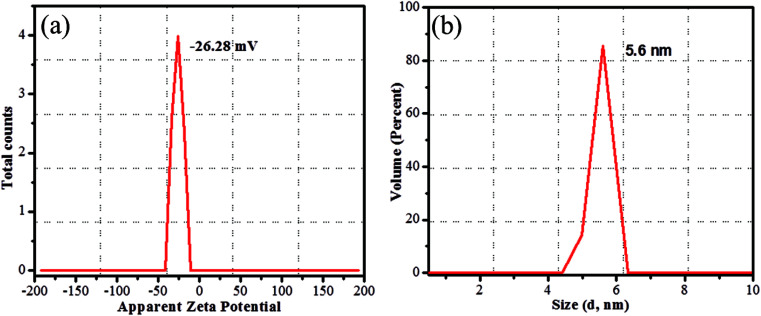
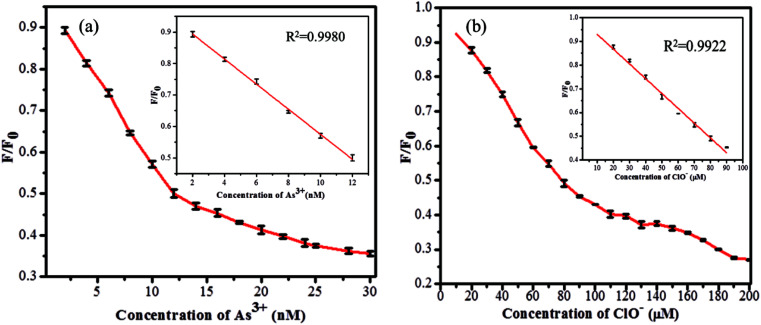
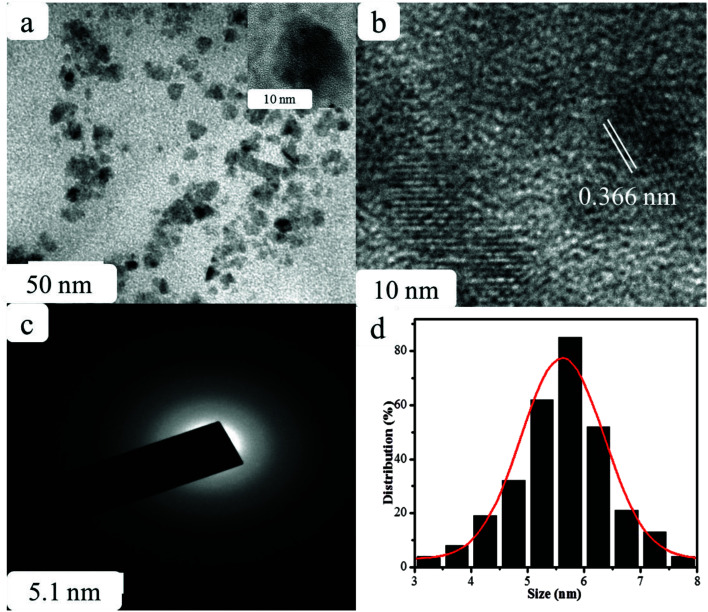
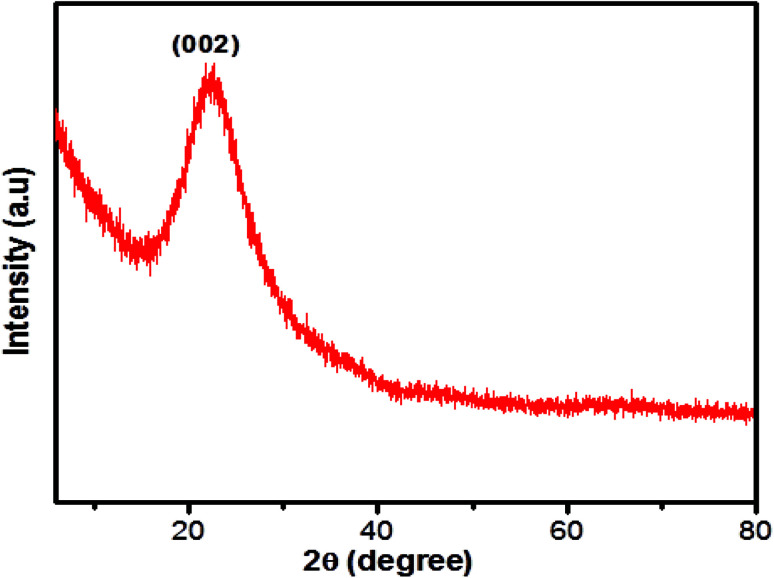
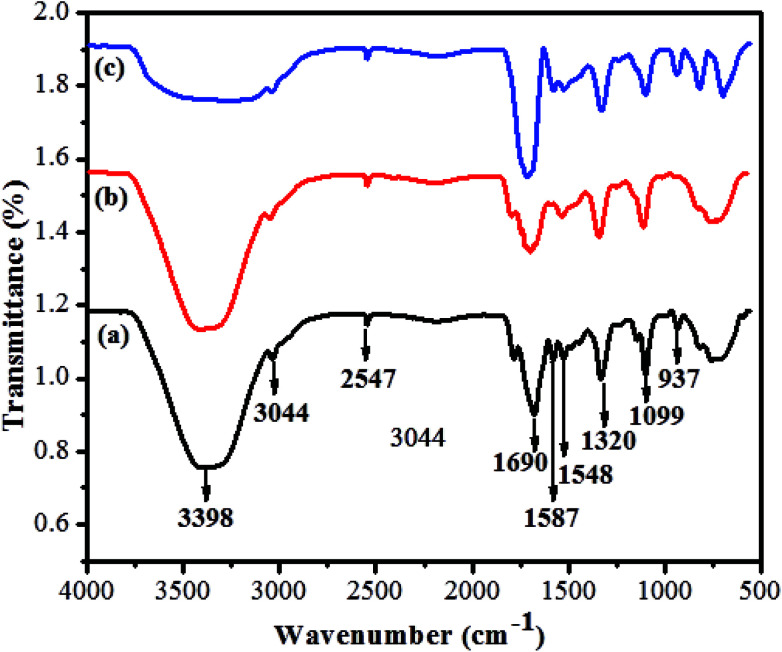
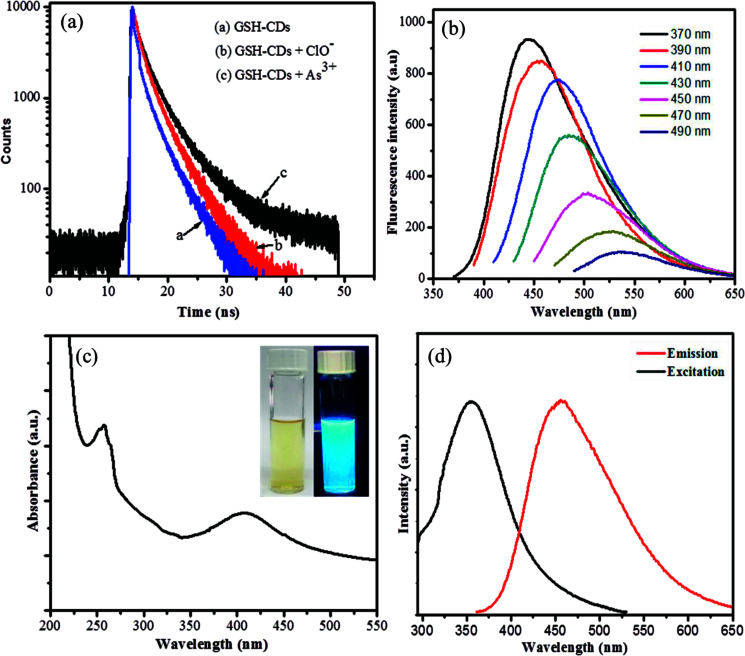
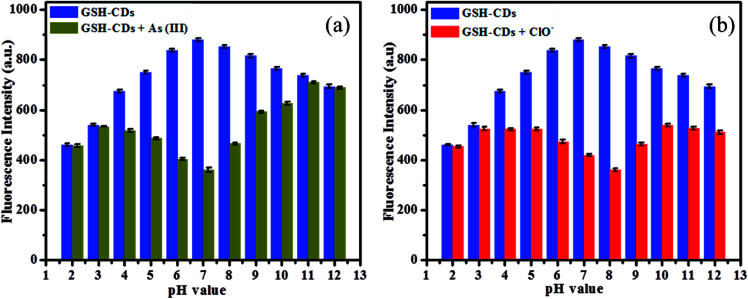
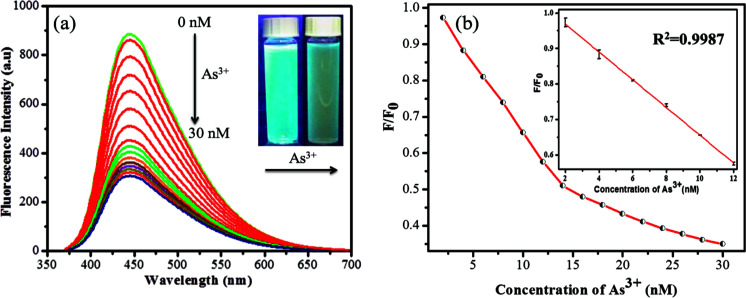
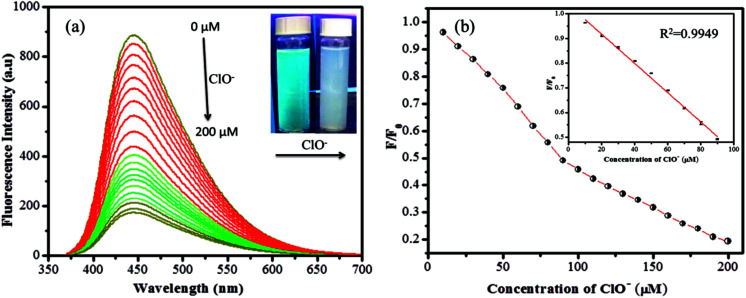
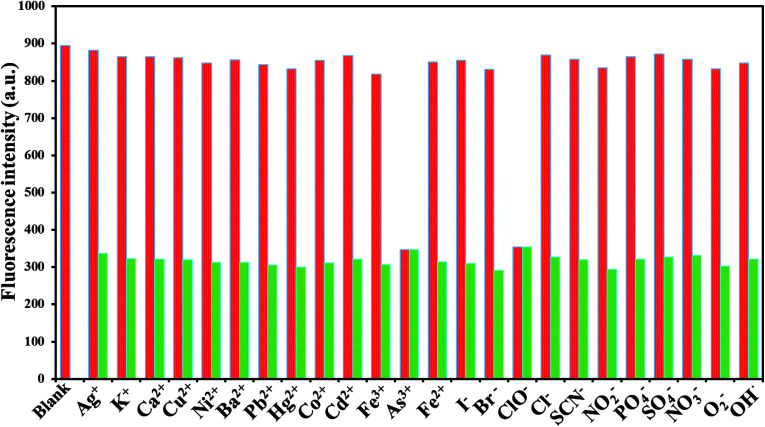
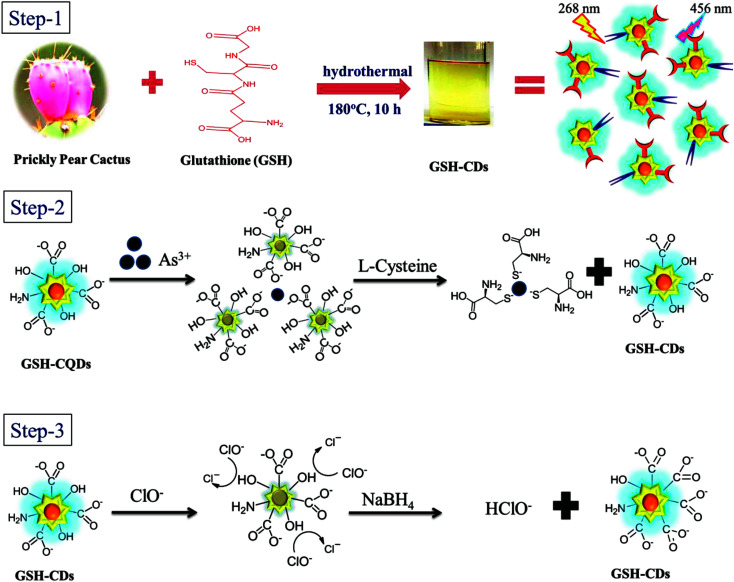
Efforts were made to develop a simple new approach for the green synthesis of surface-passivated carbon dots from edible prickly pear cactus fruit as the carbon source by a one-pot hydrothermal route. Glutathione (GSH) was passivated on the surface of the CDs to form a sensor probe, which exhibited excellent optical properties and water solubility. The prepared sensor was successfully characterized by UV-visible spectrophotometry, fluorescence spectrophotometry, Fourier transform infrared spectroscopy (FT-IR), X-ray diffraction (XRD), scanning electron microscopy (SEM), and transmission electron microscopy (TEM). The simple sensing platform developed by the GSH-CDs was highly sensitive and selective with a "turn-off" fluorescence response for the dual detection of As and ClO ions in drinking water. This sensing system exhibited effective quenching in the presence of As and ClO ions to display the formation of metal complexes and surface interaction with an oxygen functional group. The oxygen-rich GSH-CDs afforded a better selectivity for As/ClO ions over other competitive ions. The fluorescence quenching measurement quantified the concentration range as 2-12 nM and 10-90 μM with the lower detection limit of 2.3 nM and 0.016 μM for the detection of As and ClO ions, respectively. Further, we explored the potential applications of this simple, reliable, and cost-effective sensor for the detection of As/ClO ions in environmental samples for practical analysis.
人们致力于开发一种简单的新方法,通过一锅水热法,以可食用的仙人掌果实为碳源,绿色合成表面钝化的碳点。谷胱甘肽(GSH)在碳点表面进行钝化,形成一种传感器探针,该探针具有优异的光学性能和水溶性。通过紫外可见分光光度法、荧光分光光度法、傅里叶变换红外光谱(FT-IR)、X射线衍射(XRD)、扫描电子显微镜(SEM)和透射电子显微镜(TEM)对制备的传感器进行了成功表征。由GSH修饰的碳点构建的简单传感平台对饮用水中的As和ClO离子具有高灵敏度和选择性,呈现“关闭”荧光响应用于二者的同时检测。该传感系统在As和ClO离子存在下表现出有效的猝灭,显示出金属配合物的形成以及与含氧官能团的表面相互作用。富含氧的GSH修饰的碳点对As/ClO离子的选择性优于其他竞争性离子。荧光猝灭测量定量了As和ClO离子检测的浓度范围分别为2 - 12 nM和10 - 90 μM,检测下限分别为2.3 nM和0.016 μM。此外,我们探索了这种简单、可靠且经济高效的传感器在实际分析环境样品中As/ClO离子检测方面的潜在应用。