Li Mengxu, Zhang Jinlai, Bai Qiuyan, Fang Lixia, Song Hao, Cao Yingxiu
Frontier Science Center for Synthetic Biology and Key Laboratory of Systems Bioengineering (Ministry of Education), School of Chemical Engineering and Technology, Tianjin University, Tianjin, China.
Key Laboratory of Systems Bioengineering (Ministry of Education), Tianjin University, Tianjin, China.
Front Microbiol. 2022 Apr 25;13:898884. doi: 10.3389/fmicb.2022.898884. eCollection 2022.
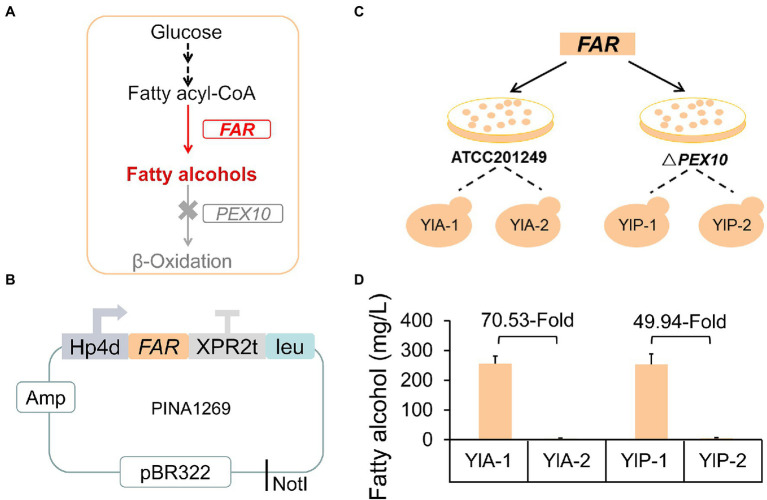
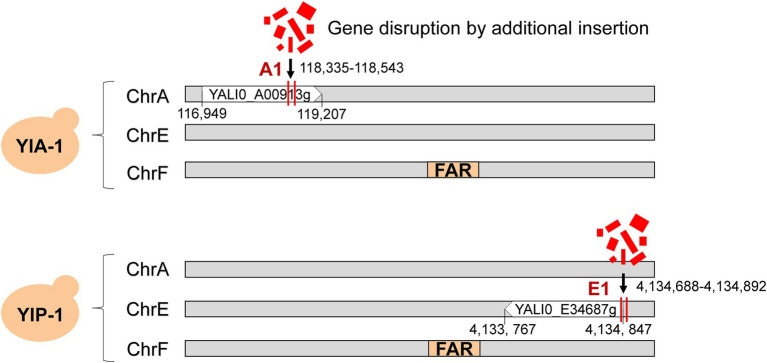
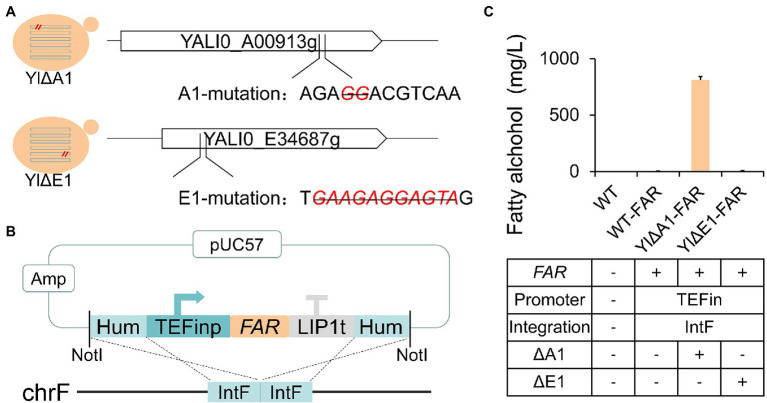
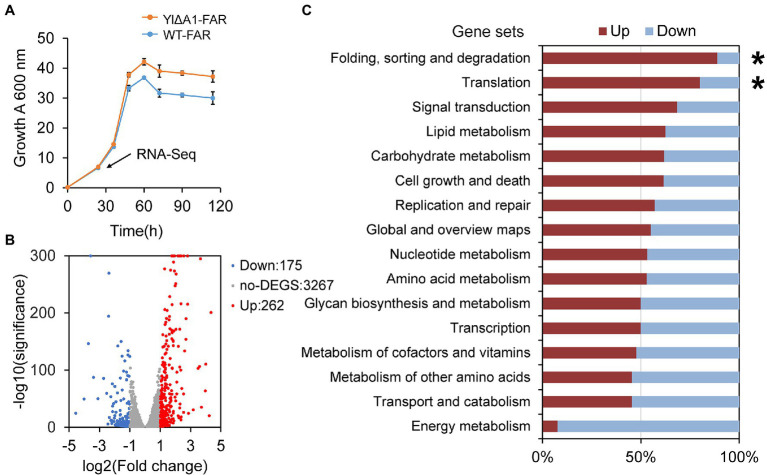
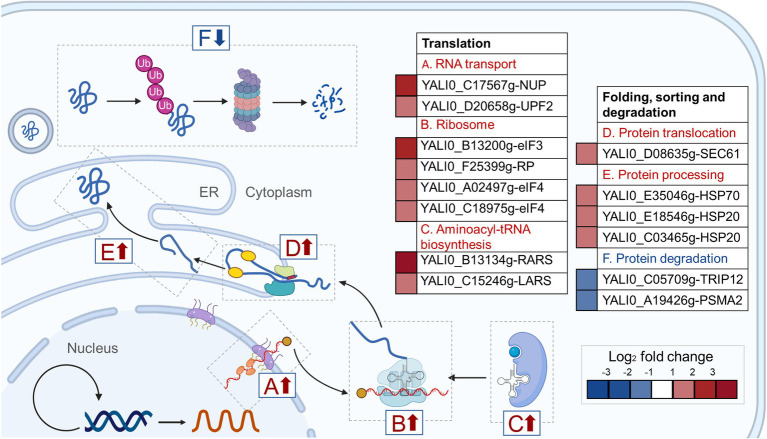
Non-homologous end joining (NHEJ)-mediated integration is effective in generating random mutagenesis to identify beneficial gene targets in the whole genome, which can significantly promote the performance of the strains. Here, a novel target leading to higher protein synthesis was identified by NHEJ-mediated integration that seriously improved fatty alcohols biosynthesis in . One batch of strains transformed with fatty acyl-CoA reductase gene () showed significant differences (up to 70.53-fold) in fatty alcohol production. Whole-genome sequencing of the high-yield strain demonstrated that a new target YALI0_A00913g ("A1 gene") was disrupted by NHEJ-mediated integration of partial carrier DNA, and reverse engineering of the A1 gene disruption (YlΔA1-FAR) recovered the fatty alcohol overproduction phenotype. Transcriptome analysis of YlΔA1-FAR strain revealed A1 disruption led to strengthened protein synthesis process that was confirmed by gene expression, which may account for enhanced cell viability and improved biosynthesis of fatty alcohols. This study identified a novel target that facilitated synthesis capacity and provided new insights into unlocking biosynthetic potential for future genetic engineering in .
非同源末端连接(NHEJ)介导的整合在全基因组中产生随机诱变以鉴定有益基因靶点方面是有效的,这可以显著提高菌株的性能。在此,通过NHEJ介导的整合鉴定出一个导致更高蛋白质合成的新靶点,该靶点严重改善了[具体生物]中脂肪醇的生物合成。一批用脂肪酰辅酶A还原酶基因([具体基因名称])转化的菌株在脂肪醇产量上表现出显著差异(高达70.53倍)。高产菌株的全基因组测序表明,一个新靶点YALI0_A00913g(“A1基因”)被NHEJ介导的部分载体DNA整合破坏,对A1基因破坏的反向工程(YlΔA1-FAR)恢复了脂肪醇过量生产的表型。对YlΔA1-FAR菌株的转录组分析表明,A1基因破坏导致蛋白质合成过程增强,这通过[具体基因名称]的基因表达得到证实,这可能解释了细胞活力增强和脂肪醇生物合成改善的原因。本研究鉴定出一个促进合成能力的新靶点,并为未来[具体生物]的基因工程中释放生物合成潜力提供了新的见解。