Mudassir Muhammad Ahmad, Hussain Syed Zajif, Khan Mishal, Asma Syeda Tasmia, Iqbal Zafar, Huma Zille, Ullah Najeeb, Zhang Haifei, Ansari Tariq Mahmood, Hussain Irshad
Department of Chemistry & Chemical Engineering, SBA School of Science & Engineering (SBASSE), Lahore University of Management Sciences (LUMS) Lahore-54792 Pakistan
Institute of Chemical Sciences, Bahauddin Zakariya University (BZU) Multan-60800 Pakistan
RSC Adv. 2018 Aug 21;8(52):29628-29636. doi: 10.1039/c8ra06197a. eCollection 2018 Aug 20.
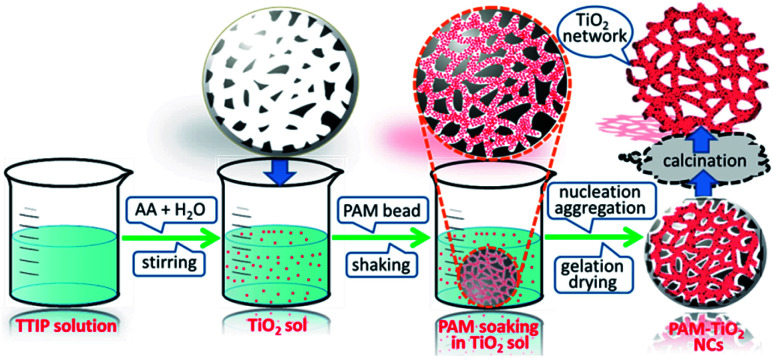
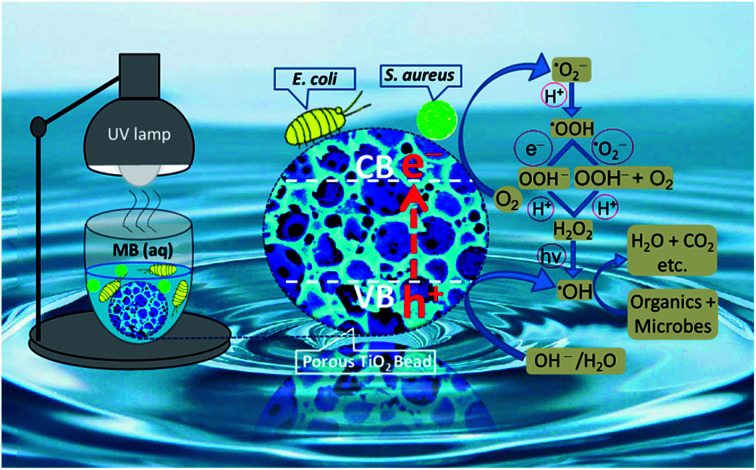
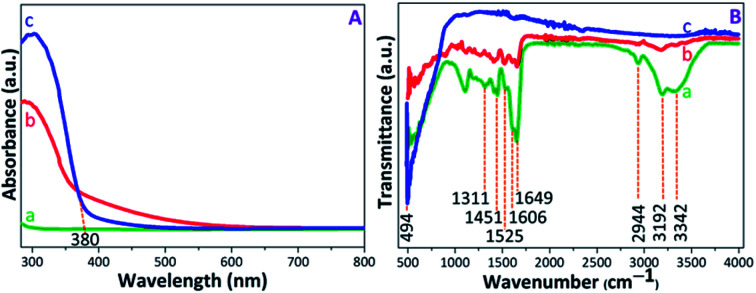
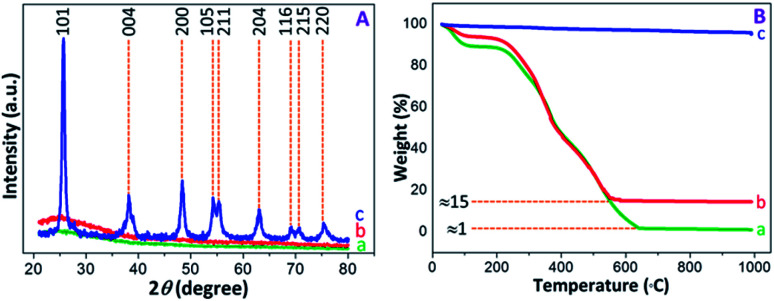
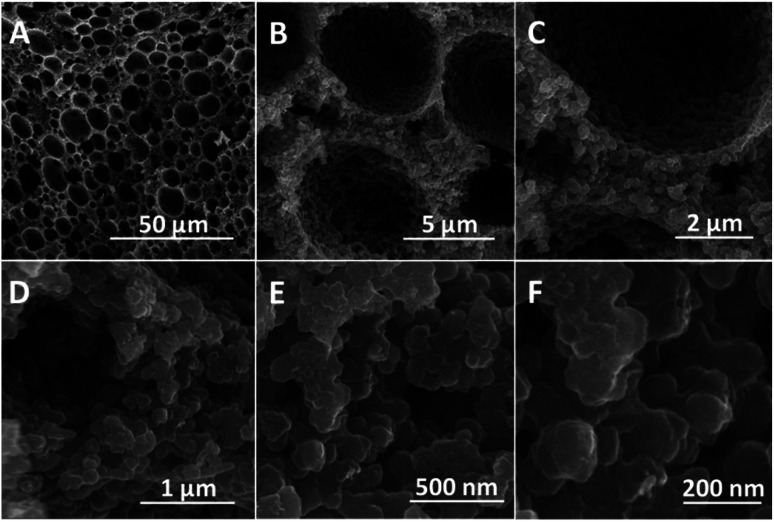
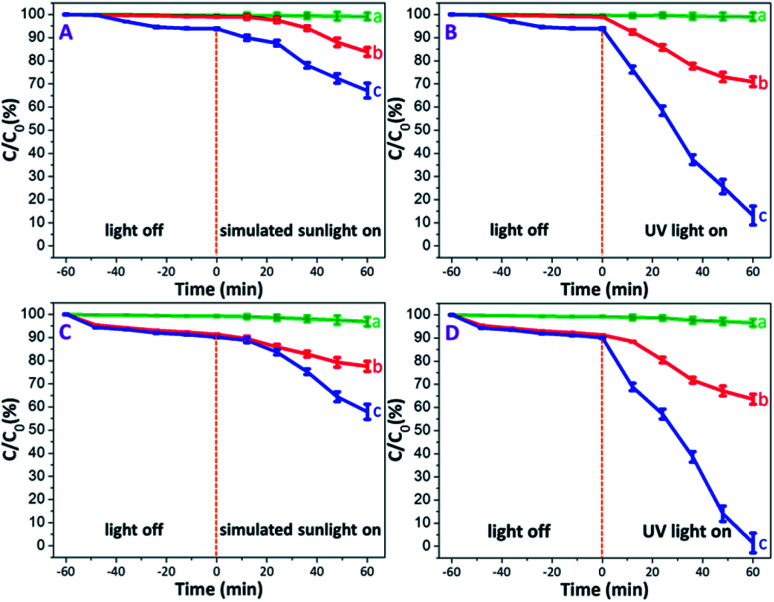
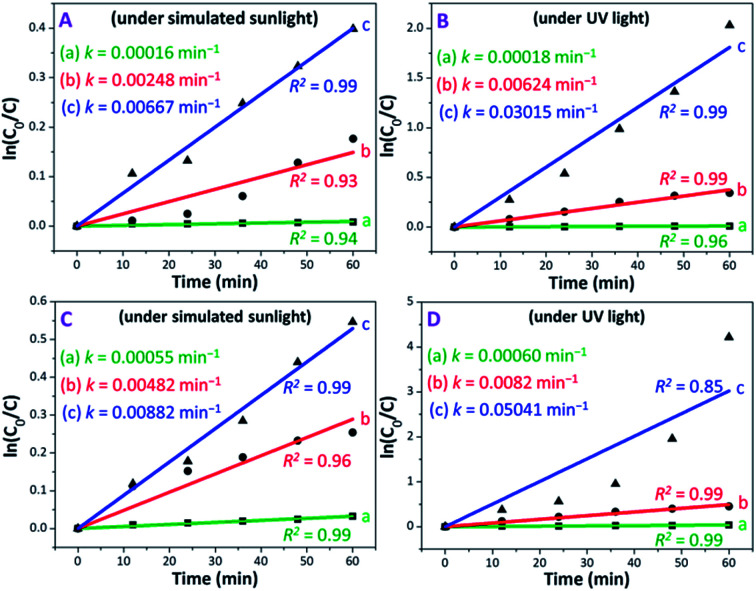
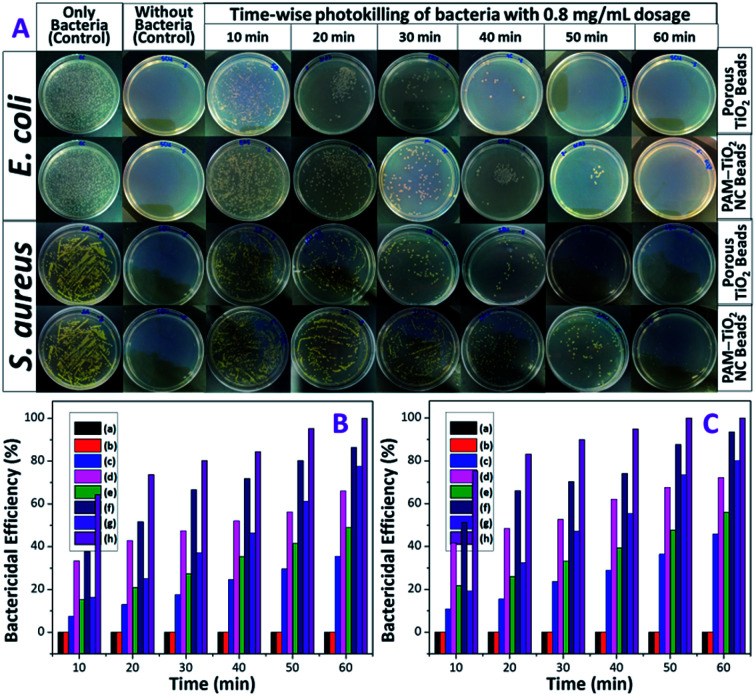
Nano/microscale TiO materials and their composites have reached the pinnacle of their photocatalytic performances to destroy persistent organic pollutants and waterborne microorganisms, but their practical applications are limited by the drawbacks associated with their stability, leaching, processing and separation. To overcome these shortcomings, we have prepared hierarchically porous nanostructured TiO macrobeads an exotemplating or nanocasting strategy by infiltrating the TiO sol into the emulsion-templated porous polyacrylamide scaffold followed by its gelation, drying and calcination. The nanoscale TiO building units tailor the shape of the porous polymeric network after calcination thereby retaining the macroscale morphology of polymer beads after template removal. A novel combination of the hierarchical macroporosity, orderly crystalline anatase nature, nanoscale feature and good surface area revealed by the relevant characterization tools makes these TiO scaffolds particularly effective for superior degradation of methylene blue with the enhanced rate constant and efficient disinfection of and under UV light. The macrosize and mechanical stability of these purely TiO beaded architectures have several potential advantages over conventional TiO nanocomposites and slurry systems to address the inherent bottlenecks of secondary contamination, difficult operation and energy-intensive post-recovery processes that are indeed deemed to be the barriers to develop practically useful water treatment technologies.
纳米/微米级二氧化钛材料及其复合材料在光催化降解持久性有机污染物和水中微生物方面已达到其性能的巅峰,但它们的实际应用受到与稳定性、浸出、加工和分离相关的缺点的限制。为了克服这些缺点,我们通过将二氧化钛溶胶渗透到乳液模板化的多孔聚丙烯酰胺支架中,然后进行凝胶化、干燥和煅烧,采用外模板法或纳米铸造策略制备了分级多孔纳米结构二氧化钛大珠。纳米级二氧化钛构建单元在煅烧后调整了多孔聚合物网络的形状,从而在去除模板后保留了聚合物珠的宏观形态。相关表征工具揭示的分级大孔结构、有序结晶锐钛矿性质、纳米级特征和良好比表面积的新颖组合,使得这些二氧化钛支架在紫外光下对亚甲基蓝具有卓越的降解效果,速率常数提高,对大肠杆菌和金黄色葡萄球菌具有高效消毒作用。这些纯二氧化钛珠状结构的大尺寸和机械稳定性相对于传统二氧化钛纳米复合材料和浆料系统具有几个潜在优势,可解决二次污染、操作困难和能源密集型后处理回收过程等固有瓶颈问题,而这些问题确实被认为是开发实用水处理技术的障碍。