Gu Liu-Qing, Cui Peng-Fei, Xing Lei, He Yu-Jing, Chang Xin, Zhou Tian-Jiao, Liu Yu, Li Ling, Jiang Hu-Lin
State Key Laboratory of Natural Medicines, Department of Pharmaceutics, China Pharmaceutical University Nanjing 210009 China
Jiangsu Key Laboratory of Druggability of Biopharmaceuticals, China Pharmaceutical University Nanjing 210009 China.
RSC Adv. 2019 Apr 16;9(21):12110-12123. doi: 10.1039/c9ra01356c. eCollection 2019 Apr 12.
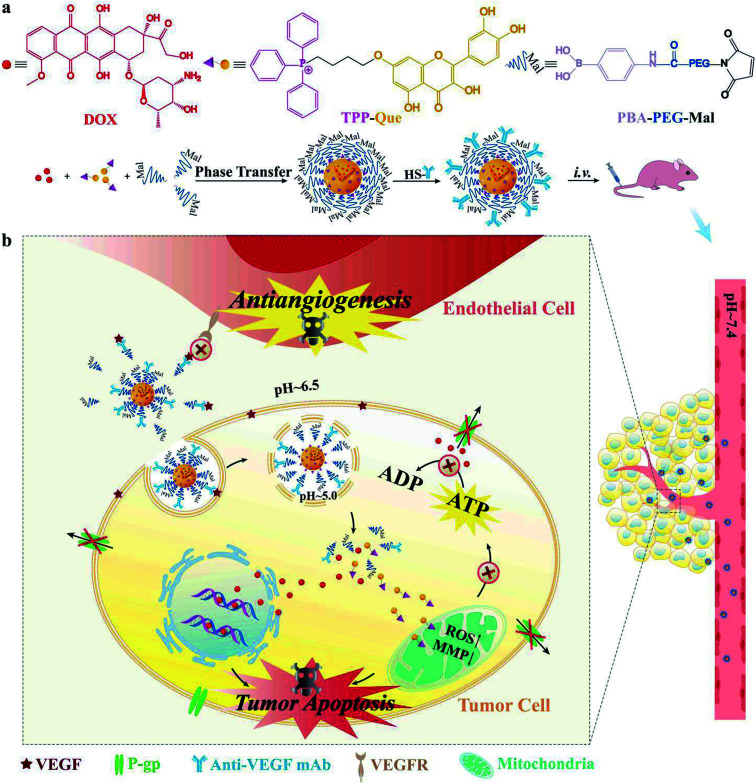
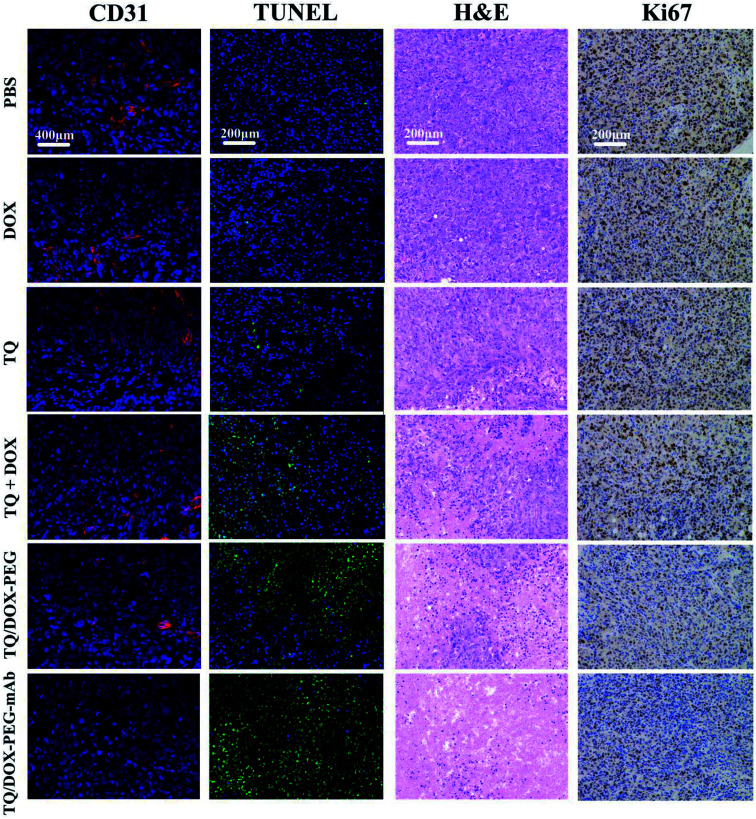
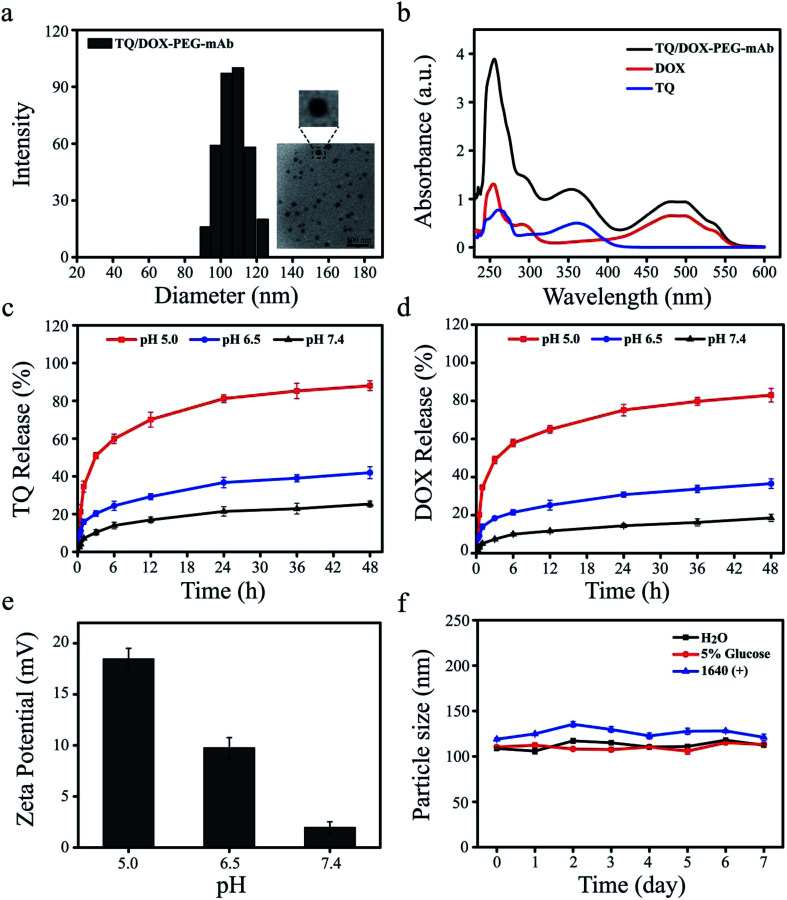
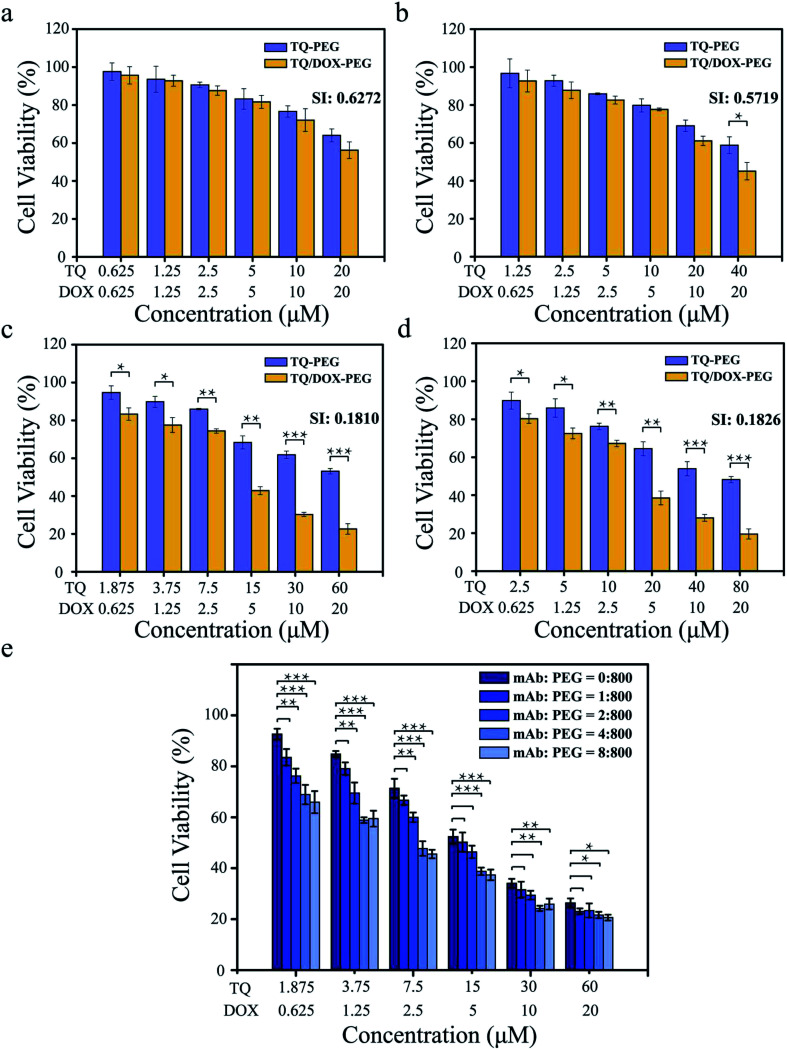
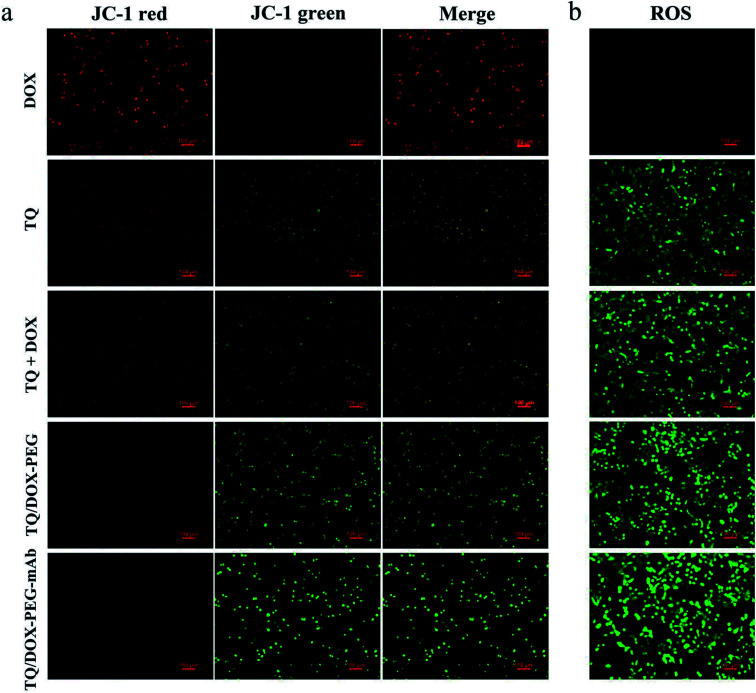
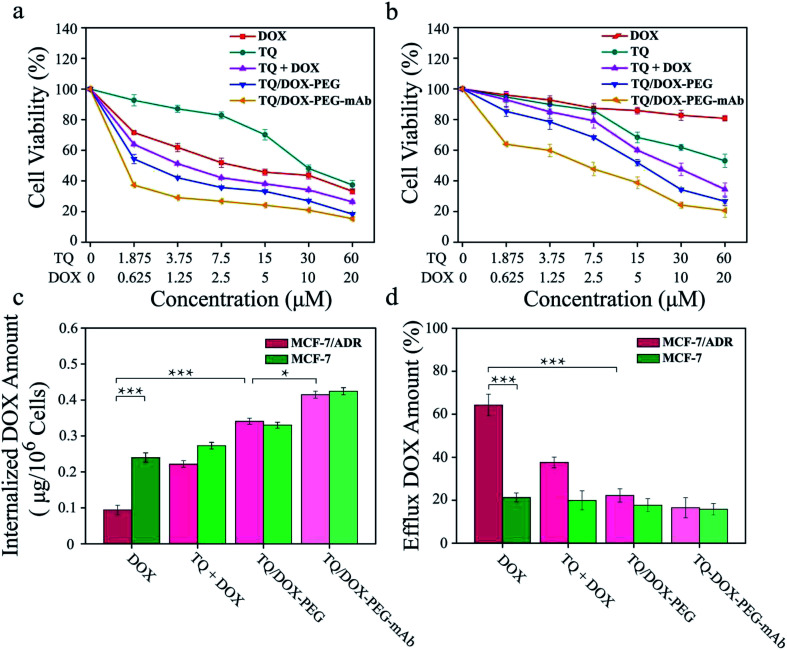
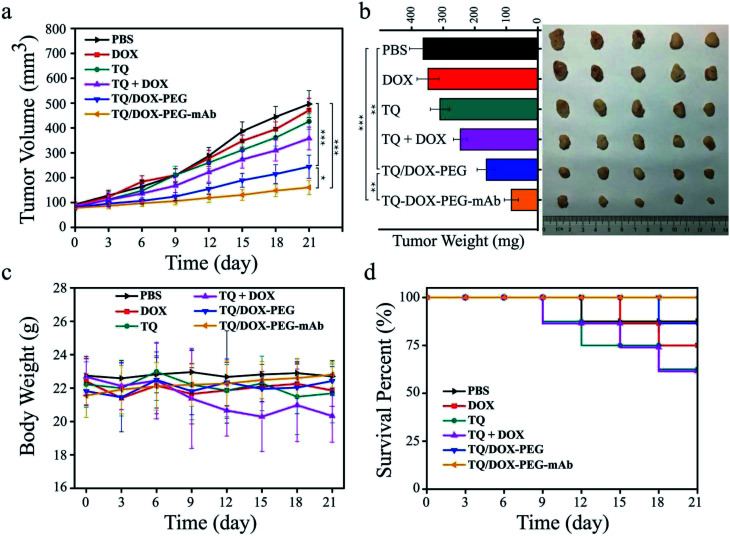
Multi-drug resistance (MDR) of tumor cells has greatly hindered the therapeutic efficacy of chemotherapeutic drugs, resulting in chemotherapy failure, while overexpression of ATP-binding cassette (ABC) transporters in cell membranes is the leading cause of MDR. In this study, we reported novel self-assembled triphenylphosphine-quercetin-polyethylene glycol-monoclonal antibody nanoparticles (TQ-PEG-mAb NPs) for overcoming MDR primarily through mitochondrial damage to block ATP supply to ABC transporters both and . The doxorubicin (DOX)-loaded NPs (TQ/DOX-PEG-mAb) were composed of two drugs (TQ and DOX) and an outer shielding shell of the PEG-mAb conjugate. Besides, the outer shell could be acid-responsively detached to expose the positive charge of TQ inside the NPs to enhance cellular uptake. TQ was proved to effectively induce mitochondrial damage with increased ROS levels and depolarization of mitochondrial membrane potential (MMP), leading to prominently reduced ATP supply to ABC transporters. Moreover, the involvement of the anti-vascular endothelial growth factor (VEGF) mAb was not only for efficient targeting but also for combined therapy. Consequently, TQ/DOX-PEG-mAb showed that the internalized amount of DOX was largely improved while the efflux amount was dramatically inhibited on MCF-7/ADR cells, indicating excellent reversal of DOX resistance. Importantly, the growth of DOX-resistant breast tumors was significantly inhibited with no evident systemic toxicity. Therefore, the employment of TQ-PEG-mAb is believed to be a new approach to improve the efficacy of chemotherapeutic drugs in MDR tumors.
肿瘤细胞的多药耐药性(MDR)极大地阻碍了化疗药物的治疗效果,导致化疗失败,而细胞膜上ATP结合盒(ABC)转运蛋白的过表达是MDR的主要原因。在本研究中,我们报道了新型自组装三苯基膦-槲皮素-聚乙二醇-单克隆抗体纳米颗粒(TQ-PEG-mAb NPs),其主要通过线粒体损伤来阻断ABC转运蛋白的ATP供应,从而克服MDR。负载阿霉素(DOX)的纳米颗粒(TQ/DOX-PEG-mAb)由两种药物(TQ和DOX)和PEG-mAb偶联物的外层屏蔽壳组成。此外,外壳可酸响应性脱落,以暴露纳米颗粒内部TQ的正电荷,增强细胞摄取。已证明TQ能有效诱导线粒体损伤,增加活性氧水平并使线粒体膜电位(MMP)去极化,导致向ABC转运蛋白供应的ATP显著减少。此外,抗血管内皮生长因子(VEGF)单克隆抗体的作用不仅在于有效靶向,还在于联合治疗。因此,TQ/DOX-PEG-mAb表明,在MCF-7/ADR细胞上,DOX的内化量大幅提高,而外排量则显著受到抑制,表明对DOX耐药具有优异的逆转作用。重要的是,DOX耐药性乳腺肿瘤的生长受到显著抑制,且无明显的全身毒性。因此,采用TQ-PEG-mAb被认为是提高化疗药物对MDR肿瘤疗效的一种新方法。