Meijaard Erik, Abrams Jesse F, Slavin Joanne L, Sheil Douglas
Borneo Futures, Bandar Seri Begawan, Brunei.
Department of Ecology, Charles University in Prague, Prague, Czechia.
Front Nutr. 2022 Apr 25;9:878644. doi: 10.3389/fnut.2022.878644. eCollection 2022.
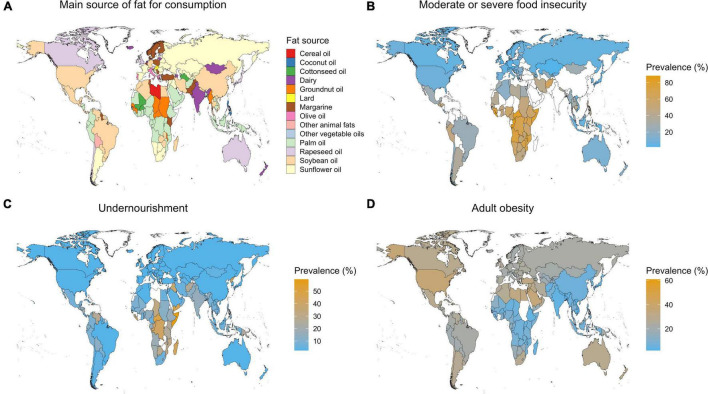
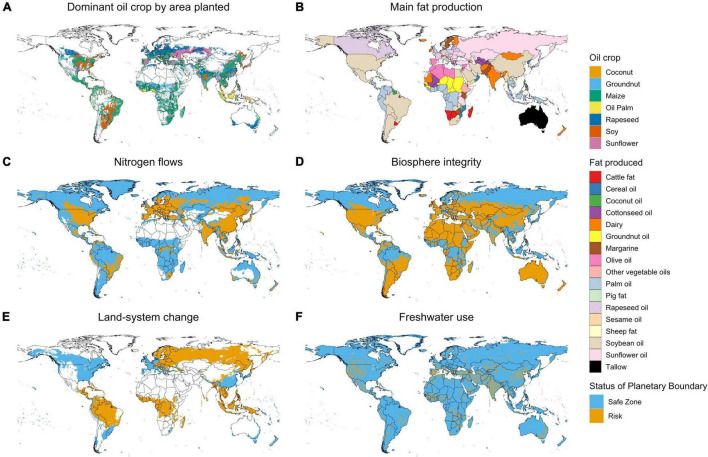
Dietary fats are essential ingredients of a healthy diet. Their production, however, impacts the environment and its capacity to sustain us. Growing knowledge across multiple disciplines improves our understanding of links between food, health and sustainability, but increases apparent complexity. Whereas past dietary guidelines placed limits on total fat intake especially saturated fats, recent studies indicate more complex links with health. Guidelines differ between regions of general poverty and malnutrition and those where obesity is a growing problem. Optimization of production to benefit health and environmental outcomes is hindered by limited data and shared societal goals. We lack a detailed overview of where fats are being produced, and their environmental impacts. Furthermore, the yields of different crops, for producing oils or feeding animals, and the associated land needs for meeting oil demands, differ greatly. To illuminate these matters, we review current discourse about the nutritional aspects of edible fats, summarize the inferred environmental implications of their production and identify knowledge gaps.
膳食脂肪是健康饮食的重要组成部分。然而,其生产会对环境及其维持我们生存的能力产生影响。多学科知识的不断增长增进了我们对食物、健康和可持续性之间联系的理解,但也增加了明显的复杂性。过去的膳食指南对总脂肪摄入量尤其是饱和脂肪的摄入量进行了限制,而最近的研究表明其与健康的联系更为复杂。在普遍贫困和营养不良的地区与肥胖问题日益严重的地区,膳食指南存在差异。数据有限和缺乏共同的社会目标阻碍了为实现健康和环境效益而进行的生产优化。我们缺乏对脂肪生产地点及其环境影响的详细概述。此外,用于生产油脂或饲养动物的不同作物的产量以及满足油脂需求所需的相关土地面积差异很大。为阐明这些问题,我们回顾了当前关于食用脂肪营养方面的论述,总结了其生产对环境的潜在影响,并确定了知识空白。