Wellcome Sanger Institute, Wellcome Genome Campus, Hinxton, Cambridge, UK.
Department of Clinical Neurosciences, University of Cambridge, Cambridge, UK.
Science. 2022 May 13;376(6594):eabl5197. doi: 10.1126/science.abl5197.
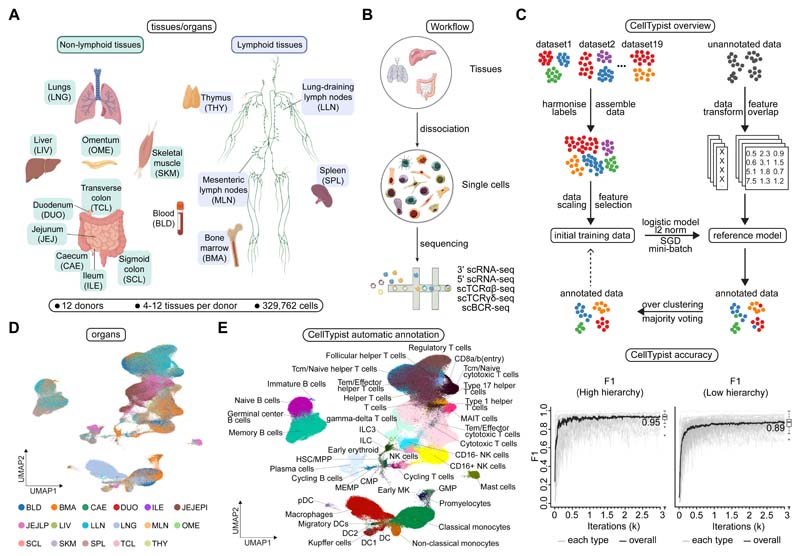
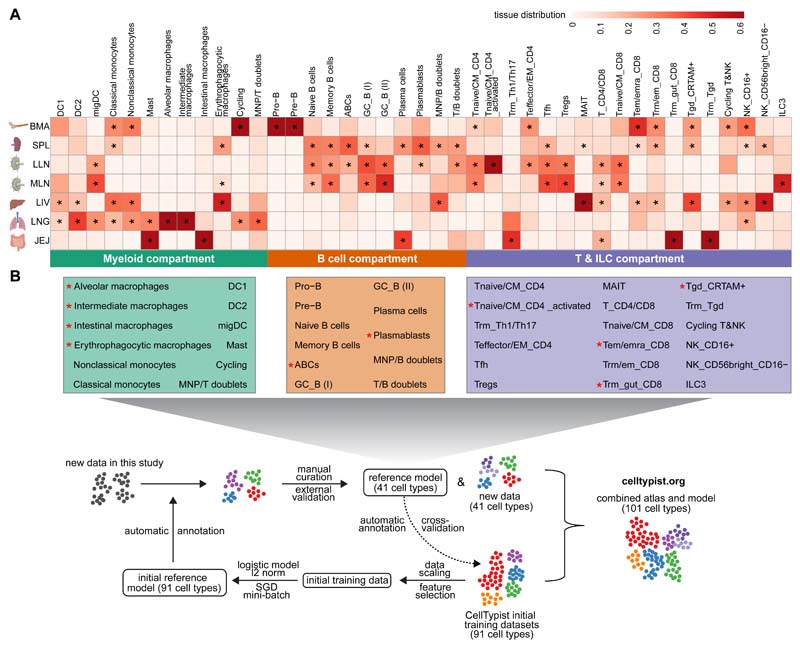
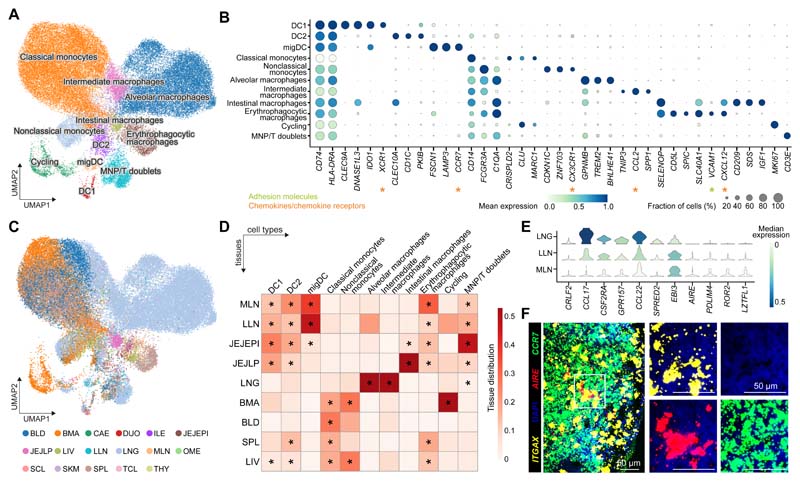
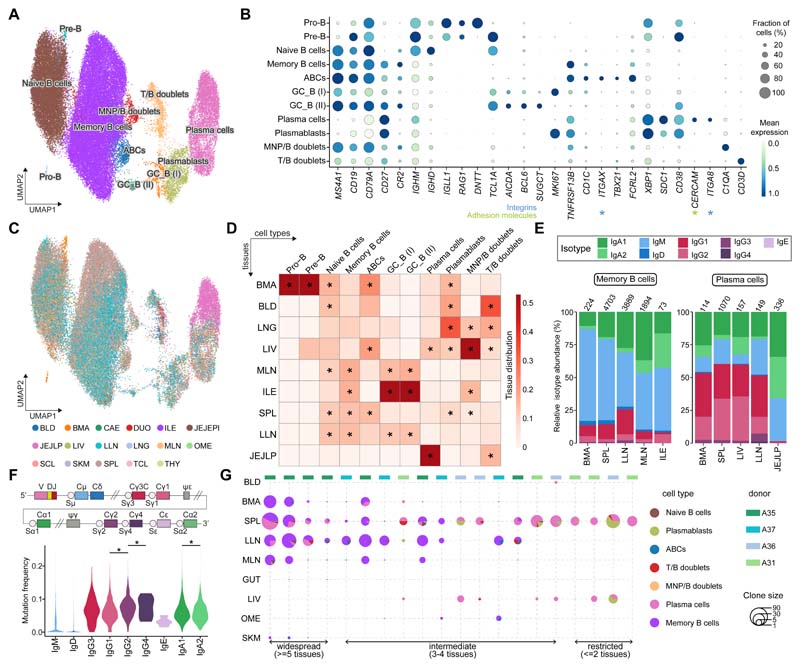
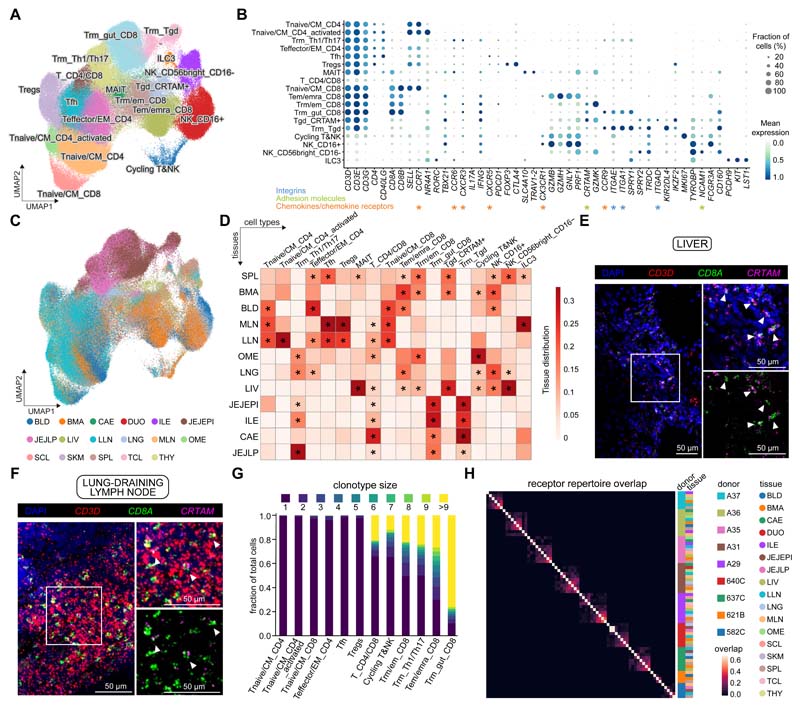
Despite their crucial role in health and disease, our knowledge of immune cells within human tissues remains limited. We surveyed the immune compartment of 16 tissues from 12 adult donors by single-cell RNA sequencing and VDJ sequencing generating a dataset of ~360,000 cells. To systematically resolve immune cell heterogeneity across tissues, we developed CellTypist, a machine learning tool for rapid and precise cell type annotation. Using this approach, combined with detailed curation, we determined the tissue distribution of finely phenotyped immune cell types, revealing hitherto unappreciated tissue-specific features and clonal architecture of T and B cells. Our multitissue approach lays the foundation for identifying highly resolved immune cell types by leveraging a common reference dataset, tissue-integrated expression analysis, and antigen receptor sequencing.
尽管免疫细胞在健康和疾病中起着至关重要的作用,但我们对人类组织中的免疫细胞的了解仍然有限。我们通过单细胞 RNA 测序和 VDJ 测序对来自 12 位成年供体的 16 种组织中的免疫区室进行了调查,生成了一个约 36 万个细胞的数据集。为了系统地解析跨组织的免疫细胞异质性,我们开发了 CellTypist,这是一种用于快速准确的细胞类型注释的机器学习工具。使用这种方法,并结合详细的策展,我们确定了精细表型免疫细胞类型的组织分布,揭示了以前未被重视的 T 和 B 细胞的组织特异性特征和克隆结构。我们的多组织方法为通过利用通用参考数据集、组织整合表达分析和抗原受体测序来识别高度解析的免疫细胞类型奠定了基础。