School of Biological and Food Engineering, Anhui Polytechnic University, Wuhu, 241000, Anhui, China.
State Key Laboratory of Radiation Medicine and Protection, School of Radiation Medicine and Protection & School for Radiological and Interdisciplinary Sciences (RAD-X), Collaborative Innovation Center of Radiation Medicine of Jiangsu Higher Education Institutions, Soochow University, Suzhou, 215123, Jiangsu, China.
J Nanobiotechnology. 2022 May 12;20(1):223. doi: 10.1186/s12951-022-01442-5.
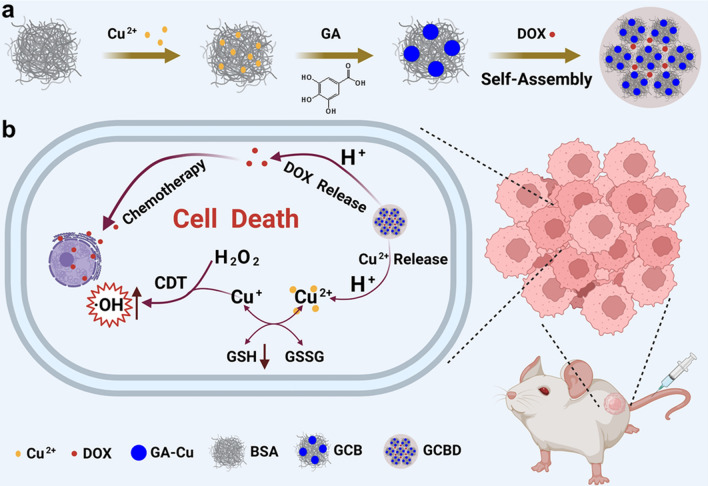
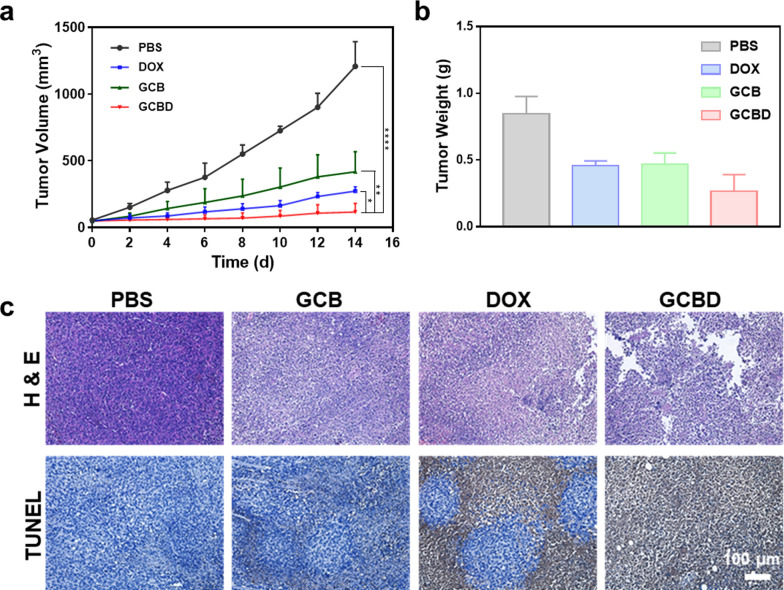
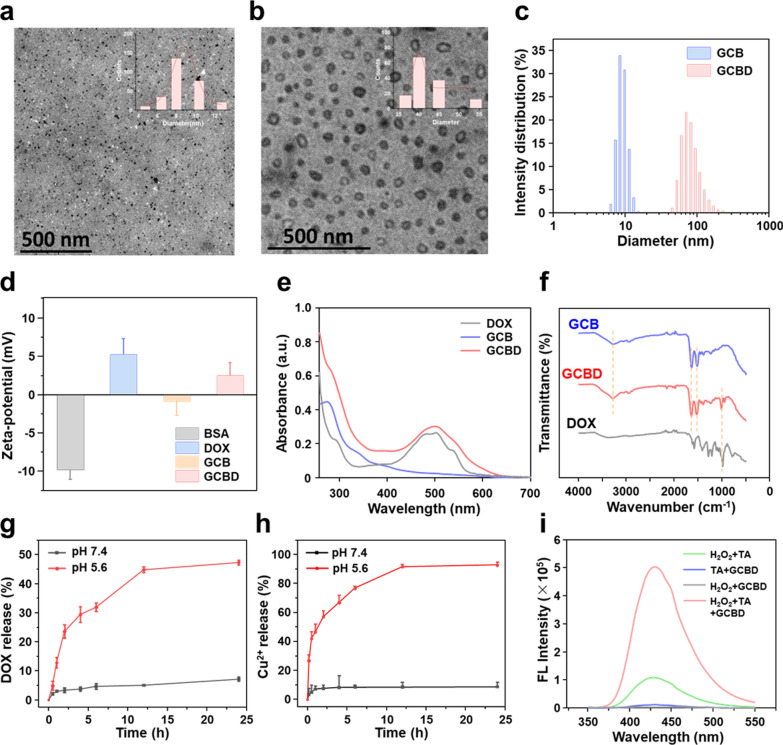
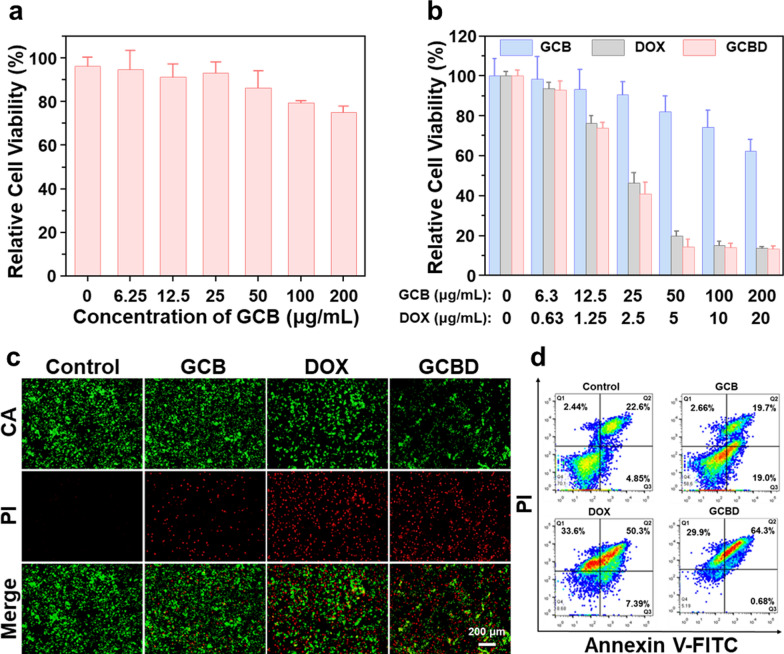
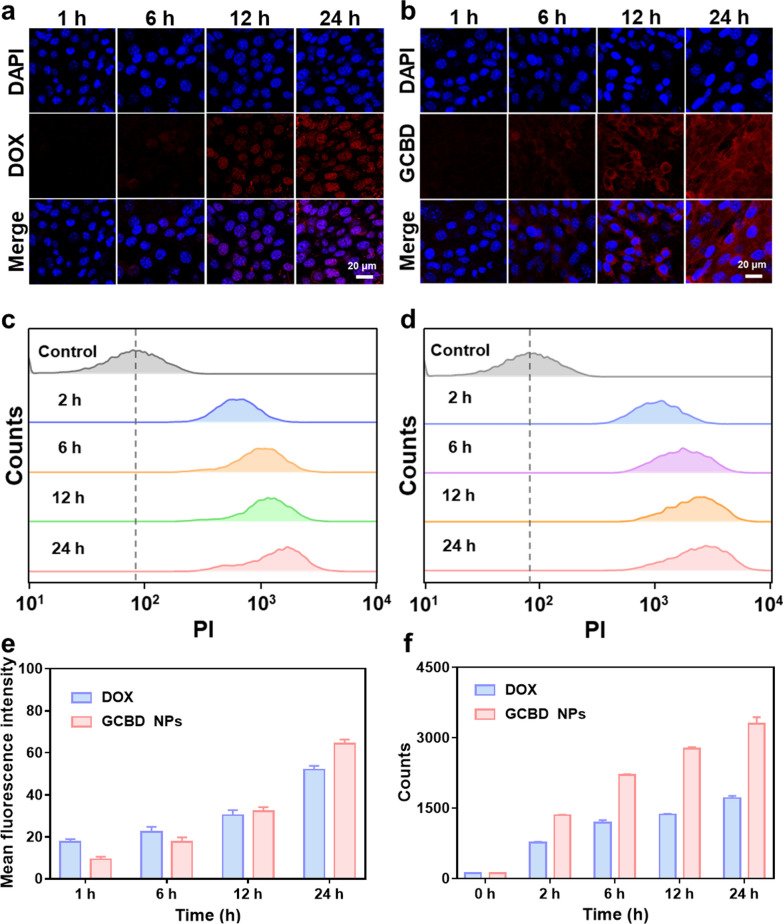
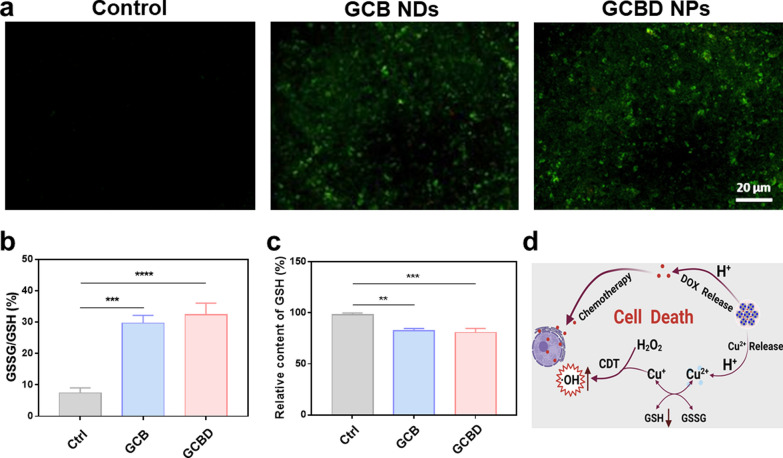
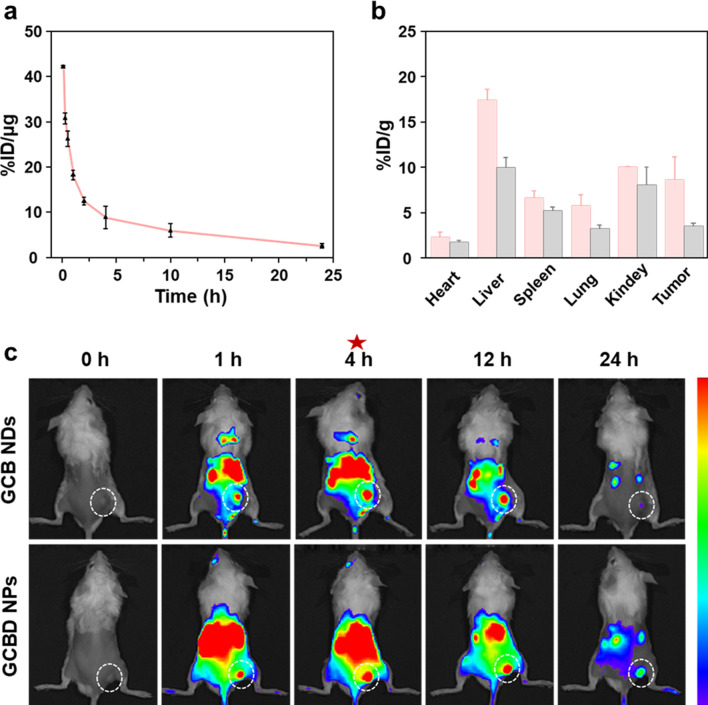
Tumor microenvironment (TME), characterized by high glutathione (GSH), high hydrogen peroxide (HO) and acidic pH levels, is favorable for the growth, invasion and metastasis of cancer cells. Taking advantage of the specific characteristics of tumors, TME-responsive GCBD NPs are designed to deliver nanoscale coordination polymers (NCPs, GA-Cu) and chemotherapy drugs (doxorubicin, DOX) based on bovine serum albumin (BSA) nanocarriers into cancer cells for combined chemodynamic therapy (CDT) and chemotherapy. In an acidic environment, GCBD NPs could release approximately 90% copper ions, which can not only consume overexpressed GSH to modulate the TME but can also react with endogenous HO in a Fenton-like reaction to achieve the CDT effect. Meanwhile, the released DOX could enter the nucleus of tumor cells and affect their proliferation to achieve efficient chemotherapy. Both in vitro and in vivo experiments showed that GCBD NPs had good biosafety and could effectively inhibit the growth of cancer cells. GCBD NPs are promising as a biocompatible nanoplatform to exploit TME characteristics for combined chemo and chemodynamic therapy, providing a novel strategy to eradicate tumors with high efficiency and specificity.
肿瘤微环境(TME)的特点是高谷胱甘肽(GSH)、高过氧化氢(HO)和酸性 pH 值,有利于癌细胞的生长、侵袭和转移。利用肿瘤的特异性特征,TME 响应性 GCBD NPs 被设计为基于牛血清白蛋白(BSA)纳米载体将纳米级配位聚合物(NCPs,GA-Cu)和化疗药物(阿霉素,DOX)递送至癌细胞中,用于联合化学动力学治疗(CDT)和化疗。在酸性环境中,GCBD NPs 可以释放约 90%的铜离子,不仅可以消耗过表达的 GSH 来调节 TME,还可以在类 Fenton 反应中与内源性 HO 反应,实现 CDT 效应。同时,释放的 DOX 可以进入肿瘤细胞的核内,影响其增殖,从而实现有效的化疗。体外和体内实验均表明,GCBD NPs 具有良好的生物安全性,并能有效抑制癌细胞的生长。GCBD NPs 有望成为一种具有生物相容性的纳米平台,利用 TME 特性进行联合化疗和化学动力学治疗,为高效、特异性地消灭肿瘤提供了一种新策略。