Hospital Universitari de Tarragona Joan XXIII, Institut d'Investigació Sanitària Pere Virgili, Tarragona, Spain.
CIBER de Diabetes y Enfermedades Metabólicas Asociadas (CIBERDEM), Instituto de Salud Carlos III, Madrid, Spain.
J Crohns Colitis. 2022 Nov 1;16(10):1571-1583. doi: 10.1093/ecco-jcc/jjac069.
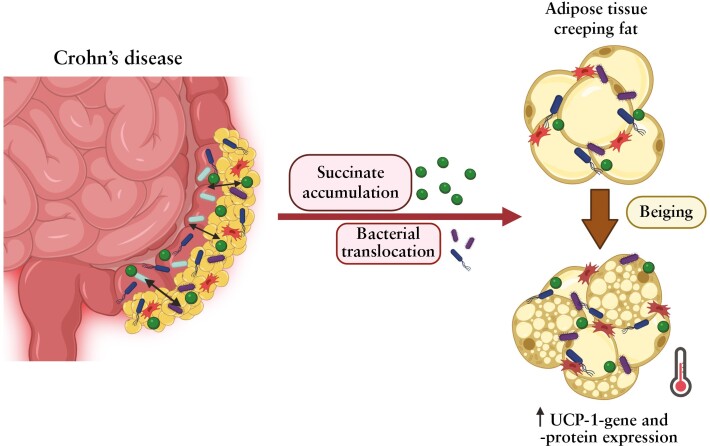
Crohn's disease [CD] is associated with complex microbe-host interactions, involving changes in microbial communities, and gut barrier defects, leading to the translocation of microorganisms to surrounding adipose tissue [AT]. We evaluated the presence of beige AT depots in CD and questioned whether succinate and/or bacterial translocation promotes white-to-beige transition in adipocytes.
Visceral [VAT] and subcutaneous [SAT] AT biopsies, serum and plasma were obtained from patients with active [n = 21] or inactive [n = 12] CD, and from healthy controls [n = 15]. Adipose-derived stem cells [ASCs] and AT macrophages [ATMs] were isolated from VAT biopsies.
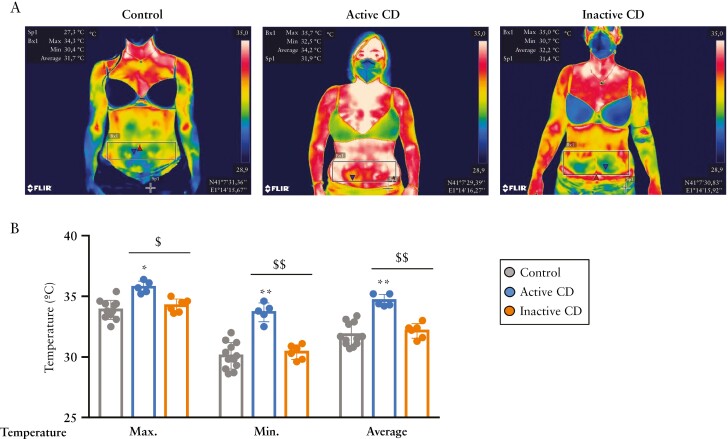
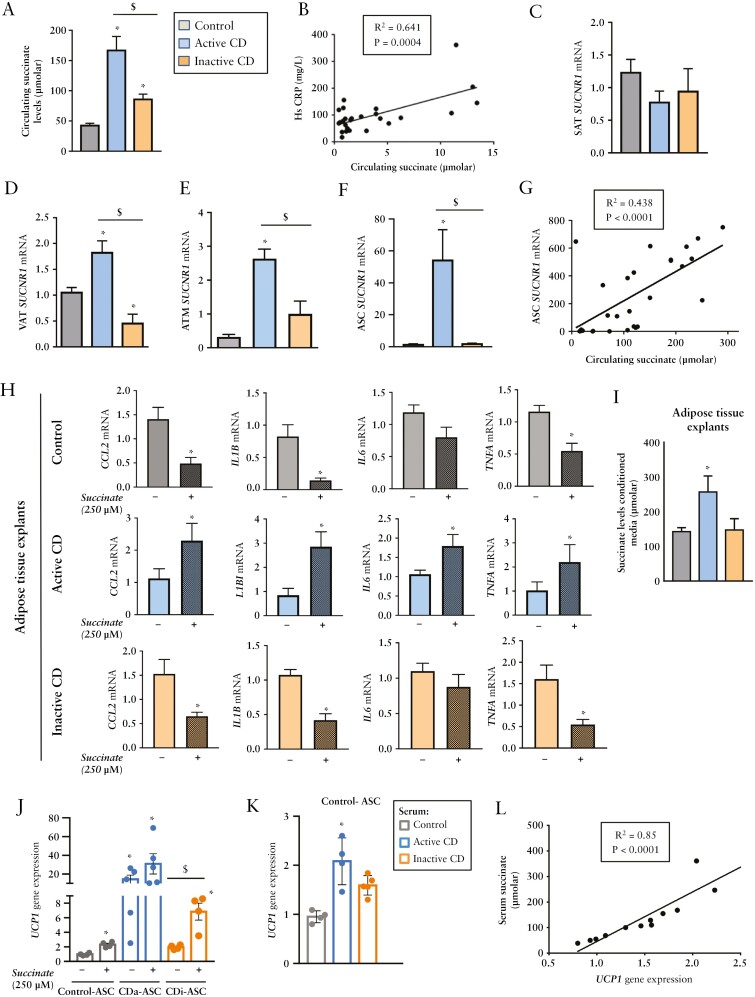
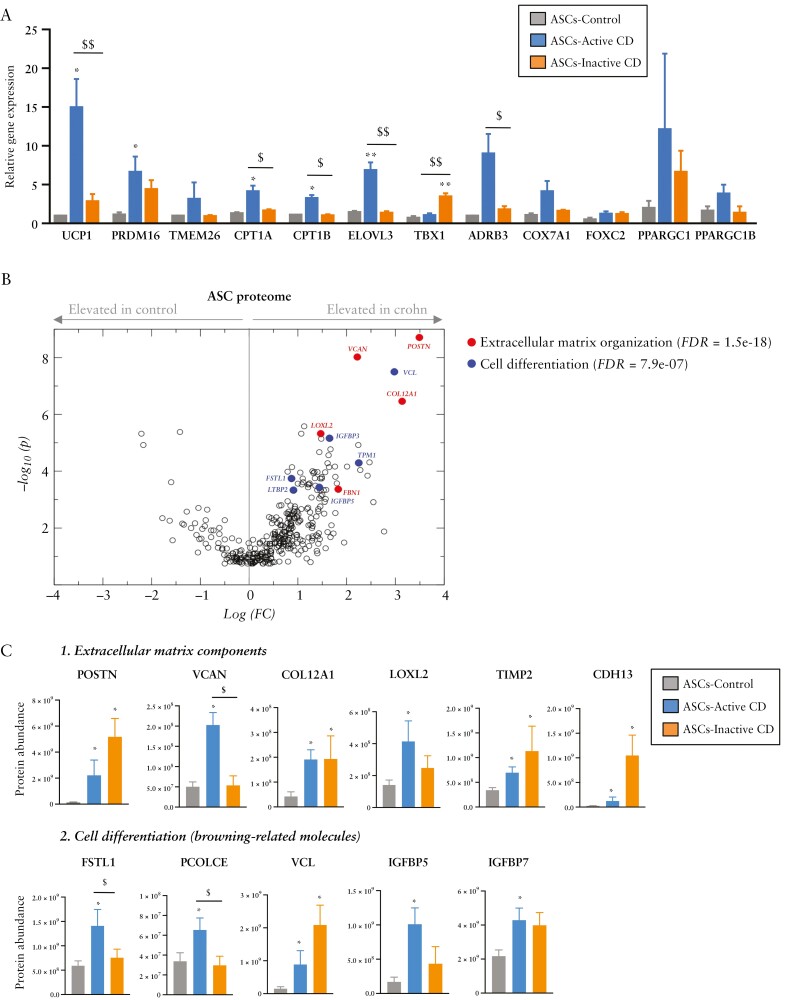
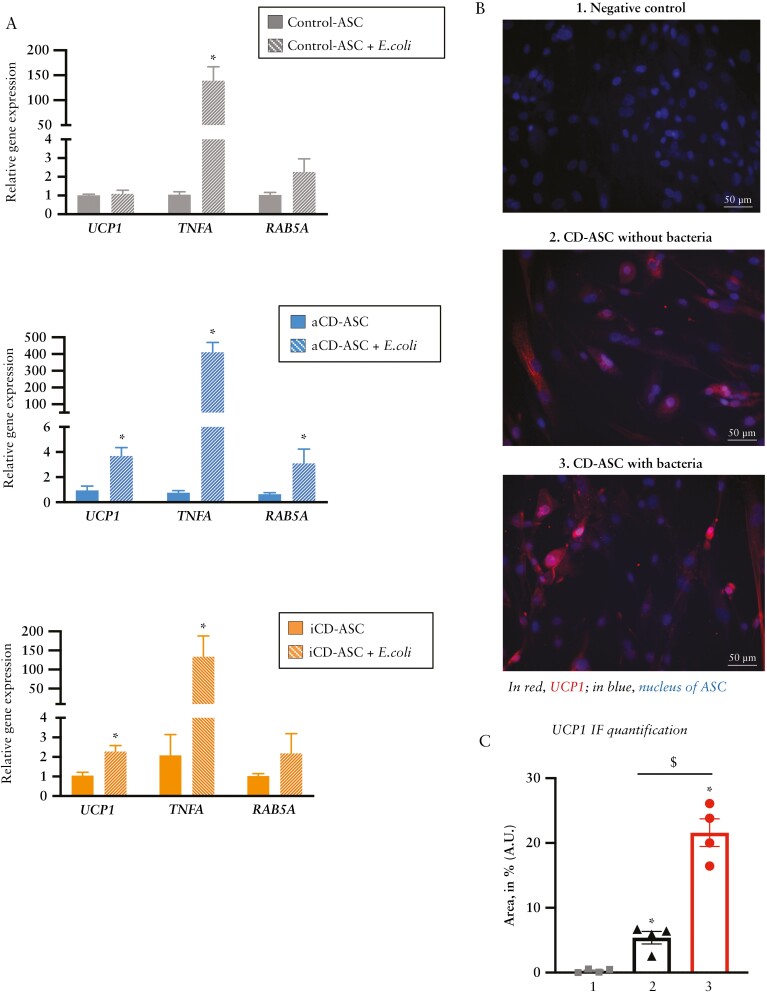
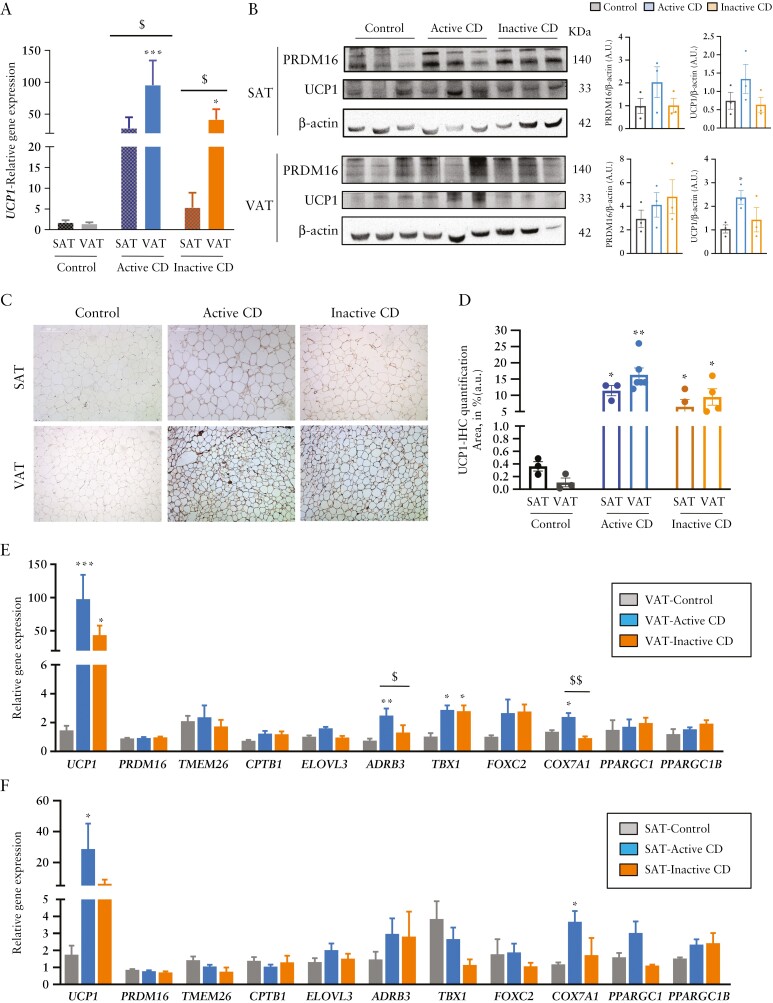
Plasma succinate levels were significantly higher in patients with active CD than in controls and were intermediate in those with inactive disease. Plasma succinate correlated with the inflammatory marker high-sensitivity C-reactive protein. Expression of the succinate receptor SUCNR1 was higher in VAT, ASCs and ATMs from the active CD group than from the inactive or control groups. Succinate treatment of ASCs elevated the expression of several beige AT markers from controls and from patients with inactive disease, including uncoupling protein-1 [UCP1]. Notably, beige AT markers were prominent in ASCs from patients with active CD. Secretome profiling revealed that ASCs from patients with active disease secrete beige AT-related proteins, and co-culture assays showed that bacteria also trigger the white-to-beige switch of ASCs from patients with CD. Finally, AT depots from patients with CD exhibited a conversion from white to beige AT together with high UCP1 expression, which was corroborated by in situ thermal imaging analysis.
Succinate and bacteria trigger white-to-beige AT transition in CD. Understanding the role of beige AT in CD might aid in the development of therapeutic or diagnostic interventions.
克罗恩病(CD)与复杂的微生物-宿主相互作用有关,涉及微生物群落的变化和肠道屏障缺陷,导致微生物易位到周围脂肪组织(AT)。我们评估了 CD 患者中米色 AT 沉积的存在,并质疑琥珀酸和/或细菌易位是否促进脂肪细胞的白色到米色转变。
从活动期(n=21)或缓解期(n=12)CD 患者和健康对照者(n=15)中获取内脏(VAT)和皮下(SAT)AT 活检、血清和血浆。从 VAT 活检中分离出脂肪来源的干细胞(ASCs)和 AT 巨噬细胞(ATMs)。
与对照组相比,活动期 CD 患者的血浆琥珀酸水平显著升高,而缓解期患者的血浆琥珀酸水平处于中间水平。血浆琥珀酸与炎症标志物高敏 C 反应蛋白相关。与缓解期或对照组相比,活动期 CD 患者的 VAT、ASCs 和 ATMs 中,琥珀酸受体 SUCNR1 的表达更高。ASCs 用琥珀酸处理后,可提高对照组和缓解期 CD 患者的几种米色 AT 标志物的表达,包括解偶联蛋白 1(UCP1)。值得注意的是,活动期 CD 患者的 ASCs 中存在明显的米色 AT 标志物。分泌组分析显示,活动期 CD 患者的 ASC 分泌米色 AT 相关蛋白,共培养试验表明,细菌也可触发 CD 患者 ASC 从白色向米色的转变。最后,CD 患者的 AT 沉积与高 UCP1 表达一起从白色向米色 AT 转化,这一结果得到了原位热成像分析的证实。
琥珀酸和细菌触发 CD 中白色到米色 AT 的转变。了解米色 AT 在 CD 中的作用可能有助于开发治疗或诊断干预措施。