Department of Immunology, School of Basic Medical Sciences, Peking University. National Health Commission (NHC) Key Laboratory of Medical Immunology (Peking University), Beijing, China.
Beijing Youan Hospital, Capital Medical University, Beijing, China.
Front Immunol. 2022 Apr 26;13:831194. doi: 10.3389/fimmu.2022.831194. eCollection 2022.
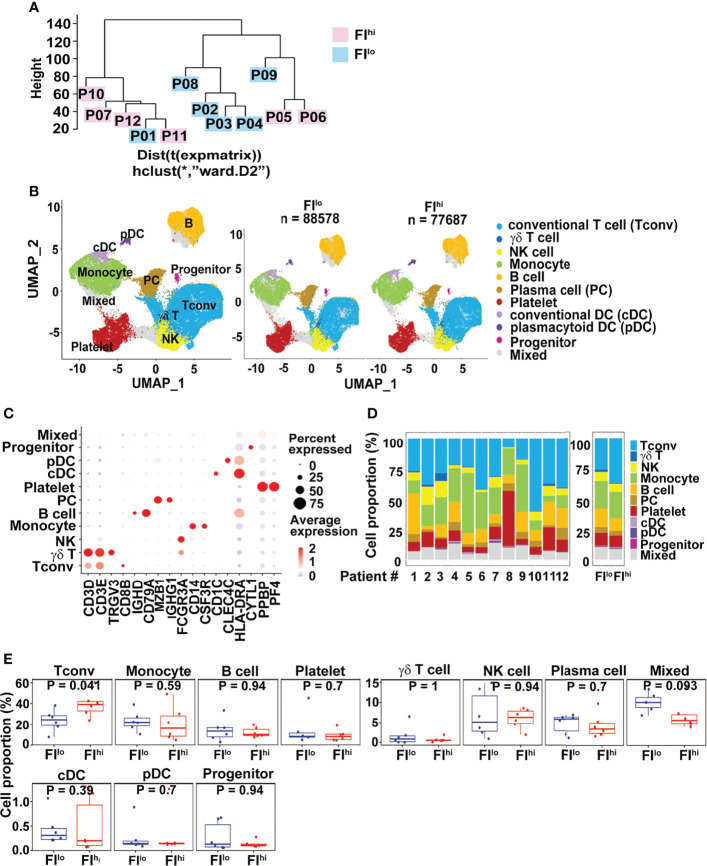
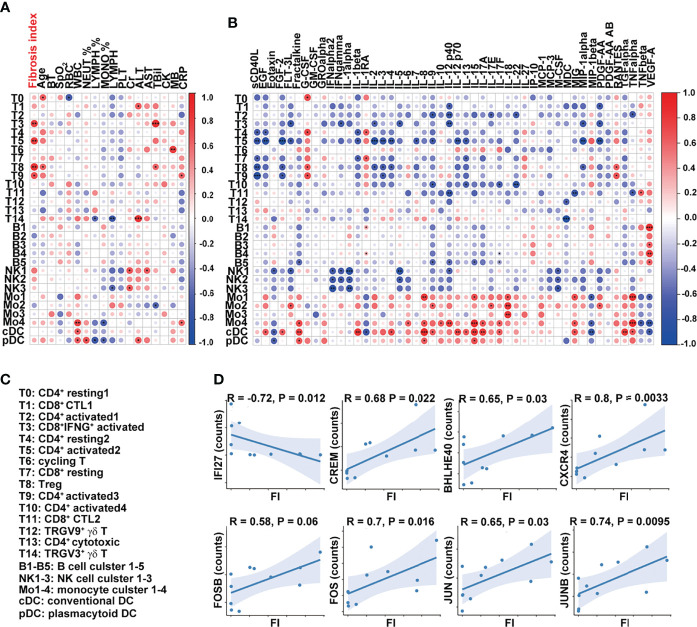
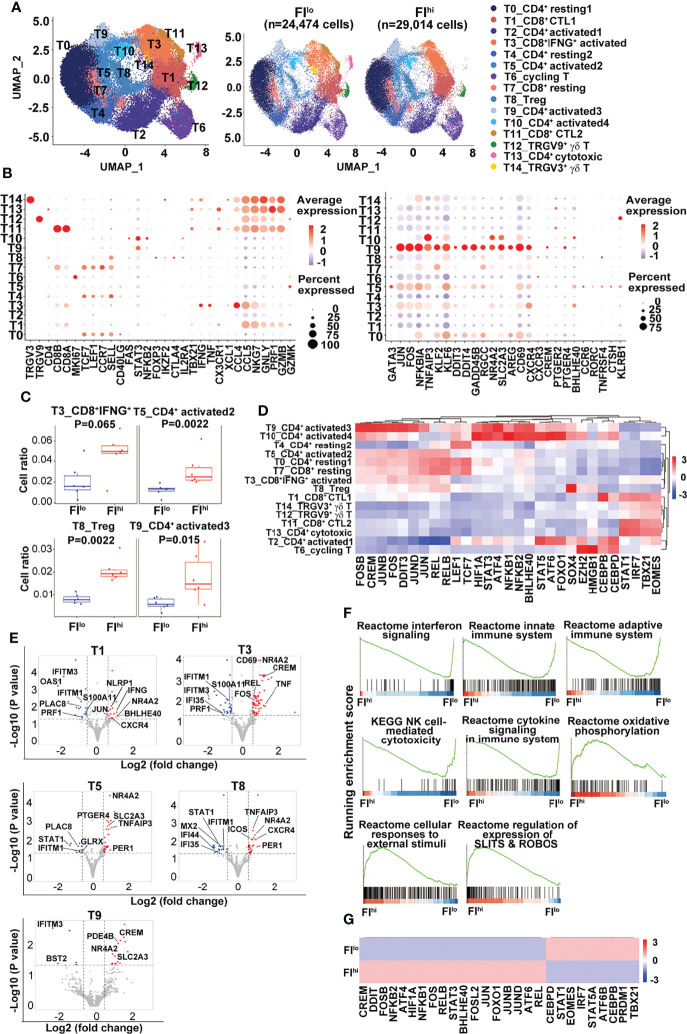
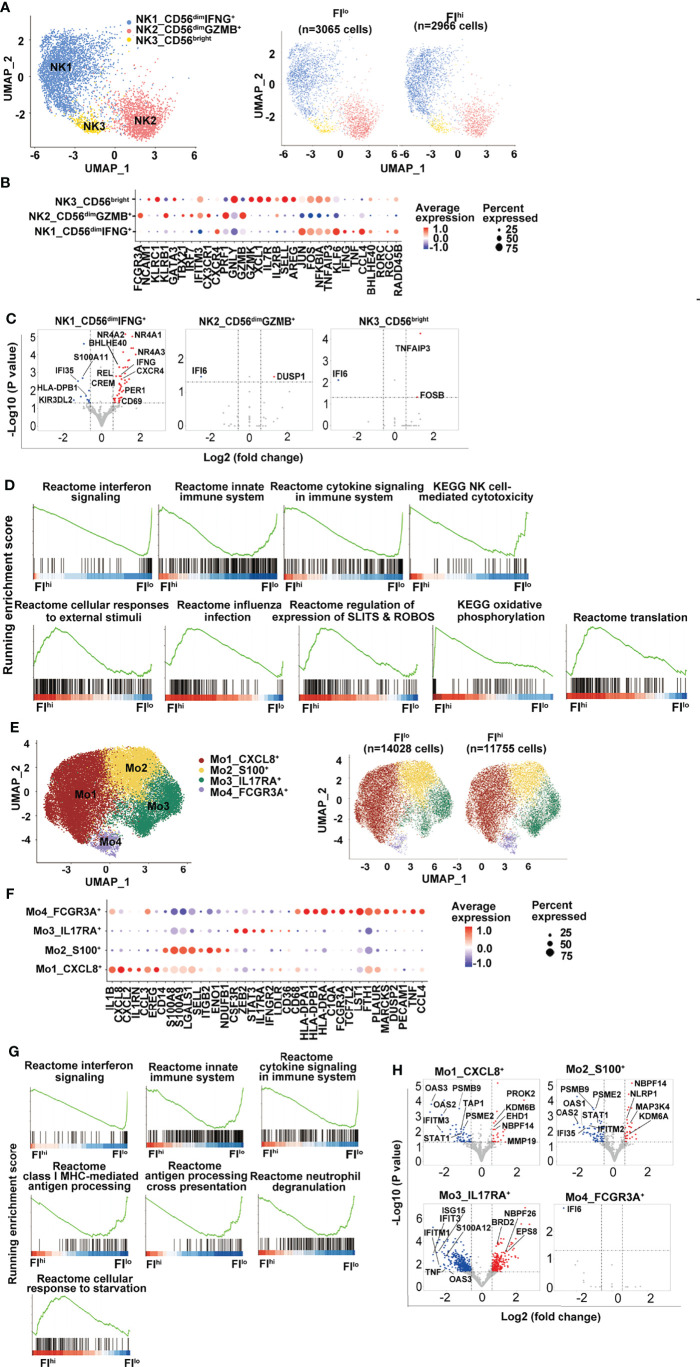
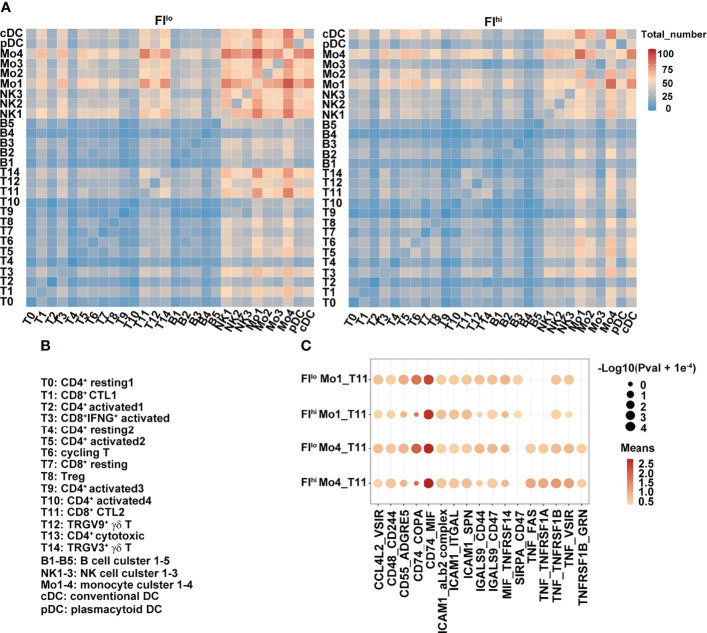
Resulting from severe inflammation and cell destruction, COVID-19 patients could develop pulmonary fibrosis (PF), which remains in the convalescent stage. Nevertheless, how immune response participates in the pathogenesis of PF progression is not well defined. To investigate that question, 12 patients with severe COVID-19 were included in the study. Peripheral mononuclear cell (PBMC) samples were collected shortly after their admission and proceeded for single-cell RNA sequencing (scRNA-seq). After 14 days of discharge, the patients were revisited for chest CT scan. PF index (FI) was computed by AI-assisted CT images. Patients were categorized into FI and FI based on median of FI. By scRNA-seq analysis, our data demonstrated that frequency of CD4+ activated T cells and Treg cells were approximately 3-fold higher in FI patients compared with FI ones ( < 0.034 for all). By dissecting the differentially expressed genes, we found an overall downregulation of IFN-responsive genes (, and ) and S100s alarmins (, etc.) in all T-cell clusters, and cytotoxicity-related genes (, and ) in CTLs and γδ T cells in the FI cohort, compared with FI subjects. The GSEA analysis illustrated decreased expression of genes enriched in IFN signaling, innate immune response, adaptive immune response in T cells, NK cells, and monocytes in FI patients compared with FI ones. In conclusion, these data indicated that the attenuated IFN-responsive genes and their related signaling pathways could be critical for PF progression in COVID-19 patients.
由于严重的炎症和细胞破坏,COVID-19 患者可能会发展为肺纤维化(PF),这种情况在康复期仍然存在。然而,免疫反应如何参与 PF 进展的发病机制尚不清楚。为了研究这个问题,本研究纳入了 12 名重症 COVID-19 患者。患者入院后不久采集外周血单核细胞(PBMC)样本,并进行单细胞 RNA 测序(scRNA-seq)。出院 14 天后,对患者进行胸部 CT 扫描复查。通过 AI 辅助 CT 图像计算 PF 指数(FI)。根据 FI 的中位数,患者被分为 FI 和 FI 两组。通过 scRNA-seq 分析,我们的数据表明,FI 患者的 CD4+活化 T 细胞和 Treg 细胞的频率比 FI 患者高约 3 倍(均<0.034)。通过对差异表达基因进行分析,我们发现 FI 组所有 T 细胞簇中 IFN 反应基因(、和)和 S100s 警报素(、等)总体下调,CTLs 和 γδ T 细胞中细胞毒性相关基因(、和)下调,与 FI 组相比。GSEA 分析表明,与 FI 组相比,FI 患者中 IFN 信号、固有免疫反应、T 细胞、NK 细胞和单核细胞适应性免疫反应相关基因的表达减少。综上所述,这些数据表明,IFN 反应基因及其相关信号通路的减弱可能是 COVID-19 患者 PF 进展的关键。