Department of Immunology, School of Medicine, Tehran University of Medical Sciences, Tehran, Iran.
Department of Immunology, University of Social Welfare and Rehabilitation Sciences, Tehran, Iran.
Arthritis Res Ther. 2022 May 13;24(1):108. doi: 10.1186/s13075-022-02787-w.
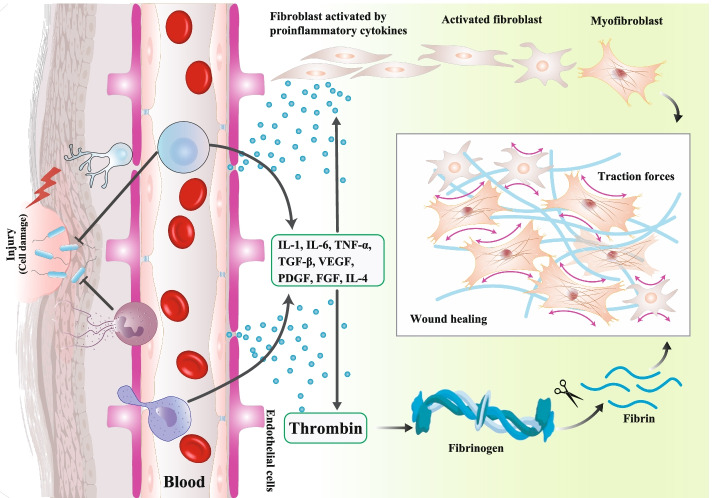
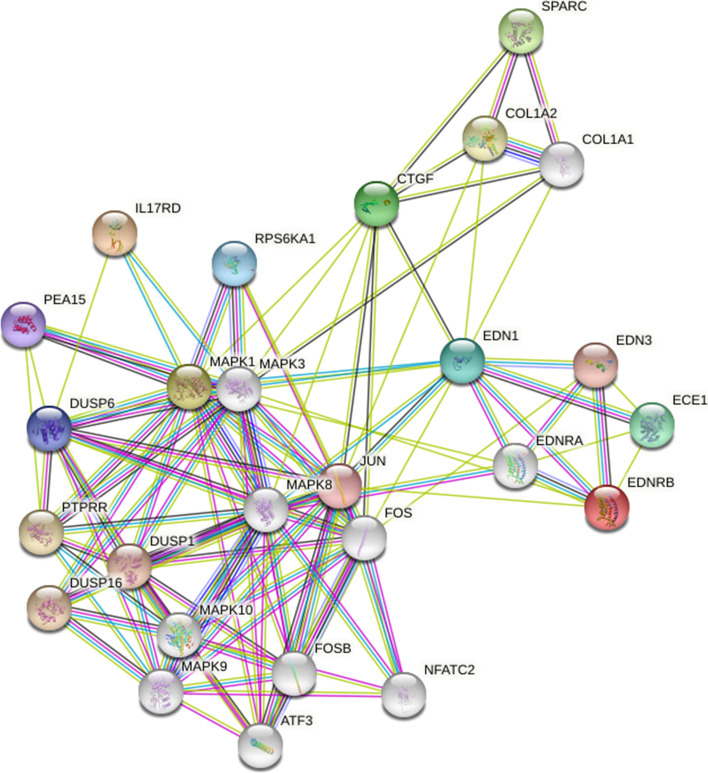
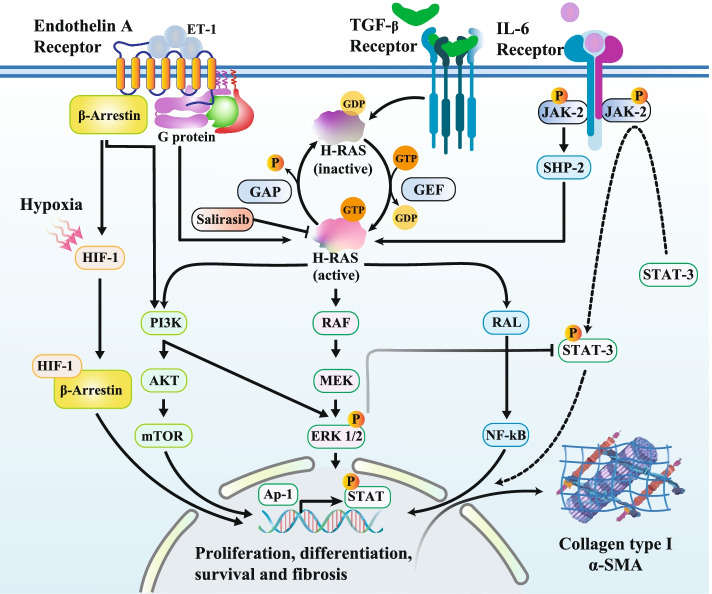
Systemic sclerosis (SSc) is a disease of connective tissue with high rate of morbidity and mortality highlighted by extreme fibrosis affecting various organs such as the dermis, lungs, and heart. Until now, there is no specific cure for the fibrosis occurred in SSc disease. The SSc pathogenesis is yet unknown, but transforming growth factor beta (TGF-β), endothelin-1 (ET-1), and Ras-ERK1/2 cascade are the main factors contributing to the tissue fibrosis through extracellular matrix (ECM) accumulation. Several studies have hallmarked the association of ET-1 with or without TGF-β and Ras-ERK1/2 signaling in the development of SSc disease, vasculopathy, and fibrosis of the dermis, lungs, and several organs. Accordingly, different clinical and experimental studies have indicated the potential therapeutic role of ET-1 and Ras antagonists in these situations in SSc. In addition, ET-1 and connective tissue growth factor (CTGF) as a cofactor of the TGF-β cascade play a substantial initiative role in inducing fibrosis. Once initiated, TGF-β alone or in combination with ET-1 and CTGF can activate several kinase proteins such as the Ras-ERK1/2 pathway that serve as the fundamental factor for developing fibrosis. Furthermore, Salirasib is a synthetic small molecule that is able to inhibit all Ras forms. Therefore, it can be used as a potent therapeutic factor for fibrotic disorders. So, this review discusses the role of TGF-β/ET-1/Ras signaling and their involvement in SSc pathogenesis, particularly in its fibrotic situation.
系统性硬化症(SSc)是一种结缔组织疾病,发病率和死亡率都很高,其特征是极度纤维化,影响皮肤、肺和心脏等各种器官。到目前为止,还没有针对 SSc 疾病中发生的纤维化的特定治疗方法。SSc 的发病机制尚不清楚,但转化生长因子-β(TGF-β)、内皮素-1(ET-1)和 Ras-ERK1/2 级联是导致组织纤维化的主要因素,通过细胞外基质(ECM)积累。几项研究已经确定了 ET-1 与 TGF-β 和 Ras-ERK1/2 信号通路的关联,无论是在 SSc 疾病、血管病变还是皮肤、肺和几个器官的纤维化发展中。因此,不同的临床和实验研究表明,ET-1 和 Ras 拮抗剂在 SSc 中的这些情况下具有潜在的治疗作用。此外,ET-1 和结缔组织生长因子(CTGF)作为 TGF-β 级联的协同因子,在诱导纤维化方面发挥着重要的主动作用。一旦启动,TGF-β 单独或与 ET-1 和 CTGF 结合可以激活几种激酶蛋白,如 Ras-ERK1/2 途径,这些途径是纤维化发展的基本因素。此外,Salirasib 是一种能够抑制所有 Ras 形式的合成小分子。因此,它可以用作治疗纤维化疾病的有效治疗因子。因此,本综述讨论了 TGF-β/ET-1/Ras 信号通路及其在 SSc 发病机制中的作用,特别是在其纤维化情况下的作用。