Li Xiao-Hua, Pang Wei-Wei, Zhang Yue, Liu Dan-Yang, Yi Qiao-Rong, Wang Ning, Zhang Fu-Rong, Deng Yun, Chen Xiang-Ding, Greenbaum Jonathan, Xiao Hong-Mei, Deng Hong-Wen, Tan Li-Jun
Laboratory of Molecular and Statistical Genetics, College of Life Sciences, Hunan Normal University, Changsha, Hunan, China.
School of Physical Education, Hunan University of Arts and Science, Changde, Hunan, China.
Front Pharmacol. 2023 Jul 20;14:1211302. doi: 10.3389/fphar.2023.1211302. eCollection 2023.
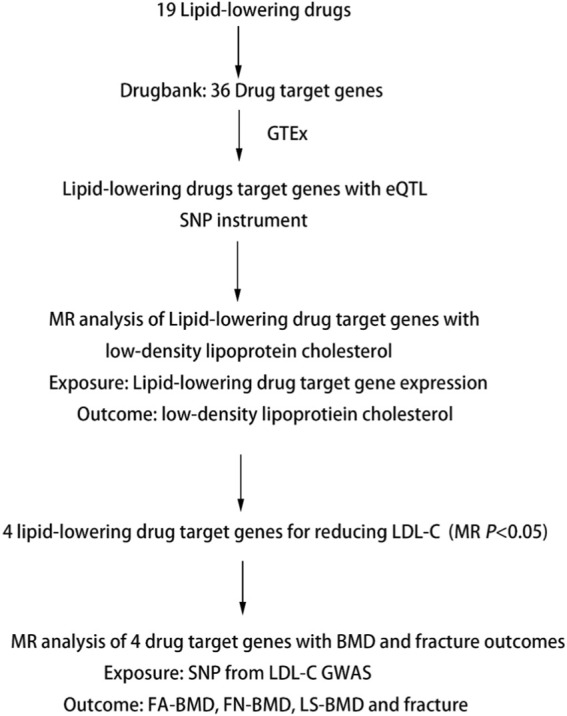
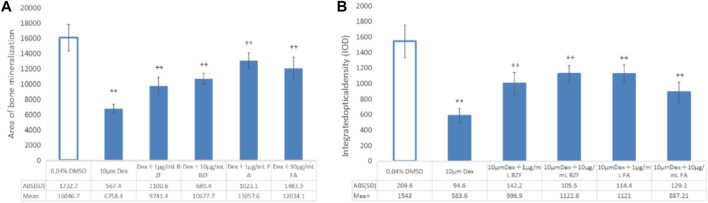
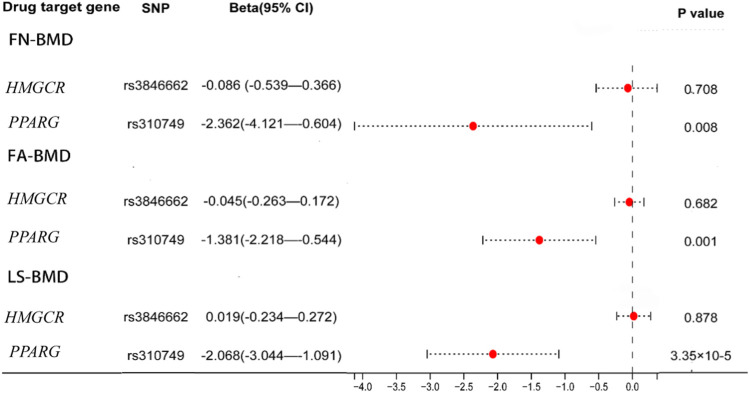
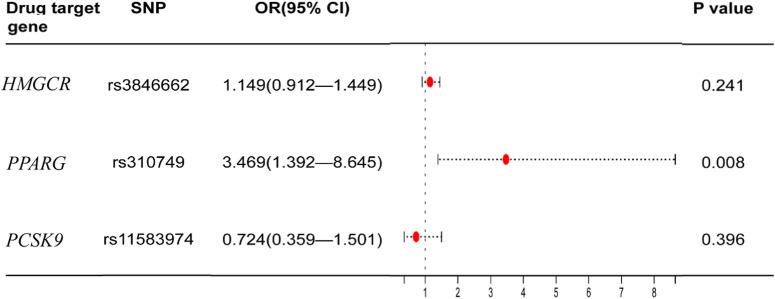
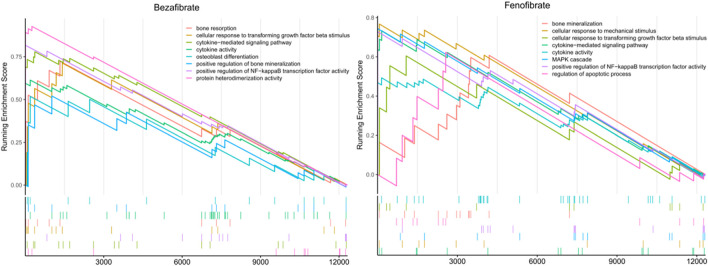
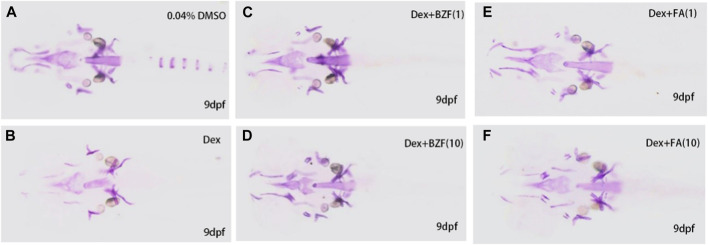
Lipid pathways have been implicated in the pathogenesis of osteoporosis (OP). Lipid-lowering drugs may be used to prevent and treat OP. However, the causal interpretation of results from traditional observational designs is controversial by confounding. We aimed to investigate the causal association between genetically proxied lipid-lowering drugs and OP risk. We conducted two-step Mendelian randomization (MR) analyses to investigate the causal association of genetically proxied lipid-lowering drugs on the risk of OP. The first step MR was used to estimate the associations of drug target genes expression with low-density lipoprotein cholesterol (LDL-C) levels. The significant SNPs in the first step MR were used as instrumental variables in the second step MR to estimate the associations of LDL-C levels with forearm bone mineral density (FA-BMD), femoral neck BMD (FN-BMD), lumbar spine BMD (LS-BMD) and fracture. The significant lipid-lowering drugs after MR analyses were further evaluated for their effects on bone mineralization using a dexamethasone-induced OP zebrafish model. The first step MR analysis found that the higher expression of four genes (, , and ) was significantly associated with a lower LDL-C level. The genetically decreased LDL-C level mediated by the was significantly associated with increased FN-BMD (BETA = -1.38, = 0.001) and LS-BMD (BETA = -2.07, = 3.35 × 10) and was marginally significantly associated with FA-BMD (BETA = -2.36, = 0.008) and reduced fracture risk (OR = 3.47, = 0.008). Bezafibrate (BZF) and Fenofibric acid (FBA) act as agonists. Therefore genetically proxied BZF and FBA had significant protective effects on OP. The dexamethasone-induced OP zebrafish treated with BZF and FBA showed increased bone mineralization area and integrated optical density (IOD) with alizarin red staining. The present study provided evidence that BZF and FBA can increase BMD, suggesting their potential effects in preventing and treating OP. These findings potentially pave the way for future studies that may allow personalized selection of lipid-lowering drugs for those at risk of OP.
脂质代谢途径与骨质疏松症(OP)的发病机制有关。降脂药物可用于预防和治疗OP。然而,传统观察性设计结果的因果解释因混杂因素而存在争议。我们旨在研究基因代理的降脂药物与OP风险之间的因果关系。我们进行了两步孟德尔随机化(MR)分析,以研究基因代理的降脂药物与OP风险之间的因果关系。第一步MR用于估计药物靶基因表达与低密度脂蛋白胆固醇(LDL-C)水平的关联。第一步MR中的显著单核苷酸多态性(SNPs)在第二步MR中用作工具变量,以估计LDL-C水平与前臂骨矿物质密度(FA-BMD)、股骨颈骨密度(FN-BMD)、腰椎骨密度(LS-BMD)和骨折的关联。MR分析后显著的降脂药物使用地塞米松诱导的OP斑马鱼模型进一步评估其对骨矿化的影响。第一步MR分析发现,四个基因(、、和)的较高表达与较低的LDL-C水平显著相关。由介导的基因降低的LDL-C水平与FN-BMD增加(BETA = -1.38, = 0.001)和LS-BMD增加(BETA = -2.07, = 3.35×10)显著相关,与FA-BMD增加(BETA = -2.36, = 0.008)和骨折风险降低(OR = 3.47, = 0.008)有边缘显著相关性。苯扎贝特(BZF)和非诺贝特酸(FBA)作为激动剂。因此,基因代理的BZF和FBA对OP有显著的保护作用。用BZF和FBA处理的地塞米松诱导的OP斑马鱼经茜素红染色显示骨矿化面积和积分光密度(IOD)增加。本研究提供了证据表明BZF和FBA可以增加骨密度,表明它们在预防和治疗OP方面的潜在作用。这些发现可能为未来的研究铺平道路,这些研究可能允许为有OP风险的人个性化选择降脂药物。