Department of Surgery, Division of Neurosurgery, Kaohsiung Medical University Hospital, Kaohsiung 807, Taiwan.
Graduate Institute of Medicine, College of Medicine, Kaohsiung Medical University, Kaohsiung 807, Taiwan.
Int J Mol Sci. 2022 Apr 28;23(9):4910. doi: 10.3390/ijms23094910.
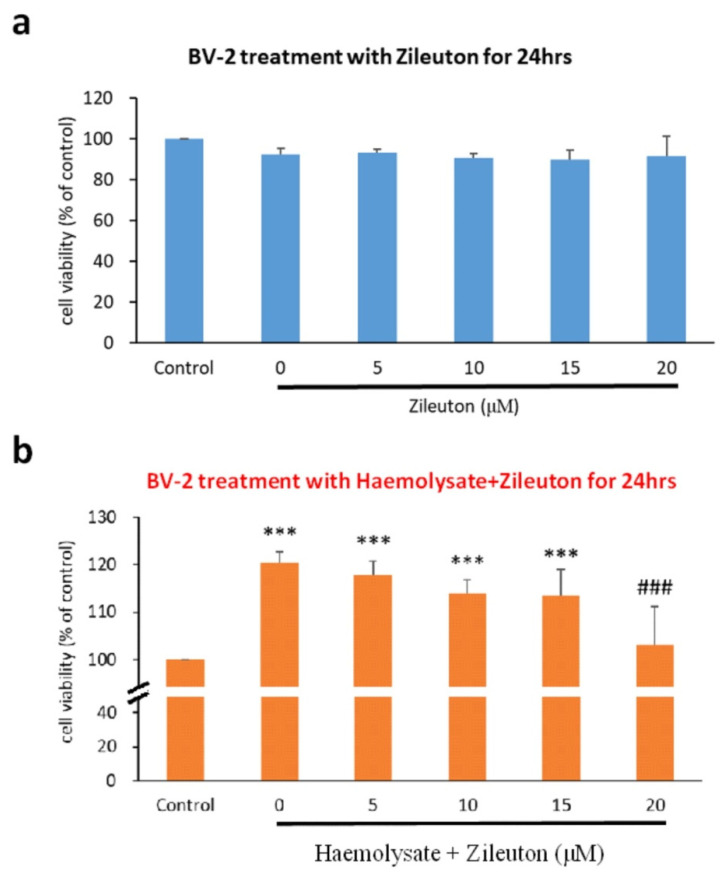
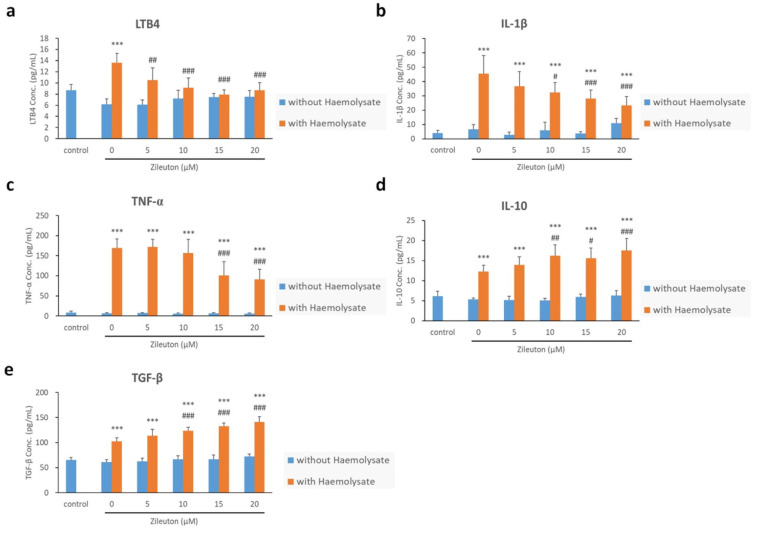
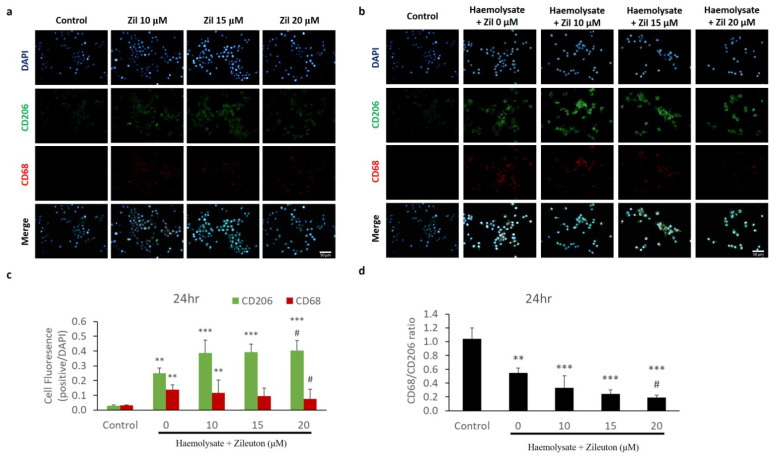
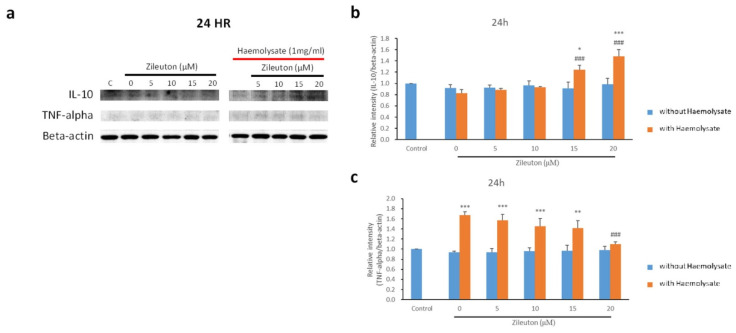
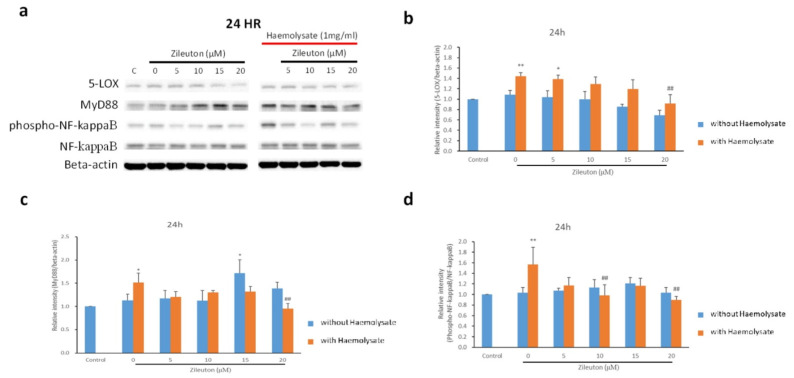
M1 microglia induce neuroinflammation-related neuronal death in animal models of spontaneous subarachnoid haemorrhage. Zileuton is a 5-lipoxygenase inhibitor that reduces the levels of downstream pro-inflammatory cytokines. This study aimed to investigate whether zileuton inhibits microglial activation and describe its underlying mechanisms. BV-2 cells were exposed to 1 mg/mL haemolysate for 30 min, followed by treatment with different concentrations (5, 10, 15, or 20 μM) of zileuton for 24 h. The cells were then assessed for viability, polarisation, and protein expression levels. Haemolysate increases the viability of BV-2 cells and induces M1 polarisation. Subsequent exposure to high concentrations of zileuton decreased the viability of BV-2 cells, shifted the polarisation to the M2 phenotype, suppressed the expression of 5-lipoxygenase, decreased tumour necrosis factor α levels, and increased interleukin-10 levels. Furthermore, high concentrations of zileuton suppressed the expression of myeloid differentiation primary response protein 88 and reduced the phosphorylated-nuclear factor-kappa B (NF-kB)/NF-kB ratio. Therefore, phenotype reversal from M1 to M2 is a possible mechanism by which zileuton attenuates haemolysate-induced neuroinflammation after spontaneous subarachnoid haemorrhage.
M1 小胶质细胞在自发性蛛网膜下腔出血的动物模型中诱导与神经炎症相关的神经元死亡。齐留通是一种 5-脂氧合酶抑制剂,可降低下游促炎细胞因子的水平。本研究旨在探讨齐留通是否抑制小胶质细胞激活,并描述其潜在机制。将 BV-2 细胞暴露于 1 mg/mL 溶血产物 30 min,然后用不同浓度(5、10、15 或 20 μM)齐留通处理 24 h。然后评估细胞活力、极化和蛋白表达水平。溶血产物增加 BV-2 细胞的活力并诱导 M1 极化。随后暴露于高浓度的齐留通降低 BV-2 细胞的活力,将极化转变为 M2 表型,抑制 5-脂氧合酶的表达,降低肿瘤坏死因子 α 水平,并增加白细胞介素 10 水平。此外,高浓度的齐留通抑制髓样分化初级反应蛋白 88 的表达,并降低磷酸化核因子-κB(NF-κB)/NF-κB 比值。因此,M1 向 M2 的表型逆转可能是齐留通减轻自发性蛛网膜下腔出血后溶血产物诱导的神经炎症的机制之一。