Department of Thoracic/Head and Neck Medical Oncology, The University of Texas MD Anderson Cancer Center, 1515 Holcombe Blvd, Houston, TX 77030, USA.
UTHealth Graduate School of Biomedical Sciences, The University of Texas MD Anderson Cancer Center, 1515 Holcombe Blvd, Houston, TX 77030, USA.
Cells. 2022 Apr 28;11(9):1484. doi: 10.3390/cells11091484.
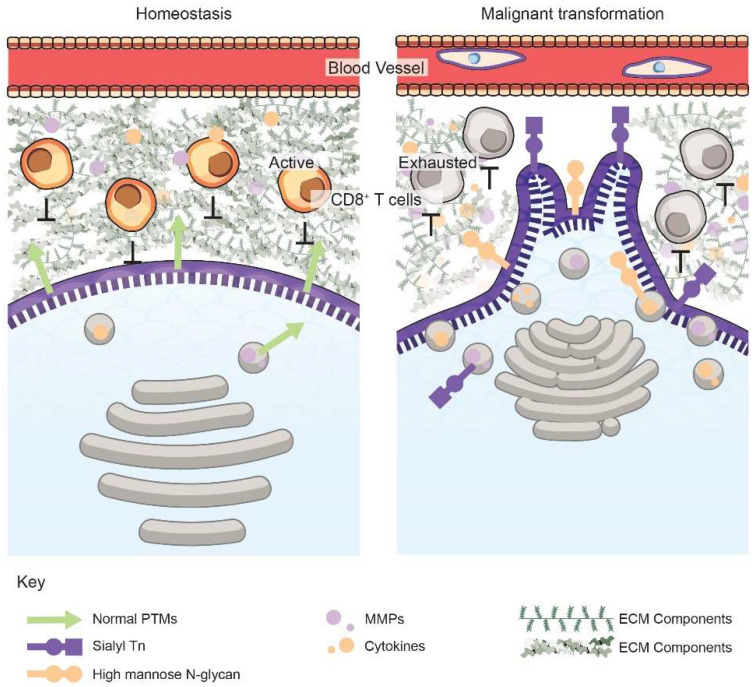
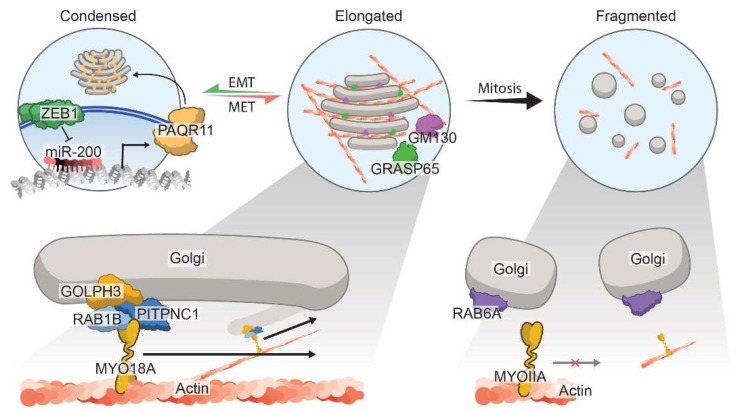
The Golgi apparatus is at the center of protein processing and trafficking in normal cells. Under pathological conditions, such as in cancer, aberrant Golgi dynamics alter the tumor microenvironment and the immune landscape, which enhances the invasive and metastatic potential of cancer cells. Among these changes in the Golgi in cancer include altered Golgi orientation and morphology that contribute to atypical Golgi function in protein trafficking, post-translational modification, and exocytosis. Golgi-associated gene mutations are ubiquitous across most cancers and are responsible for modifying Golgi function to become pro-metastatic. The pharmacological targeting of the Golgi or its associated genes has been difficult in the clinic; thus, studying the Golgi and its role in cancer is critical to developing novel therapeutic agents that limit cancer progression and metastasis. In this review, we aim to discuss how disrupted Golgi function in cancer cells promotes invasion and metastasis.
高尔基体是正常细胞中蛋白质加工和运输的中心。在病理条件下,如癌症中,异常的高尔基体动力学改变肿瘤微环境和免疫景观,从而增强癌细胞的侵袭和转移潜力。在癌症中,这些高尔基体的变化包括改变的高尔基体取向和形态,这有助于在蛋白质运输、翻译后修饰和胞吐作用中出现非典型的高尔基体功能。高尔基体相关基因突变在大多数癌症中普遍存在,负责修饰高尔基体功能以促进转移。高尔基体或其相关基因的药理学靶向在临床上一直很困难;因此,研究高尔基体及其在癌症中的作用对于开发限制癌症进展和转移的新型治疗药物至关重要。在这篇综述中,我们旨在讨论癌细胞中高尔基体功能的破坏如何促进侵袭和转移。