Basyooni Mohamed A, Al-Dossari Mawaheb, Zaki Shrouk E, Eker Yasin Ramazan, Yilmaz Mucahit, Shaban Mohamed
Department of Nanotechnology and Advanced Materials, Graduate School of Applied and Natural Science, Selçuk University, Konya 42030, Turkey.
Department of Nanoscience and Nanoengineering, Institute of Science and Technology, University of Necmettin Erbakan, Konya 42060, Turkey.
Nanomaterials (Basel). 2022 Apr 26;12(9):1470. doi: 10.3390/nano12091470.
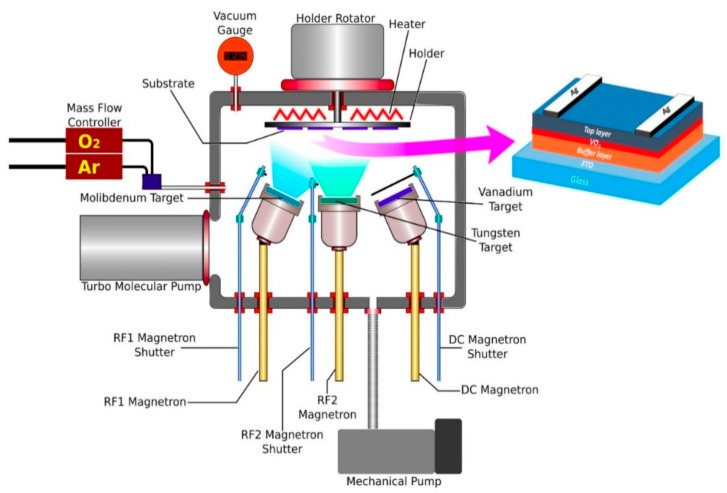
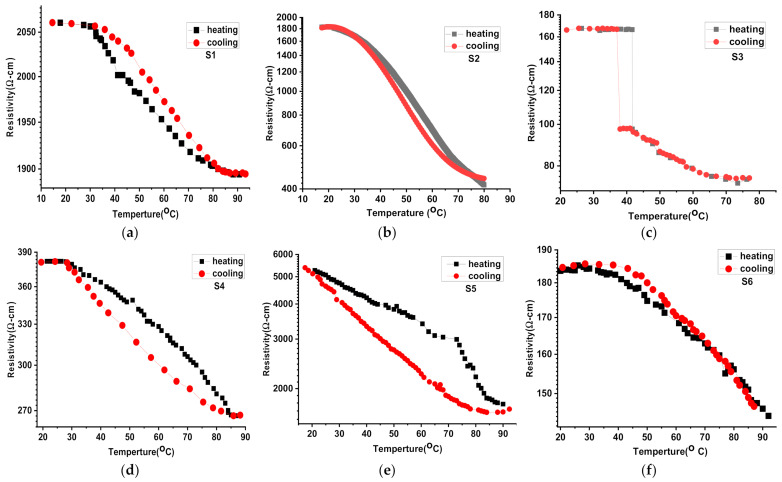
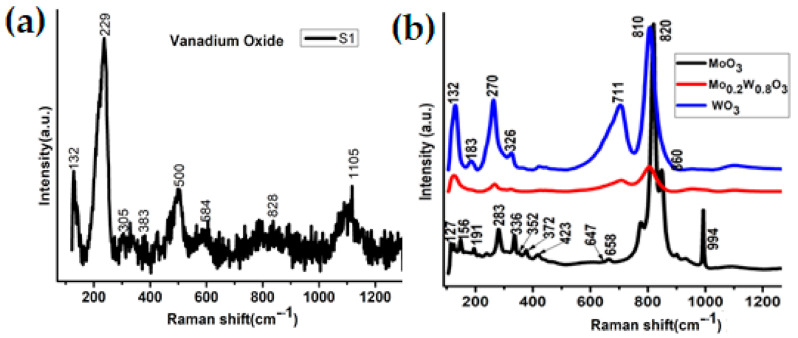
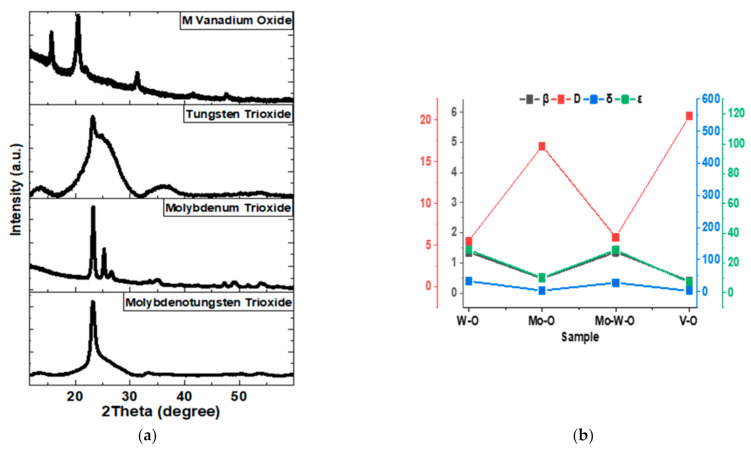
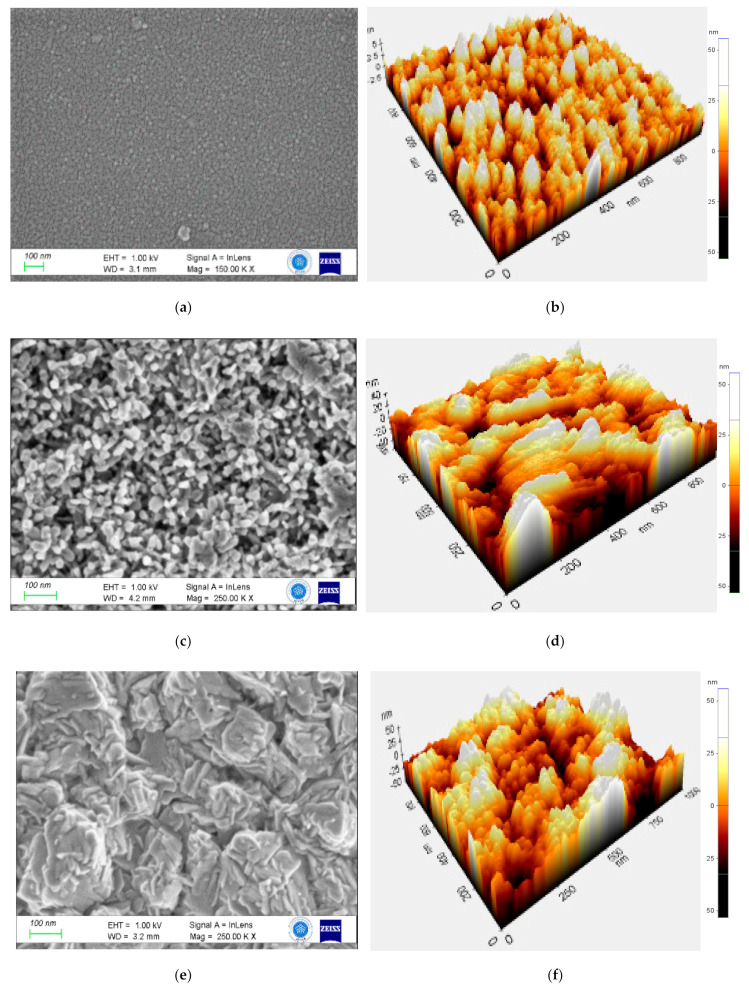
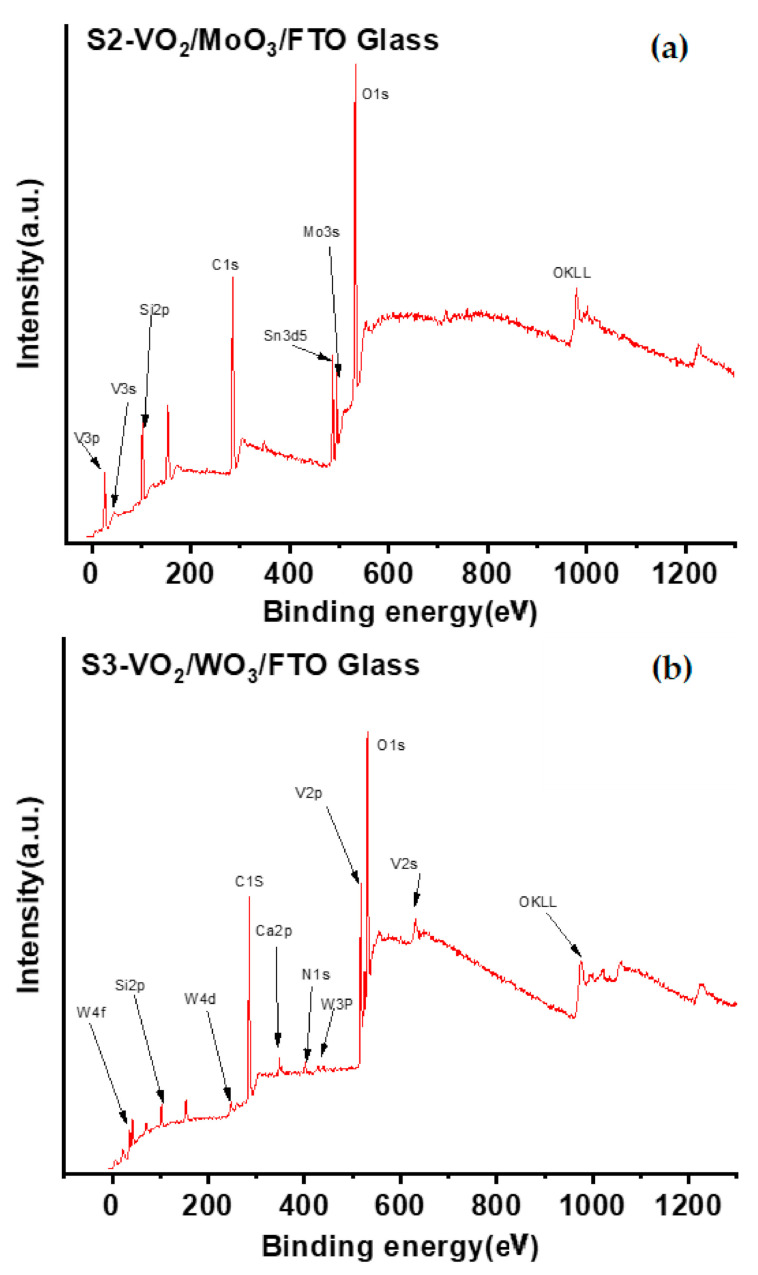
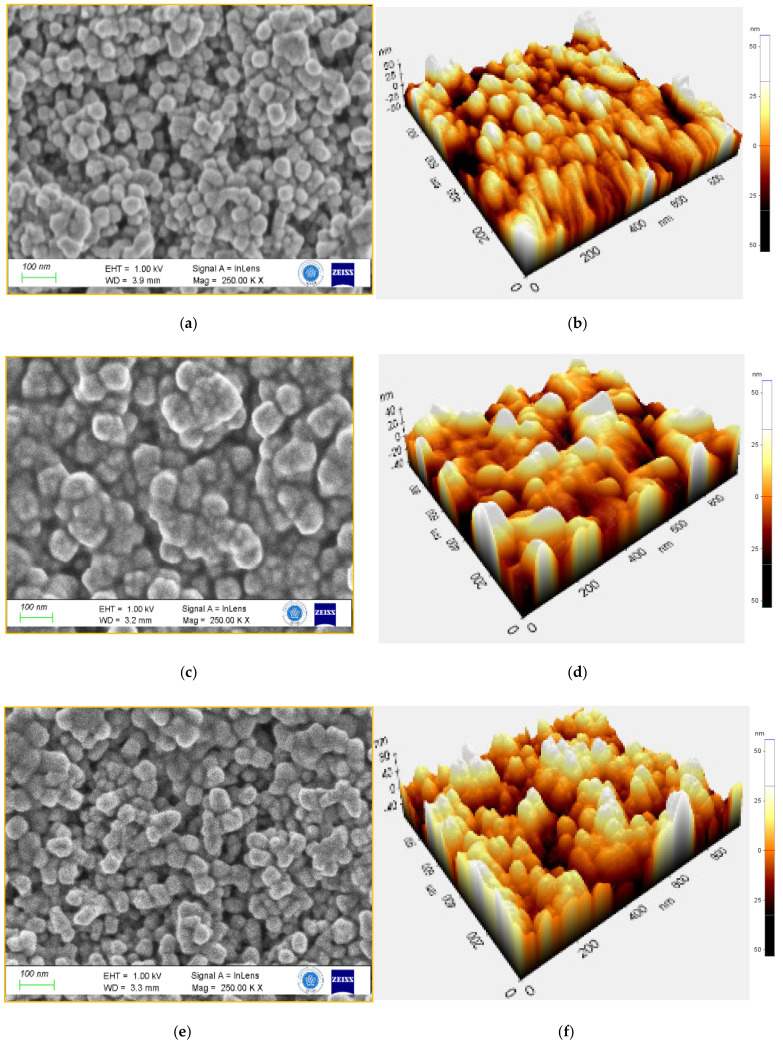
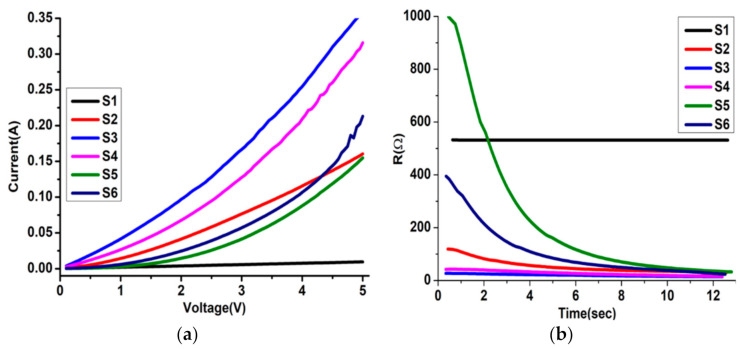
Vanadium oxide (VO) is considered a Peierls-Mott insulator with a metal-insulator transition (MIT) at T = 68° C. The tuning of MIT parameters is a crucial point to use VO within thermoelectric, electrochromic, or thermochromic applications. In this study, the effect of oxygen deficiencies, strain engineering, and metal tungsten doping are combined to tune the MIT with a low phase transition of 20 °C in the air without capsulation. Narrow hysteresis phase transition devices based on multilayer VO, WO, MoWO and/or MoO oxide thin films deposited through a high vacuum sputtering are investigated. The deposited films are structurally, chemically, electrically, and optically characterized. Different conductivity behaviour was observed, with the highest value towards VO/WO and the lowest VO on FTO glass. VO/WO showed a narrow hysteresis curve with a single-phase transition. Thanks to the role of oxygen vacancies, the MIT temperature decreased to 35 °C, while the lowest value (T = 20 °C) was reached with MoWO/VO/MoO structure. In this former sample, MoWO was used for the first time as an anti-reflective and anti-oxidative layer. The results showed that the MoO bottom layer is more suitable than WO to enhance the electrical properties of VO thin films. This work is applied to fast phase transition devices.
氧化钒(VO)被认为是一种具有在T = 68°C时发生金属-绝缘体转变(MIT)的佩尔斯-莫特绝缘体。调节MIT参数是在热电、电致变色或热致变色应用中使用VO的关键要点。在本研究中,将氧缺陷、应变工程和金属钨掺杂的影响相结合,以在无封装的空气中以20°C的低相变温度调节MIT。研究了基于通过高真空溅射沉积的多层VO、WO、MoWO和/或MoO氧化物薄膜的窄滞后相变器件。对沉积的薄膜进行了结构、化学、电学和光学表征。观察到了不同的导电行为,在FTO玻璃上VO/WO的导电率最高,VO的最低。VO/WO呈现出具有单相转变的窄滞后曲线。由于氧空位的作用,MIT温度降至35°C,而MoWO/VO/MoO结构达到了最低值(T = 20°C)。在该前一个样品中,MoWO首次用作抗反射和抗氧化层。结果表明,MoO底层比WO更适合增强VO薄膜的电学性能。这项工作应用于快速相变器件。