Alhashmi Alamer Fahad, Beyari Rawan F
Department of Physics, Faculty of Applied Science, Umm AL-Qura University, Al Taif Road, Makkah 24382, Saudi Arabia.
Nanomaterials (Basel). 2022 May 9;12(9):1609. doi: 10.3390/nano12091609.
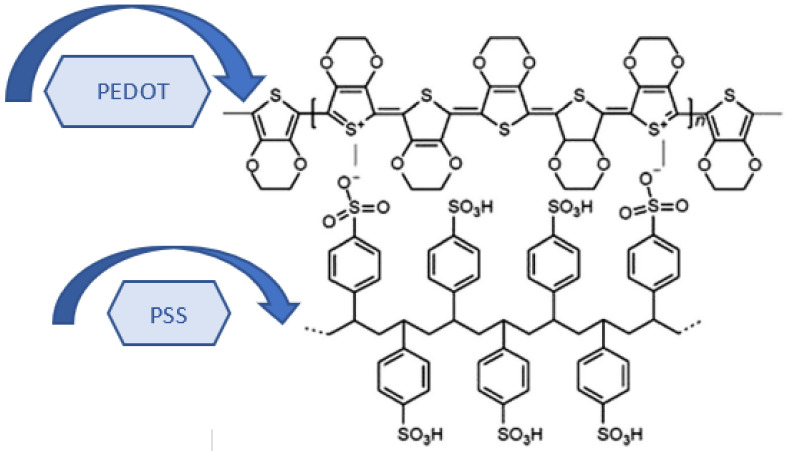
Metallic nanoparticles have been of interest to scientists, and they are now widely used in biomedical and engineering applications. The importance, categorization, and characterization of silver nanoparticles, gold nanoparticles, and titanium nanoparticles have been discussed. Poly(3,4-ethylenedioxythiophene) poly(styrenesulfonate) (PEDOT:PSS) is the most practical and reliable conductive polymer used in the manufacturing of conductive textiles. The effects of metallic nanoparticles on the performance of PEDOT:PSS thin films are discussed. The results indicated that the properties of PEDOT:PSS significantly depended on the synthesis technique, doping, post-treatment, and composite material. Further, electronic textiles known as smart textiles have recently gained popularity, and they offer a wide range of applications. This review provides an overview of the effects of nanoparticles on the physical properties of PEDOT:PSS-coated cotton fabrics.
金属纳米粒子一直是科学家们感兴趣的对象,目前它们被广泛应用于生物医学和工程领域。本文讨论了银纳米粒子、金纳米粒子和钛纳米粒子的重要性、分类及特性。聚(3,4-乙撑二氧噻吩)聚(苯乙烯磺酸盐)(PEDOT:PSS)是用于制造导电纺织品的最实用、最可靠的导电聚合物。文中探讨了金属纳米粒子对PEDOT:PSS薄膜性能的影响。结果表明,PEDOT:PSS的性能在很大程度上取决于合成技术、掺杂、后处理及复合材料。此外,被称为智能纺织品的电子纺织品近来颇受青睐,并且具有广泛的应用。这篇综述概述了纳米粒子对涂覆有PEDOT:PSS的棉织物物理性能的影响。