Carvalho-Silva João Marcos, Reis Andréa Cândido Dos
Department of Dental Materials and Prosthesis, Ribeirão Preto Dental School, University of São Paulo (USP), Ribeirão Preto, Brazil.
Heliyon. 2024 Jul 14;10(14):e34564. doi: 10.1016/j.heliyon.2024.e34564. eCollection 2024 Jul 30.
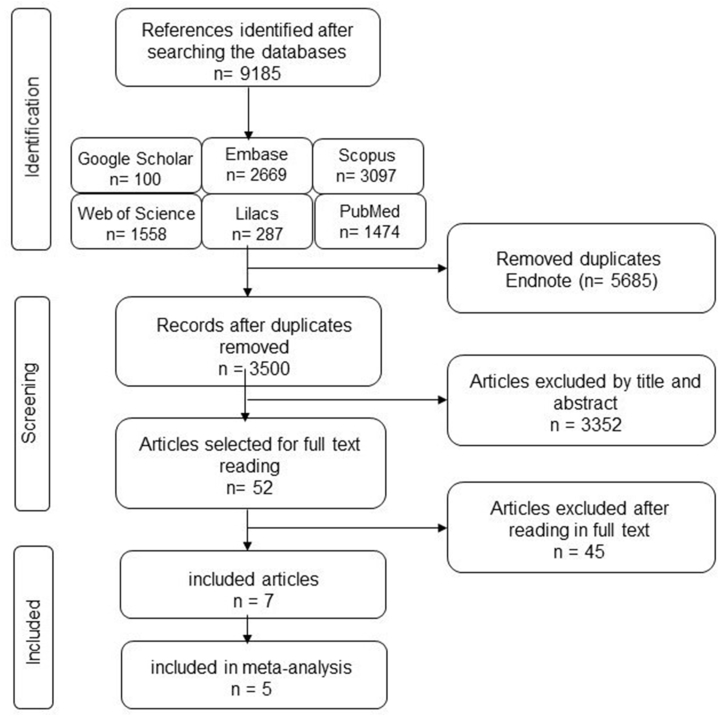
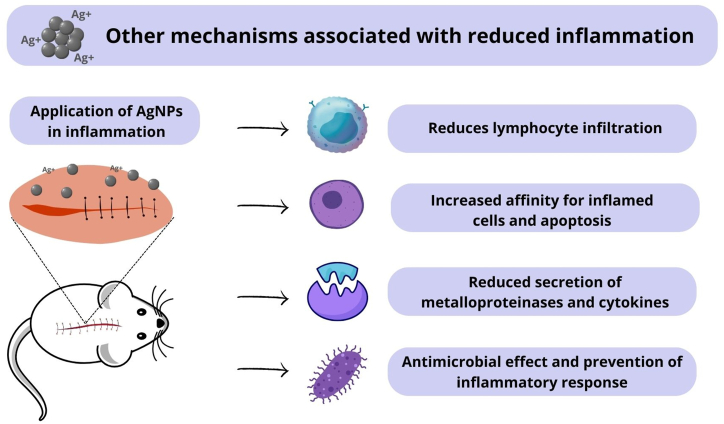
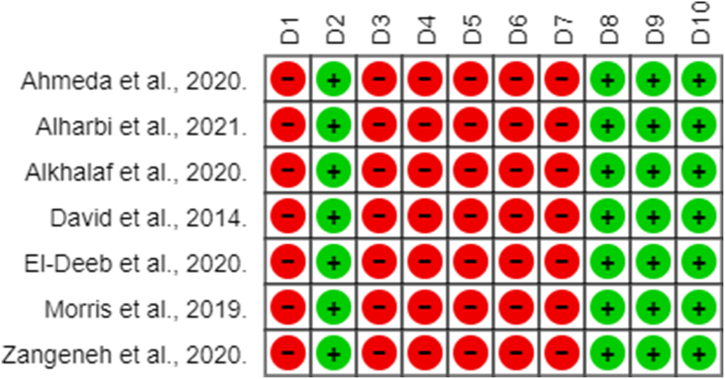
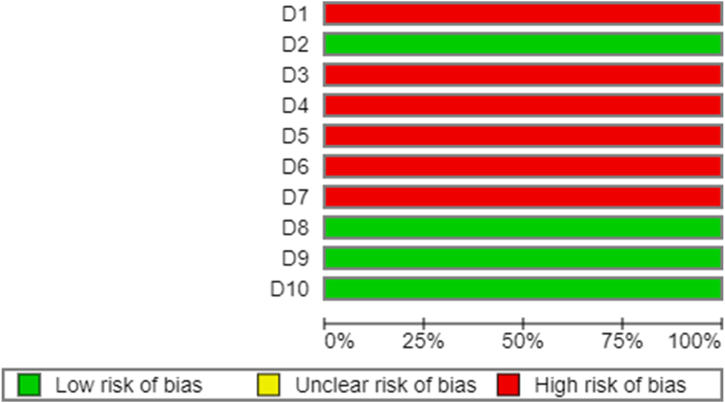
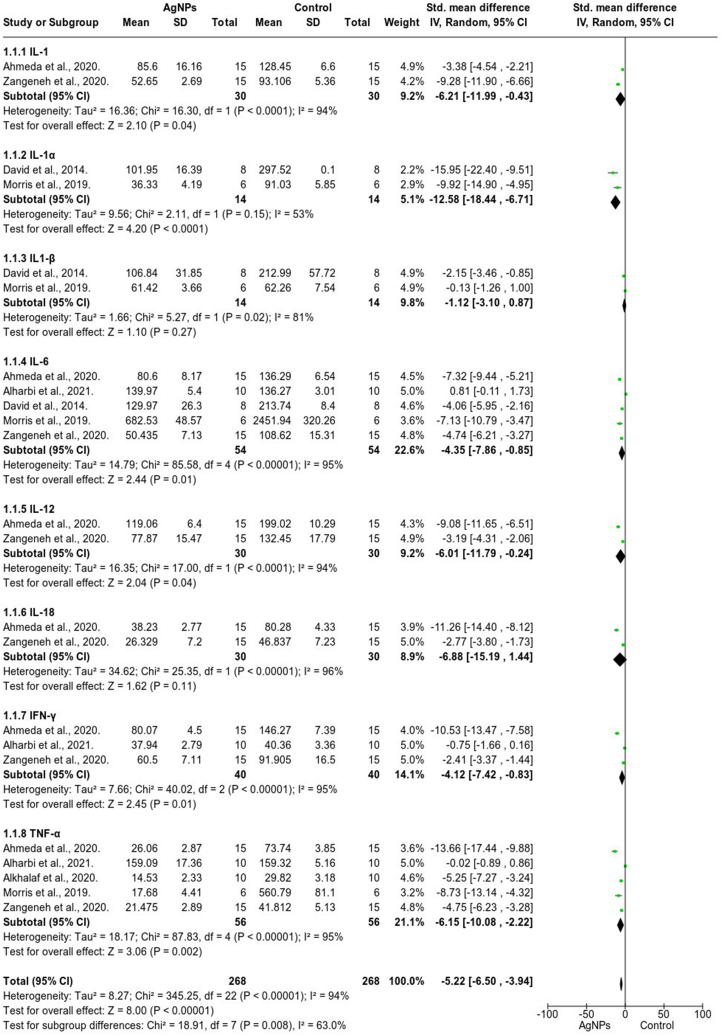
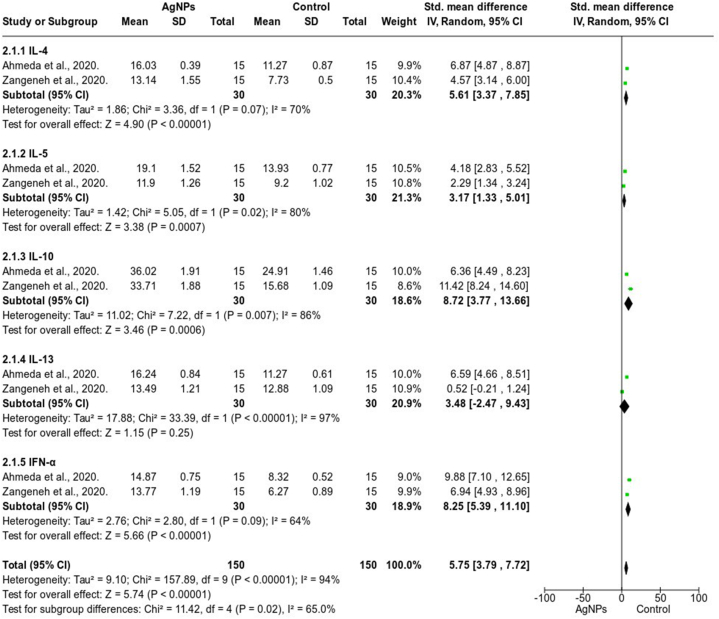
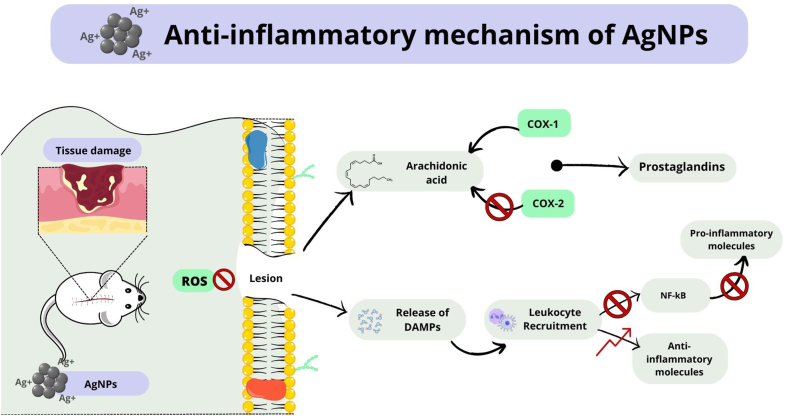
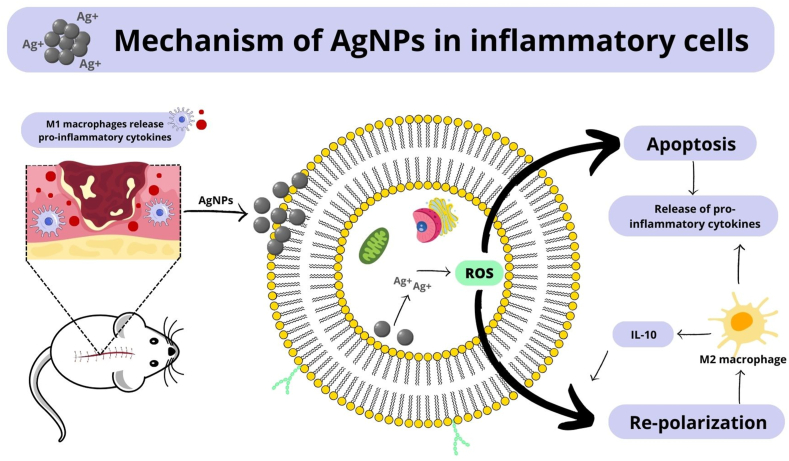
The aim of this study was to systematically review the literature to investigate whether silver nanoparticles (AgNPs) have an anti-inflammatory effect . The guidelines of PRISMA were applied, and a registration was made in PROSPERO. A personalized search of the PubMed, Web of Science, Scopus, Embase, Lilacs, and Google Scholar databases was conducted in September 2023. For the data analysis, the inverse variance in the random effects model was used. The tools of SYRCLE and GRADE were used to assess the risk of bias and the certainty of evidence, respectively. From the 9185 identified studies, 5685 duplicate studies were excluded; 52 were read in full text, and 7 were included in this review. Six studies were evaluated by the meta-analysis, and an increase in anti-inflammatory molecules (SMD -5.22; PI [-6.50, -3.94]) and an increase in anti-inflammatory ones (SMD 5.75; PI [3.79, 7.72]) were observed. Qualitative analysis showed a reduction in pro-inflammatory proteins and in the COX-2 pathway. It was concluded that AgNPs present an anti-inflammatory action through mechanisms involving the reduction of pro-inflammatory molecules and proteins, the increase of anti-inflammatory molecules, and selective inhibition of the COX-2 pathway.
本研究的目的是系统回顾文献,以调查银纳米颗粒(AgNPs)是否具有抗炎作用。本研究采用PRISMA指南,并在PROSPERO进行了注册。2023年9月对PubMed、Web of Science、Scopus、Embase、Lilacs和谷歌学术数据库进行了个性化检索。数据分析采用随机效应模型中的逆方差法。分别使用SYRCLE和GRADE工具评估偏倚风险和证据的确定性。在确定的9185项研究中,排除了5685项重复研究;对52项研究进行了全文阅读,7项研究纳入本综述。六项研究通过荟萃分析进行评估,观察到抗炎分子增加(标准化均数差-5.22;可信区间[-6.50,-3.94])以及抗炎因子增加(标准化均数差5.75;可信区间[3.79,7.72])。定性分析显示促炎蛋白和COX-2途径减少。得出的结论是,AgNPs通过减少促炎分子和蛋白、增加抗炎分子以及选择性抑制COX-2途径的机制发挥抗炎作用。