Psychiatric Unit, Department of Clinical and Experimental Medicine, AOUP, University of Pisa, 56126 Pisa, Italy.
Department of Emergency, Catholic University of the Sacred Heart, 00168 Rome, Italy.
Int J Environ Res Public Health. 2022 Apr 20;19(9):4978. doi: 10.3390/ijerph19094978.
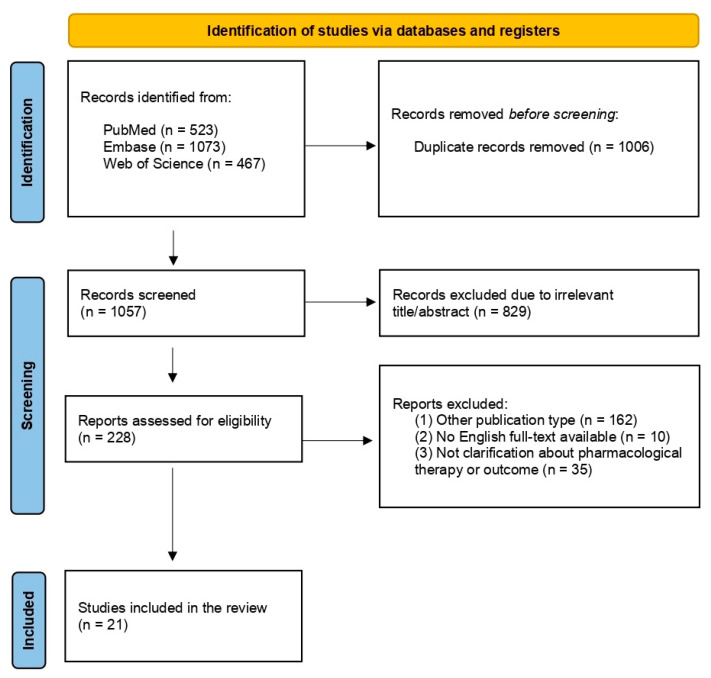
Delirium and psychomotor agitation are relevant clinical conditions that may develop during COVID-19 infection, especially in intensive care unit (ICU) settings. The psychopharmacological management of these conditions is receiving increasing interest in psychiatry, considering hyperkinetic delirium as one of the most common neuropsychiatries acute consequences in COVID-19 recovery patients. However, there are no actual internationally validated guidelines about this topic, due to the relatively newly introduced clinical condition; in addition, a standardized psychopharmacologic treatment of these cases is a complex goal to achieve due to the risk of both drug-drug interactions and the vulnerable conditions of those patients. The aim of this systematic review and case series is to evaluate and gather the scientific evidence on pharmacologic handling during delirium in COVID-19 patients to provide practical recommendations on the optimal management of psychotropic medication in these kinds of patients. The electronic databases PubMed, Embase and Web of Science were reviewed to identify studies, in accordance with the PRISMA guidelines. At the end of the selection process, a total of 21 studies ( = 2063) were included. We also collected a case series of acute psychomotor agitation in COVID-19 patients hospitalized in ICU. Our results showed how the symptom-based choice of the psychotropic medication is crucial, and even most of the psychotropic drug classes showed good safety, one must not underestimate the possible drug interactions and also the possible decrease in vital functions which need to be strictly monitored especially during treatment with some kinds of molecules. We believe that the evidence-based recommendations highlighted in the present research will enhance the current knowledge and could provide better management of these patients.
谵妄和精神运动激越都是相关的临床病症,可能在 COVID-19 感染期间发生,特别是在重症监护病房(ICU)环境中。鉴于COVID-19 康复患者中多动性谵妄是最常见的神经精神急症后果之一,精神药理学对这些病症的管理在精神病学领域受到越来越多的关注。然而,由于这是一个相对较新引入的临床病症,因此目前没有实际的国际认可指南;此外,由于药物相互作用的风险以及这些患者的脆弱状况,对这些病例进行标准化的精神药理学治疗是一个复杂的目标。本系统评价和病例系列的目的是评估和收集 COVID-19 患者谵妄期间药物处理的科学证据,为这些患者的精神药物最佳管理提供实用建议。根据 PRISMA 指南,对 PubMed、Embase 和 Web of Science 电子数据库进行了检索,以确定研究。在选择过程结束时,共纳入 21 项研究(=2063 例)。我们还收集了 ICU 住院 COVID-19 患者急性精神运动激越的病例系列。我们的结果表明,基于症状选择精神药物至关重要,即使大多数精神药物类别显示出良好的安全性,也不能低估可能的药物相互作用以及需要严格监测的重要功能下降,特别是在使用某些分子进行治疗时。我们相信,本研究中强调的基于证据的建议将增强当前的知识,并能更好地管理这些患者。