Lee Yong Jae, Woo Ha Young, Kim Yoo-Na, Park Junsik, Nam Eun Ji, Kim Sang Wun, Kim Sunghoon, Kim Young Tae, Park Eunhyang, Joung Je-Gun, Lee Jung-Yun
Department of Obstetrics and Gynecology, Institute of Women's Medical Life Science, Yonsei University College of Medicine, Seoul 03722, Korea.
Department of Pathology, Kyung Hee University Hospital, Kyung Hee University College of Medicine, Seoul 02447, Korea.
Cancers (Basel). 2022 May 6;14(9):2308. doi: 10.3390/cancers14092308.
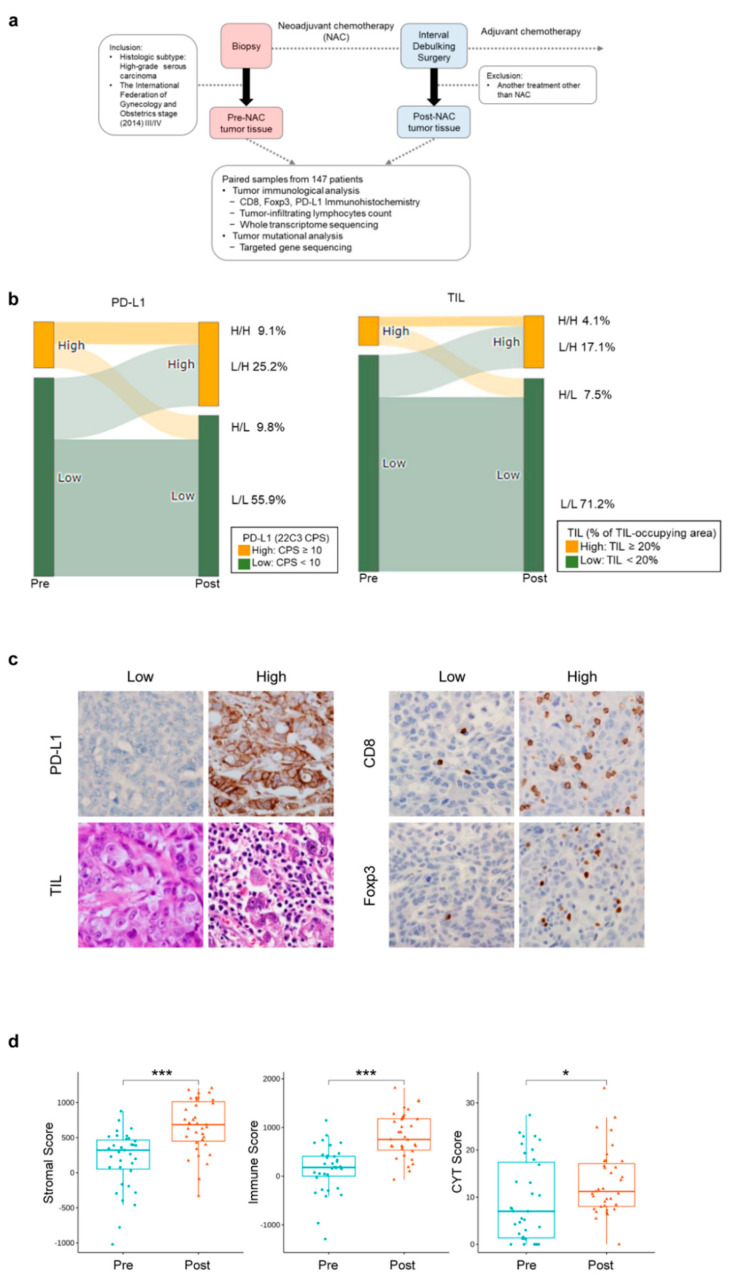
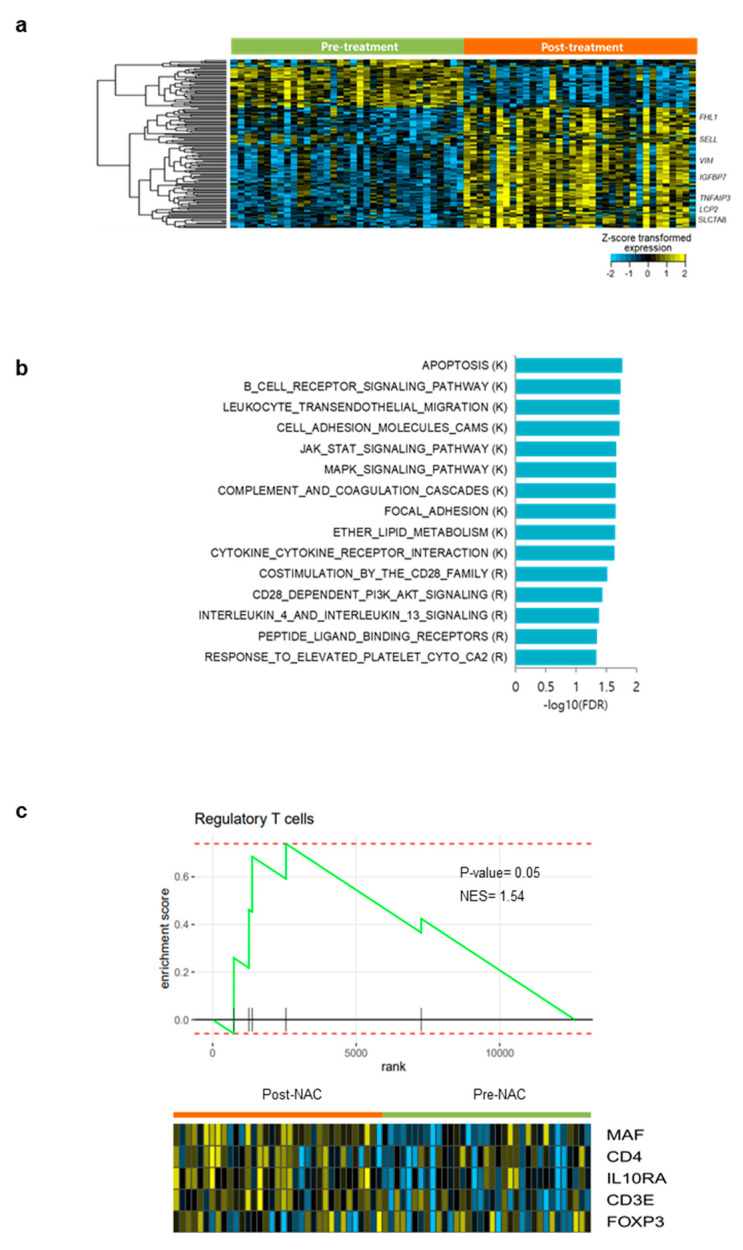
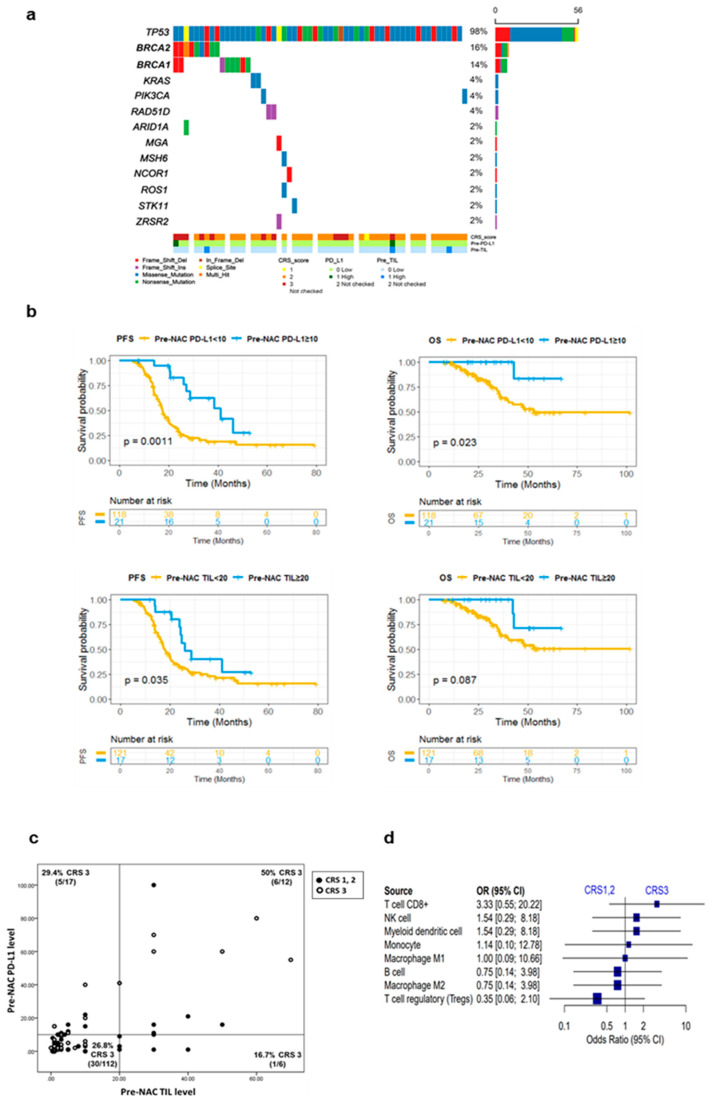
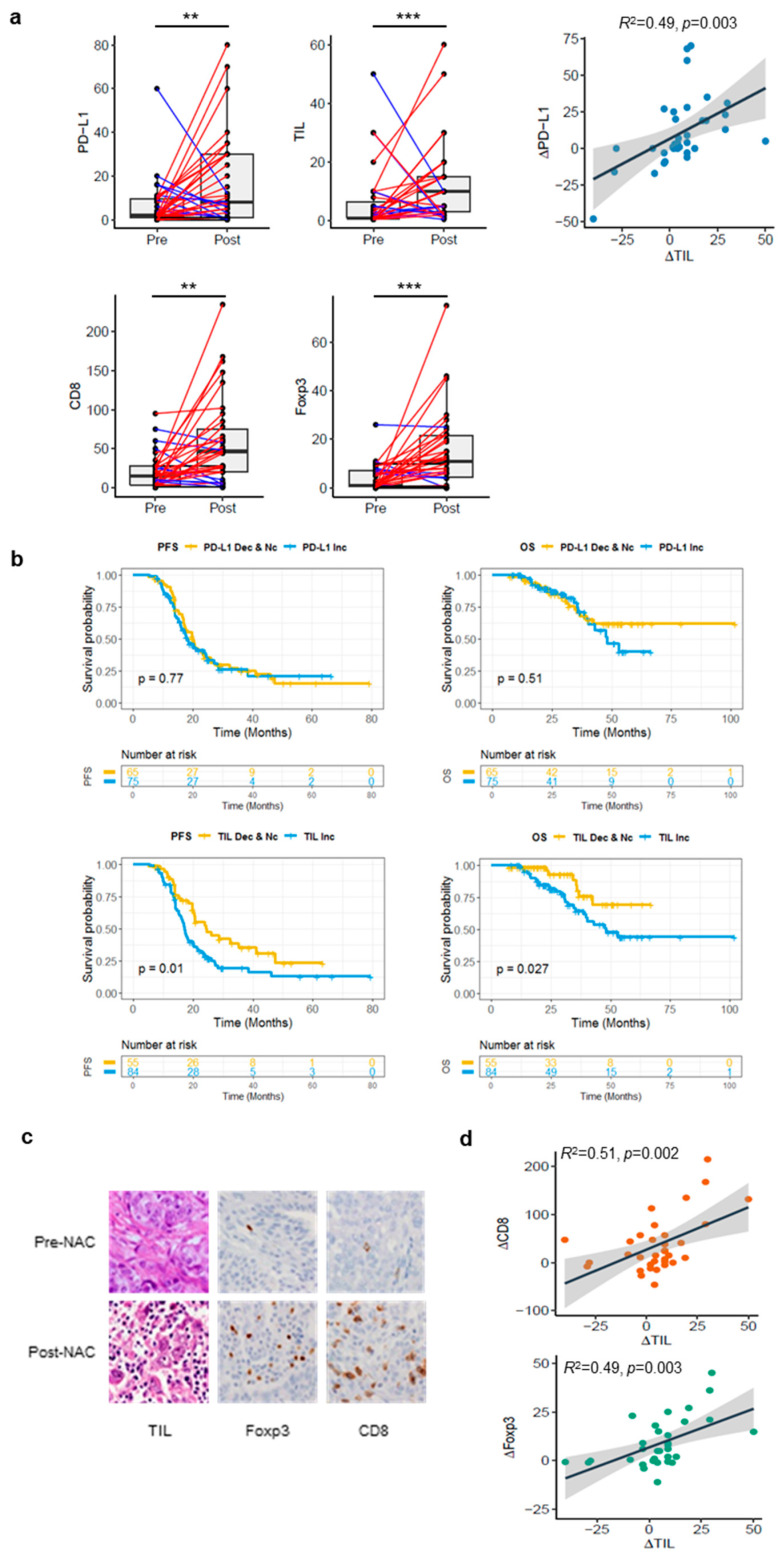
The dynamic changes in the tumor immune microenvironment (TIME) triggered by neoadjuvant chemotherapy (NAC) have not been clearly defined in advanced-stage ovarian cancer. We analyzed the immunologic changes induced by NAC to correlate them with clinical outcomes. We compared the changes in the immune infiltration of high-grade serous carcinoma biopsies before and after NAC via immunohistochemistry (147 paired samples) and whole transcriptome sequencing (35 paired samples). Immunohistochemistry showed significantly increased PD-L1 levels and TIL levels after NAC. Whole transcriptome sequencing revealed that the stromal score, immune score, and cytolytic activity score significantly increased after NAC. An increased tumor-infiltrating lymphocyte (TIL) level in response to NAC was associated with shorter progression-free survival compared with decreased TIL level after NAC. In tumors with increased TIL levels after NAC, the relative fraction of CD8 T cells and regulatory T cells significantly increased with immunohistochemistry. Post-NAC tumors were enriched in gene sets associated with immune signaling pathways, such as regulatory T cell and JAK/STAT signaling pathways. NAC induced dynamic changes in the TIME that increased TIL levels, but their high abundance did not impart any survival benefit. Our data may provide therapeutic strategies to improve the survival benefit from immunotherapies in ovarian cancer.
新辅助化疗(NAC)引发的肿瘤免疫微环境(TIME)的动态变化在晚期卵巢癌中尚未明确界定。我们分析了NAC诱导的免疫变化,并将其与临床结果相关联。我们通过免疫组织化学(147对样本)和全转录组测序(35对样本)比较了NAC前后高级别浆液性癌活检组织中免疫浸润的变化。免疫组织化学显示NAC后PD-L1水平和肿瘤浸润淋巴细胞(TIL)水平显著升高。全转录组测序显示NAC后基质评分、免疫评分和细胞溶解活性评分显著增加。与NAC后TIL水平降低相比,NAC后TIL水平升高与无进展生存期缩短相关。在NAC后TIL水平升高的肿瘤中,免疫组织化学显示CD8 T细胞和调节性T细胞的相对比例显著增加。NAC后的肿瘤富含与免疫信号通路相关的基因集,如调节性T细胞和JAK/STAT信号通路。NAC诱导了TIME的动态变化,增加了TIL水平,但其高丰度并未带来任何生存益处。我们的数据可能为改善卵巢癌免疫治疗的生存益处提供治疗策略。