Shen Wenxiang, Oladejo Ayodele Olaolu, Ma Xiaoyu, Jiang Wei, Zheng Juanshan, Imam Bereket Habte, Wang Shengyi, Wu Xiaohu, Ding Xuezhi, Ma Baohua, Yan Zuoting
Lanzhou Institute of Husbandry and Pharmaceutical Science, Chinese Academy of Agricultural Science, Lanzhou 730050, China.
College of Veterinary Medicine, Northwest A&F University, Yangling District, Xianyang 712100, China.
Animals (Basel). 2022 Apr 29;12(9):1151. doi: 10.3390/ani12091151.
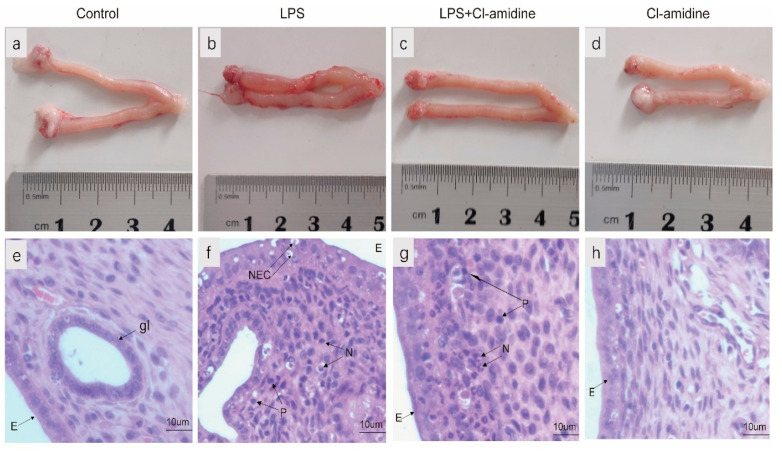
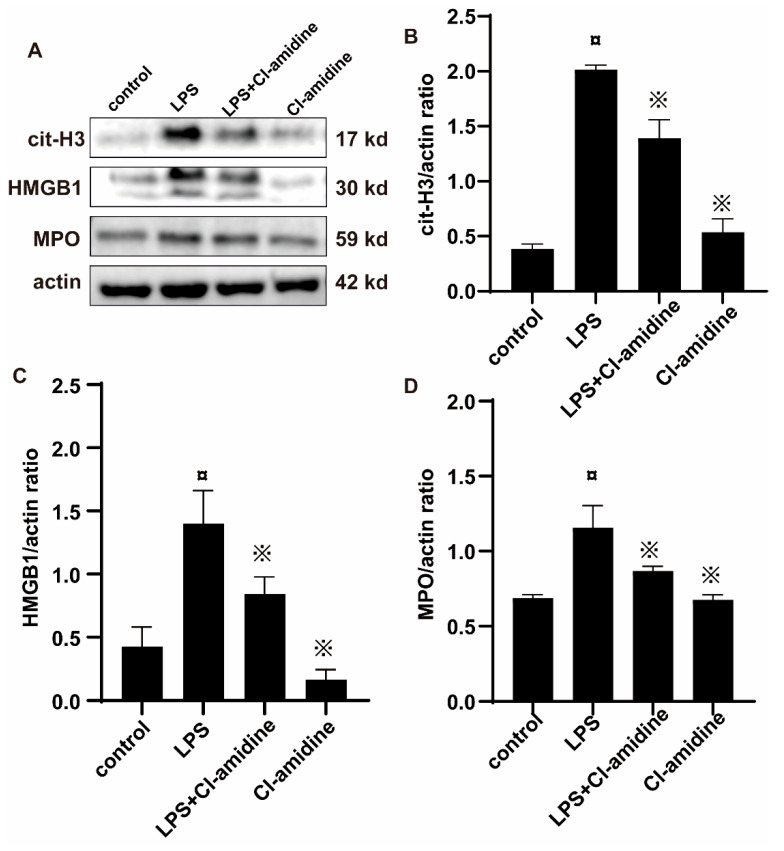
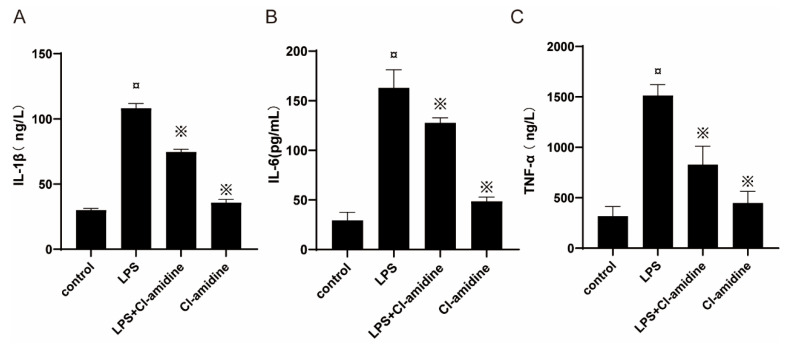
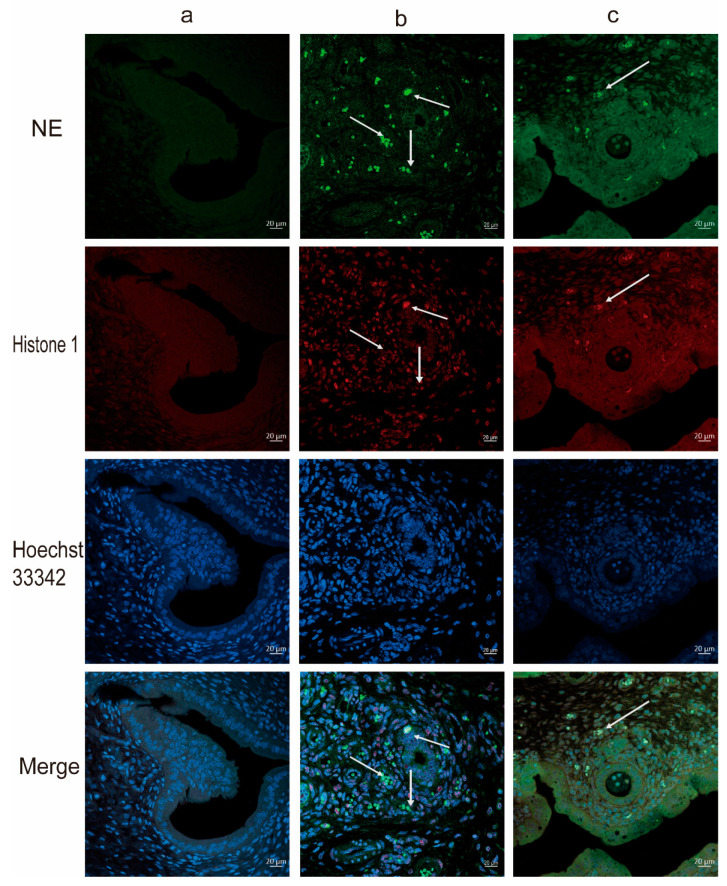
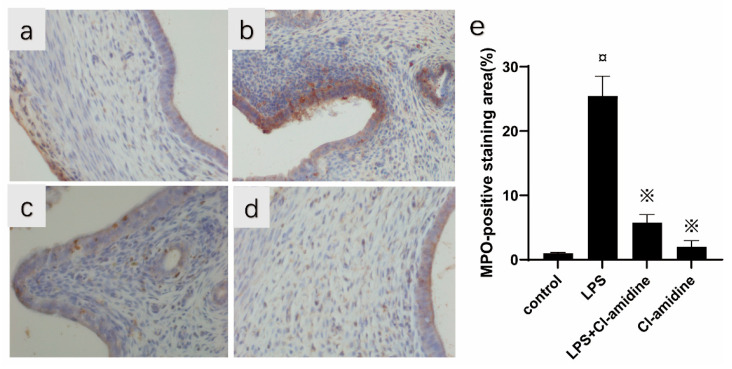
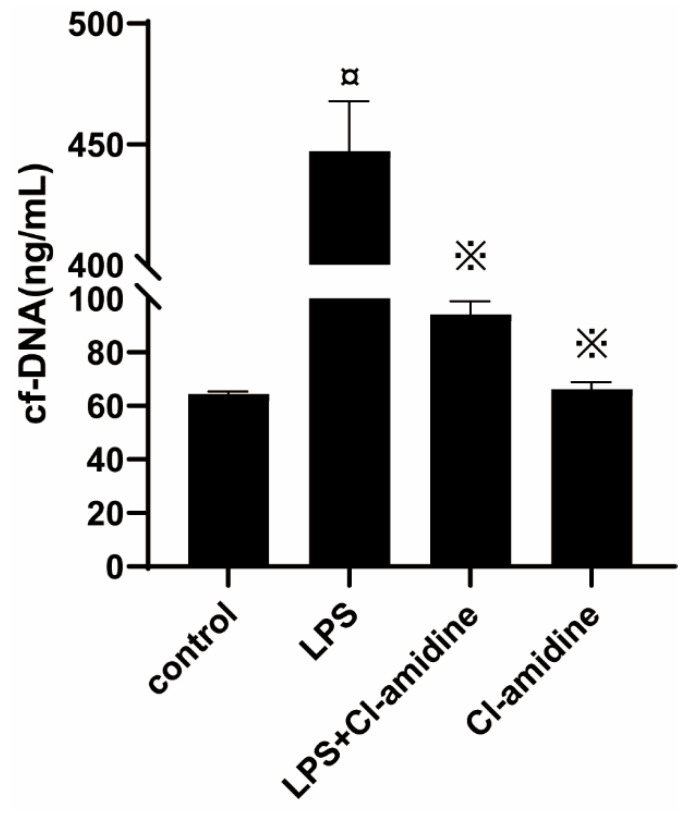
Endometritis is a common disease that affects the production in dairy cows and leads to severe losses in the dairy industry. Neutrophil extracellular traps (NETs) formation promotes pathogenic invasions of the lumen of the tissue, leading to inflammatory diseases such as mastitis, pancreatitis, and septic infection. However, research that could show the relationship between NETs and endometritis is scarce. Cl-amidine has been shown to ameliorate the disease squealing and clinical manifestation in various disease models. In this study, we investigated the role of NETs in LPS-triggered endometritis in rats and evaluated the therapeutic efficiency of Cl-amidine. An LPS-induced endometritis model in rats was established and found that the formation of NETs can be detected in the rat's uterine tissues in vivo. In addition, Cl-amidine treatment can inhibit NETs construction in LPS-induced endometritis in rats. Myeloperoxidase (MPO) activity assay indicated that Cl-amidine treatment remarkably alleviated the inflammatory cell infiltrations and attenuated the damage to the uterine tissue. The Western blot results indicated that Cl-amidine decreased the expression of citrullinated Histone H3 (Cit-H3) and high-mobility group box 1 protein (HMGB1) protein in LPS-induced rat endometritis. The ELISA test indicated that Cl-amidine treatment significantly inhibited the expression of the pro-inflammatory cytokines IL-1β, IL-6, and TNF-α. The NETs were determined by Quant-iTPicoGreen dsDNA kit, which indicated that Cl-amidine significantly inhibited the NETs in rat serum. All results showed that Cl-amidine effectively reduced the expression of Cit-H3 and HMGB1 proteins by inhibiting the formation of NETs, thereby attenuating the inflammatory response to LPS-induced endometritis in rats. Hence, Cl-amidine could be a potential candidate for the treatment of endometritis.
子宫内膜炎是一种常见疾病,会影响奶牛的生产性能,给乳制品行业带来严重损失。中性粒细胞胞外陷阱(NETs)的形成会促进病原体侵入组织腔,导致乳腺炎、胰腺炎和败血症感染等炎症性疾病。然而,能够表明NETs与子宫内膜炎之间关系的研究却很少。已证明氯胍能改善各种疾病模型中的疾病症状和临床表现。在本研究中,我们调查了NETs在脂多糖(LPS)诱导的大鼠子宫内膜炎中的作用,并评估了氯胍的治疗效果。建立了LPS诱导的大鼠子宫内膜炎模型,发现体内大鼠子宫组织中可检测到NETs的形成。此外,氯胍治疗可抑制LPS诱导的大鼠子宫内膜炎中NETs的构建。髓过氧化物酶(MPO)活性测定表明,氯胍治疗可显著减轻炎症细胞浸润,并减轻对子宫组织的损伤。蛋白质印迹结果表明,氯胍可降低LPS诱导的大鼠子宫内膜炎中瓜氨酸化组蛋白H3(Cit-H3)和高迁移率族蛋白B1(HMGB1)蛋白的表达。酶联免疫吸附测定(ELISA)试验表明,氯胍治疗可显著抑制促炎细胞因子白细胞介素-1β(IL-1β)、白细胞介素-6(IL-6)和肿瘤坏死因子-α(TNF-α)的表达。通过Quant-iT PicoGreen双链DNA试剂盒测定NETs,结果表明氯胍可显著抑制大鼠血清中的NETs。所有结果表明,氯胍通过抑制NETs的形成有效降低了Cit-H3和HMGB1蛋白的表达,从而减轻了对LPS诱导的大鼠子宫内膜炎的炎症反应。因此,氯胍可能是治疗子宫内膜炎的潜在候选药物。