Pardo-Muras María, Puig Carolina G, Pedrol Nuria
Department of Plant Biology and Soil Science, Faculty of Biology, University of Vigo, 36310 Vigo, Spain.
Plants (Basel). 2022 Apr 20;11(9):1114. doi: 10.3390/plants11091114.
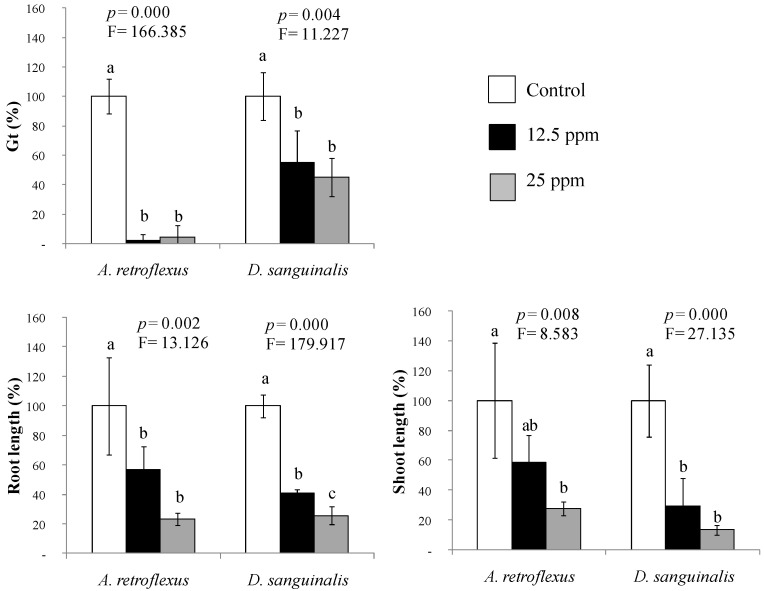
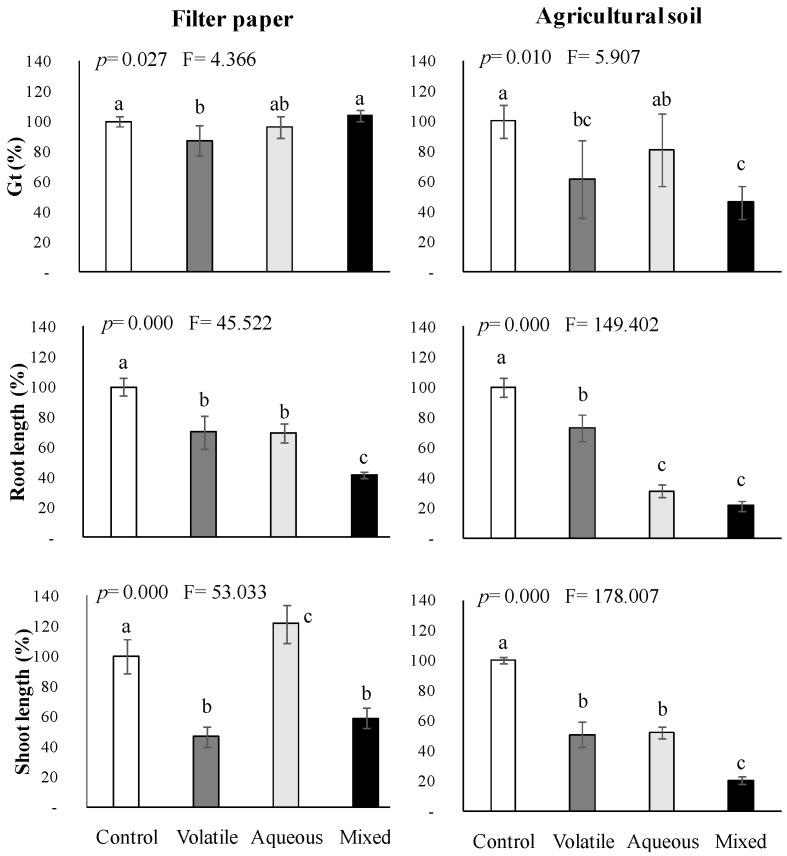
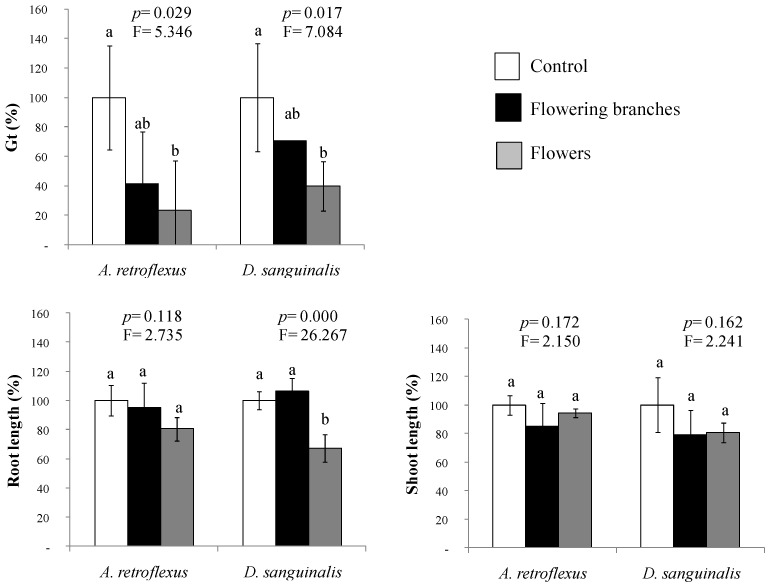
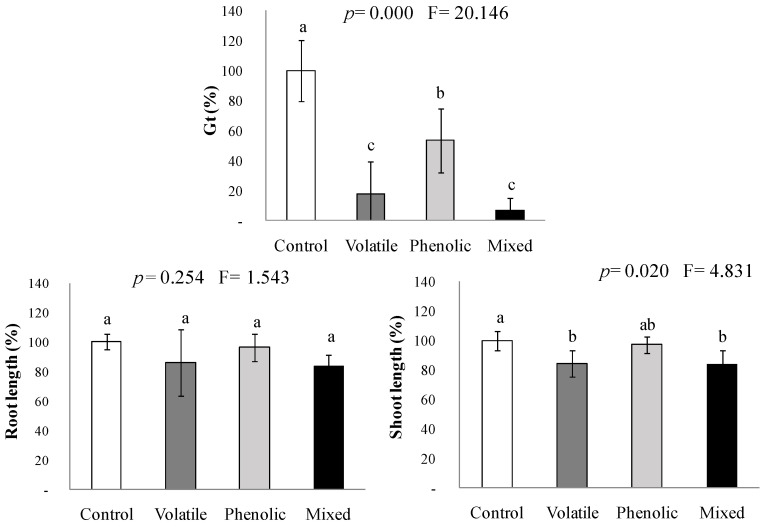
The introduction of allelopathic cover crops for green manuring or mulching is a regular practice in Integrated Weed Management. In this context, the alternative use of the abundant phytotoxic residues of allelopathic plants from the agroecosystem, e.g., the foliage of , , or species, is promising. Previous studies identified the phytotoxic compounds potentially involved in the effectiveness of some plant residues when added to the soil for weed control. The low quantities of allelochemicals present in the tissues and the weak phytotoxicity of each of them in their natural concentrations did not explain the significant levels of weed control observed at field scale. Here, to study hypothetical synergistic interactions among the volatile (VOCs) and water-soluble compounds released to the soil matrix, complex mixtures of VOCs, phenolics, or both, mimicking the chemical profiles of were prepared and then tested in vitro on the germination and early growth of two weeds. The effects were calibrated against the VOCs naturally emitted by the fresh plant material and aqueous extract, acting together or not, and with or without soil. The presence of the aqueous extract significantly increased the phytotoxicity of VOCs on root growth compared to the volatiles emitted alone. In addition, the soil factor enhanced synergistic interactions among VOCs and water-soluble compounds, resulting in a 54% decrease in total germination and an 80% inhibition of root and shoot growth. Multi-level synergistic chemical interactions should explain the bioherbicidal effectiveness of allelopathic residues applied as a soil amendment.
在综合杂草管理中,引入化感覆盖作物用于绿肥或覆盖是一种常见做法。在此背景下,将农业生态系统中化感植物丰富的具有植物毒性的残留物(例如 、 或 物种的叶子)另作他用很有前景。先前的研究确定了一些植物残体在添加到土壤中用于杂草控制时可能涉及的植物毒性化合物。组织中存在的化感物质数量较少,且它们在自然浓度下各自的植物毒性较弱,这无法解释在田间尺度上观察到的显著杂草控制水平。在此,为了研究释放到土壤基质中的挥发性(VOCs)和水溶性化合物之间假设的协同相互作用,制备了模拟 化学特征的VOCs、酚类或两者的复杂混合物,然后在体外对两种杂草的萌发和早期生长进行测试。根据新鲜植物材料和水提取物单独或共同、有或无土壤时自然释放的VOCs校准效果。与单独释放的挥发物相比,水提取物的存在显著增加了VOCs对 根生长的植物毒性。此外,土壤因素增强了VOCs和水溶性化合物之间的协同相互作用,导致总萌发率降低54%,根和芽生长受到80%的抑制。多层次的协同化学相互作用应能解释作为土壤改良剂施用的化感残留物的生物除草效果。