National Medical Research Center for Obstetrics, Gynecology and Perinatology named after Academician V.I. Kulakov, Ministry of Healthcare of the Russian Federation, 4 Oparina Street, Moscow, Russia, 117997.
BMC Womens Health. 2022 May 14;22(1):168. doi: 10.1186/s12905-022-01750-w.
Inefficiency of in vitro fertilization (IVF) programs can be caused by implantation failures. The uterine microbiota can influence the implantation process. However, it still remains unclear whether opportunistic microorganisms detected in the endometrium have a negative impact on the implantation success. The aim of our study was to evaluate the influence of the uterine microbiota on the embryo implantation success in patients undergoing assisted reproductive technologies.
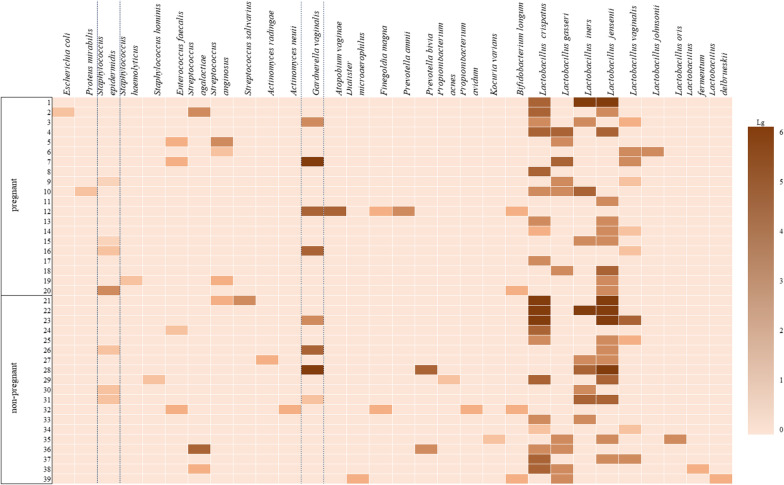
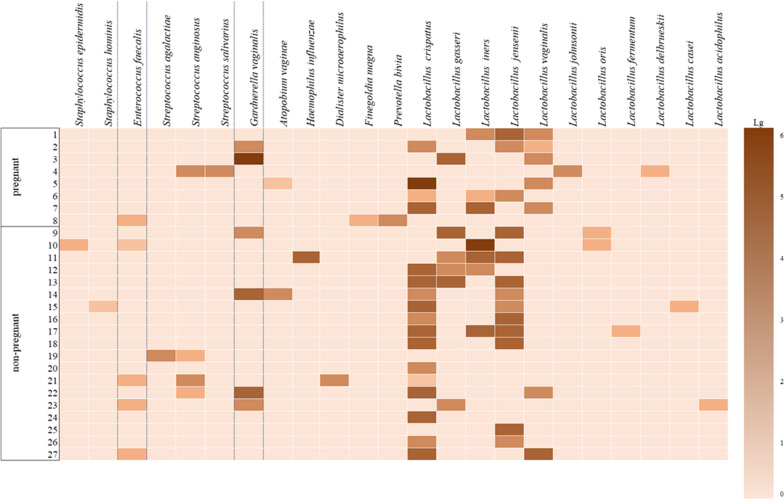
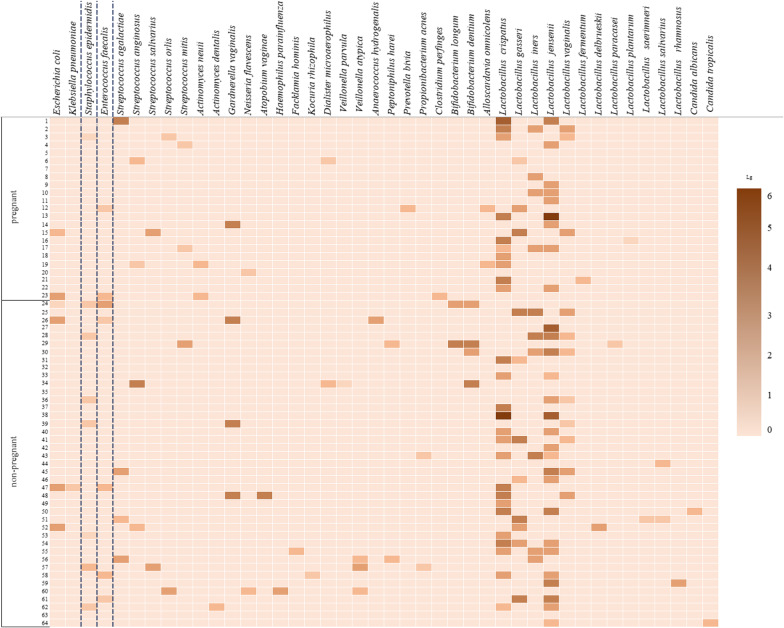
The study included 130 women diagnosed with infertility. The patients were divided into three groups: group I included women with the first IVF attempt (n = 39); group II included patients with recurrent implantation failure following embryo transfer with ovarian stimulation (n = 27); group III consisted of women with recurrent implantation failure following frozen-thawed embryo transfer (n = 64). We performed microbiological examination of the embryo transfer catheter which was removed from the uterine cavity after embryo transfer; cervical discharge of all the patients was studied as well. Thirty patients were selected for metagenomic sequencing.
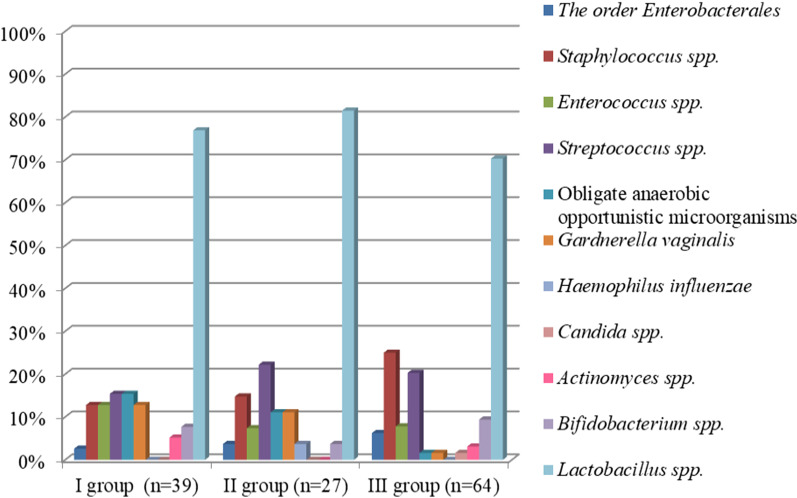
The study showed that the uterine cavity is not free of microorganisms. A total of 44 species of microorganisms were detected: 26 species of opportunistic organisms and 18 species of commensals (14 species of lactobacilli and 4 species of bifidobacteria). Obligate anaerobic microorganisms and Gardnerella vaginalis were detected more frequently in group I compared to group III (strict anaerobes-15.4 and 1.6%; G. vaginalis-12.8 and 1.6%, respectively) (p < 0.05). However, this fact did not have a negative influence on the pregnancy rate: it was 51.3% in group I, it was 29.6% and 35.9% in women with recurrent implantation failures, respectively.
Opportunistic microorganisms which were revealed in low or moderate titers (10-10 CFU/ml) in the uterine cavity and cervical canal did not affect the pregnancy rate in the women in the study groups. The microflora of the uterine cavity and cervical canal differed in qualitative composition in 87.9% of patients, therefore, we can suggest that the uterine cavity may form its own microbiota. The microbiota of the uterine cavity is characterized by fewer species diversity compared to the microbiota of the cervical canal.
体外受精(IVF)方案的效率低下可能是由于着床失败引起的。子宫微生物组可以影响着床过程。然而,目前尚不清楚子宫内膜中检测到的机会性微生物是否会对着床成功率产生负面影响。我们的研究目的是评估子宫微生物组对接受辅助生殖技术的患者胚胎着床成功率的影响。
该研究纳入了 130 名被诊断为不孕的女性。患者被分为三组:I 组包括首次进行 IVF 尝试的女性(n=39);II 组包括接受卵巢刺激后胚胎移植反复着床失败的患者(n=27);III 组包括接受冷冻胚胎移植后反复着床失败的患者(n=64)。我们对胚胎移植导管进行了微生物学检查,该导管在胚胎移植后从子宫腔中取出;还研究了所有患者的宫颈分泌物。选择了 30 名患者进行宏基因组测序。
研究表明子宫腔并非无菌。共检测到 44 种微生物:26 种机会性微生物和 18 种共生微生物(14 种乳杆菌和 4 种双歧杆菌)。与 III 组相比,I 组中更常检测到需氧菌和阴道加德纳菌(严格厌氧菌分别为 15.4%和 1.6%;阴道加德纳菌分别为 12.8%和 1.6%)(p<0.05)。然而,这一事实并没有对妊娠率产生负面影响:I 组的妊娠率为 51.3%,在反复着床失败的女性中分别为 29.6%和 35.9%。
在子宫腔和宫颈管中以低或中等滴度(10-10 CFU/ml)揭示的机会性微生物并未影响研究组中女性的妊娠率。在 87.9%的患者中,子宫腔和宫颈管的微生物群在定性组成上存在差异,因此,我们可以假设子宫腔可能形成其自身的微生物群。与宫颈管的微生物群相比,子宫腔的微生物群具有较少的物种多样性。