Department of Health Policy and Management, Keio University, Tokyo, Japan
Medical Education Program, Washington University School of Medicine in Saint Louis, St Louis, Missouri, USA.
BMJ Glob Health. 2022 May;7(5). doi: 10.1136/bmjgh-2021-007866.
Marriage, divorce and fertility are declining in Japan. There is concern that the COVID-19 pandemic may have accelerated the decrease in marriages and births while increasing the number of divorces. Changes in partnership behaviours and fertility have significant implications for mental health, well-being and population demographics.
Japanese vital statistical data were collected for December 2011-May 2021. We used the Farrington algorithm on the daily numbers of marriages, divorces and births (per month) in order to determine whether any given month between January 2017 and May 2021 had a significant excess or deficit. Analyses were conducted at the national and regional levels.
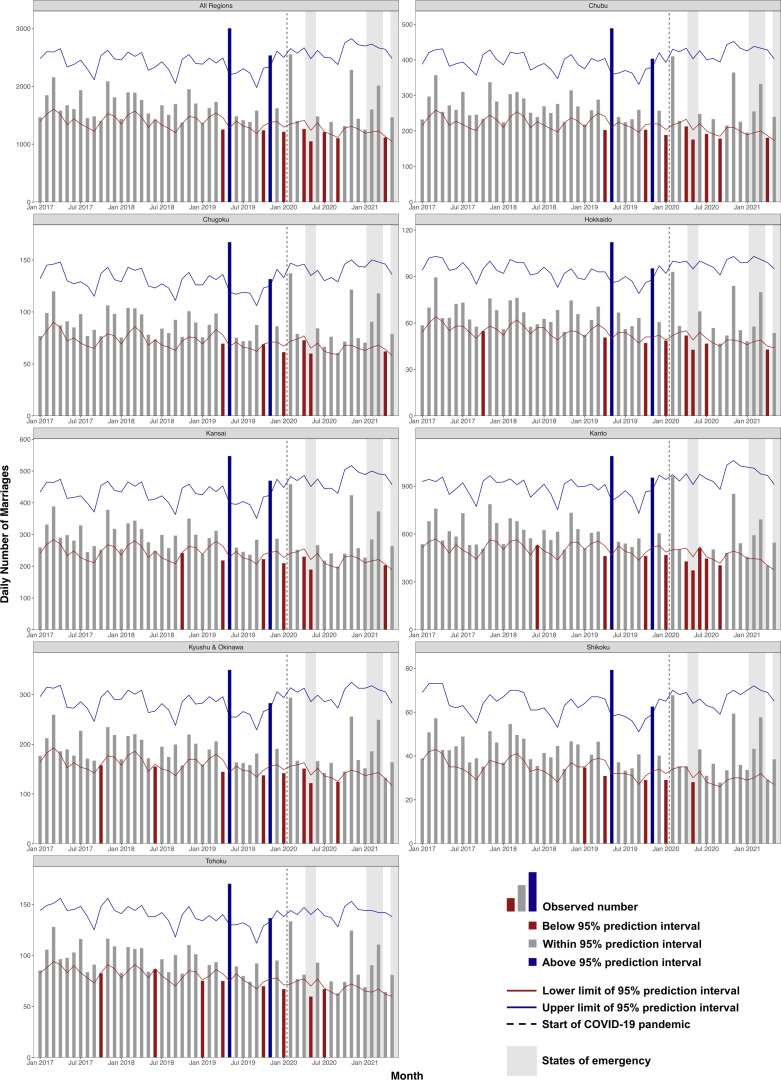
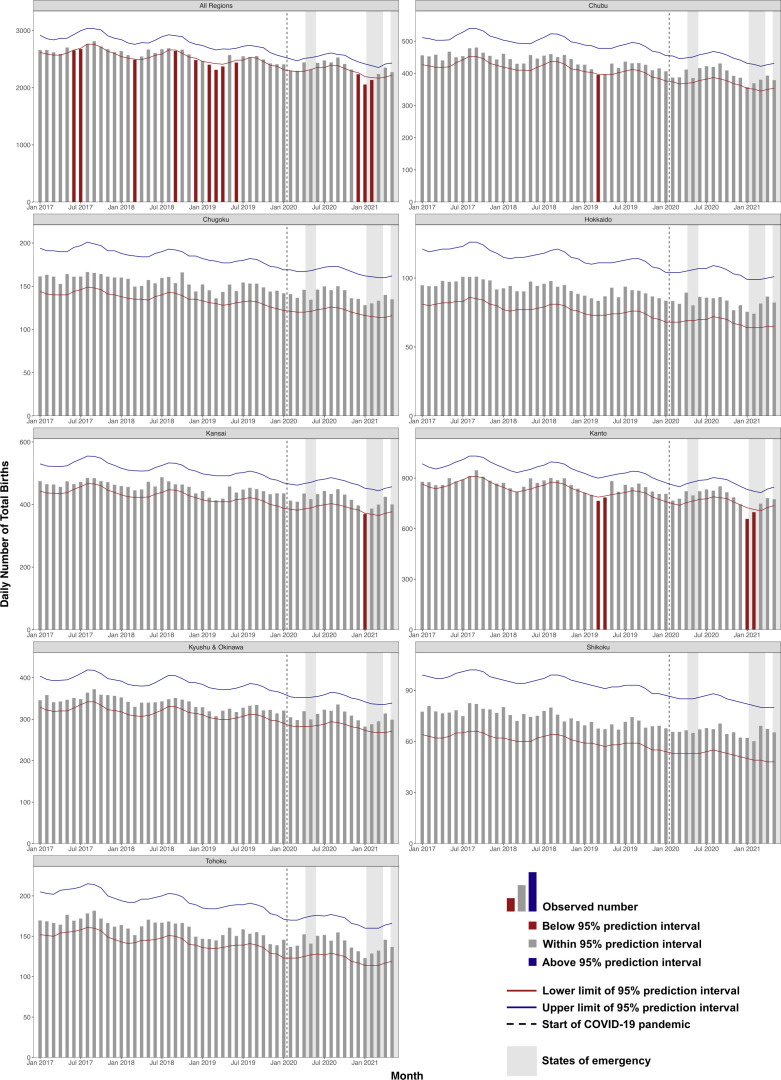
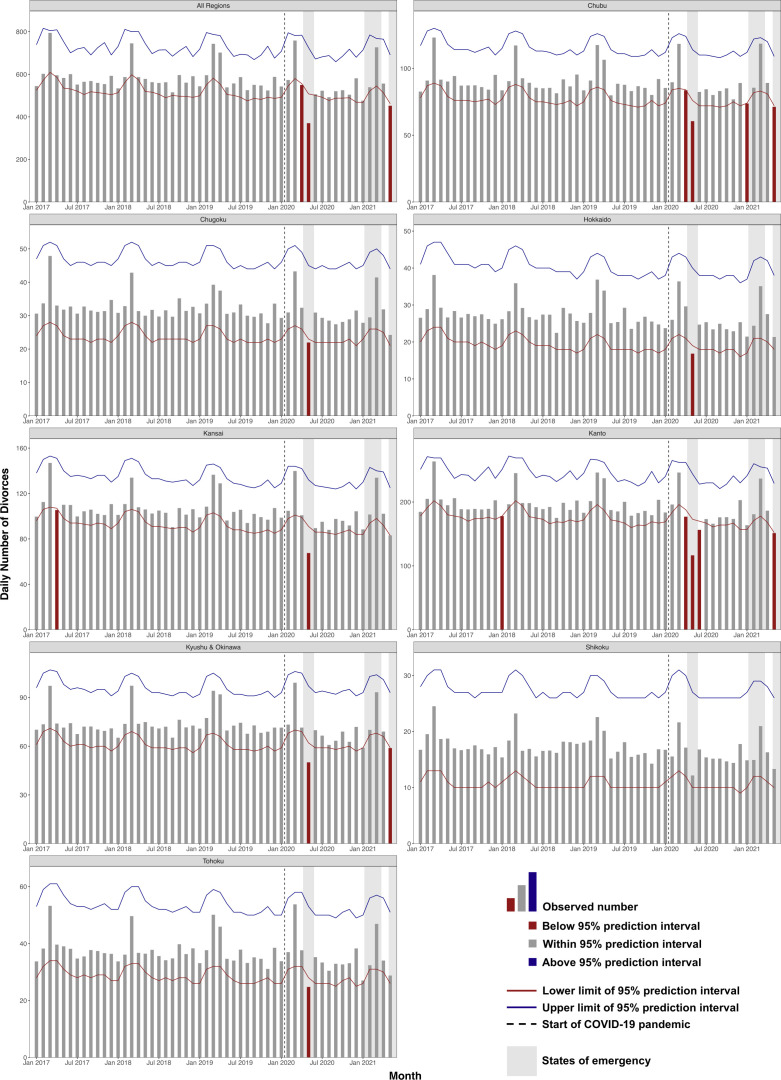
During the pandemic, significant deficits in the national number of marriages were noted in January 2020, April 2020, May 2020, July 2020, September 2020 and April 2021. Regional marriage patterns reflected national trends. Divorces were noted to be in deficit during April 2020, May 2020 and May 2021 at the country level. Regional analyses mirrored national divorce trends with the exception of Shikoku, which showed no deficits during the pandemic. Significant deficits in the number of total births were noted in December 2020, January 2021 and February 2021. Regionally, birth deficits were concentrated in Chubu, Kansai and Kanto. After the start of the pandemic, no significant excesses in marriages, divorces or births were noted at the national or regional level.
Marriages and divorces declined during the pandemic in Japan, especially during state of emergency declarations. There were decreased births between December 2020 and February 2021, approximately 8-10 months after the first state of emergency, suggesting that couples altered their pregnancy intention in response to the pandemic. Metropolitan regions were more affected by the pandemic than their less metropolitan counterparts.
日本的婚姻、离婚和生育率都在下降。人们担心,新冠疫情可能加速了结婚率和出生率的下降,同时增加了离婚率。伴侣行为和生育的变化对心理健康、幸福感和人口结构有重大影响。
我们收集了 2011 年 12 月至 2021 年 5 月的日本人口统计数据。我们使用法灵顿算法对每月的结婚、离婚和出生(每月)数量进行分析,以确定 2017 年 1 月至 2021 年 5 月之间的任何一个月是否存在显著的过剩或不足。分析在国家和地区层面进行。
在疫情期间,2020 年 1 月、2020 年 4 月、2020 年 5 月、2020 年 7 月、2020 年 9 月和 2021 年 4 月全国结婚人数明显不足。地区结婚模式反映了全国的趋势。在全国范围内,2020 年 4 月、2020 年 5 月和 2021 年 5 月离婚人数不足。地区分析与全国离婚趋势一致,除了四国地区,疫情期间没有出现不足。2020 年 12 月、2021 年 1 月和 2021 年 2 月总出生人数明显不足。在地区层面,出生不足集中在中部、关西和关东地区。疫情开始后,全国和地区层面都没有出现结婚、离婚或出生人数的显著过剩。
日本的婚姻和离婚在疫情期间下降,尤其是在宣布紧急状态期间。2020 年 12 月至 2021 年 2 月期间出生人数下降,这大约是首次宣布紧急状态后的 8-10 个月,表明夫妻双方根据疫情改变了怀孕计划。大都市地区比非大都市地区受疫情影响更大。