Noblis, Inc., Reston, VA, United States.
Joint Program Executive Office for Chemical, Biological, Radiological and Nuclear Defense (JPEO-CBRND), Joint Project Lead for CBRND Enabling Biotechnologies (JPL CBRND EB), Frederick, MD, United States.
Front Public Health. 2022 Apr 28;10:889973. doi: 10.3389/fpubh.2022.889973. eCollection 2022.
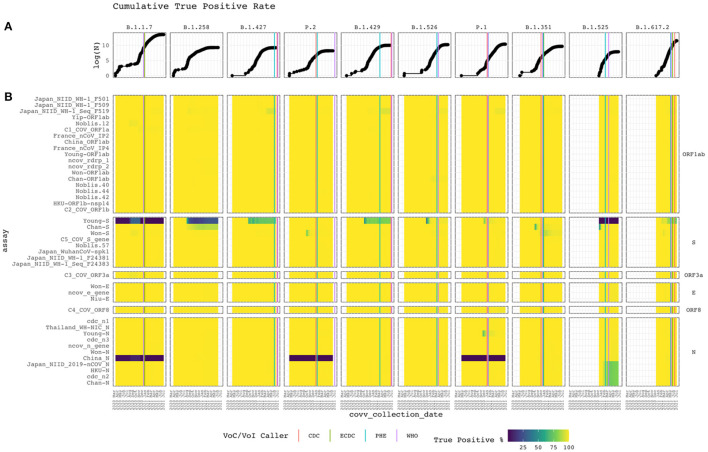
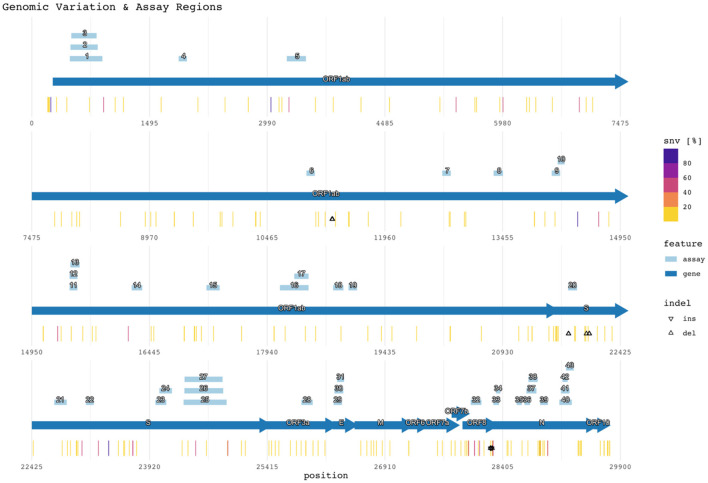
Real-time reverse transcription polymerase chain reaction (RT-PCR) assays are the most widely used molecular tests for the detection of SARS-CoV-2 and diagnosis of COVID-19 in clinical samples. PCR assays target unique genomic RNA regions to identify SARS-CoV-2 with high sensitivity and specificity. In general, assay development incorporates the whole genome sequences available at design time to be inclusive of all target species and exclusive of near neighbors. However, rapid accumulation of mutations in viral genomes during sustained growth in the population can result in signature erosion and assay failures, creating situational blind spots during a pandemic. In this study, we analyzed the signatures of 43 PCR assays distributed across the genome against over 1.6 million SARS-CoV-2 sequences. We present evidence of significant signature erosion emerging in just two assays due to mutations, while adequate sequence identity was preserved in the other 41 assays. Failure of more than one assay against a given variant sequence was rare and mostly occurred in the two assays noted to have signature erosion. Assays tended to be designed in regions with statistically higher mutations rates. analyses over time can provide insights into mutation trends and alert users to the emergence of novel variants that are present in the population at low proportions before they become dominant. Such routine assessment can also potentially highlight false negatives in test samples that may be indicative of mutations having functional consequences in the form of vaccine and therapeutic failures. This study highlights the importance of whole genome sequencing and expanded real-time monitoring of diagnostic PCR assays during a pandemic.
实时逆转录聚合酶链反应(RT-PCR)检测是目前最广泛用于检测 SARS-CoV-2 和临床样本中 COVID-19 的分子检测方法。PCR 检测方法针对独特的基因组 RNA 区域,具有高灵敏度和特异性。一般来说,检测方法的开发在设计时会纳入所有可用的全基因组序列,以包含所有目标物种,并排除近缘物种。然而,在人群中持续增长时,病毒基因组的快速积累突变可能导致特征性侵蚀和检测失败,从而在大流行期间产生情况盲点。在这项研究中,我们分析了分布在基因组上的 43 个 PCR 检测方法对超过 160 万 SARS-CoV-2 序列的特征。我们提供了证据,证明由于突变,仅在两个检测方法中出现了明显的特征性侵蚀,而其他 41 个检测方法则保留了足够的序列同一性。针对给定变异序列,不止一个检测方法失败的情况很少见,而且主要发生在我们注意到出现特征性侵蚀的两个检测方法中。检测方法往往设计在突变率统计上较高的区域。随着时间的推移进行分析可以深入了解突变趋势,并提醒用户注意在成为主导之前,以低比例存在于人群中的新型变体。这种常规评估还可以潜在地突出测试样本中的假阴性,这些假阴性可能表明突变对疫苗和治疗失败等方面具有功能影响。本研究强调了在大流行期间进行全基因组测序和扩展实时监测诊断 PCR 检测的重要性。