Gordon Elisa J, Uriarte Jefferson J, Anderson Naomi, Smith Justin Dean, Caicedo Juan Carlos, Shumate Michelle
Northwestern University Feinberg School of Medicine, Chicago, IL 60611, USA.
Spencer Fox Eccles School of Medicine at the University of Utah, Salt Lake City, UT, 84132, USA.
J Clin Transl Sci. 2022 Mar 28;6(1):e38. doi: 10.1017/cts.2022.378. eCollection 2022.
Sustainment refers to continued intervention delivery over time, while continuing to produce intended outcomes, often with ongoing adaptations, which are purposeful changes to the design or delivery of an intervention to improve its fit or effectiveness. The Hispanic Kidney Transplant Program (HKTP), a complex, culturally competent intervention, was implemented in two transplant programs to reduce disparities in Hispanic/Latinx living donor kidney transplant rates. This study longitudinally examined the influence of adaptations on HKTP sustainment.
Qualitative interviews, learning collaborative calls, and telephone meetings with physicians, administrators, and staff (n = 55) were conducted over three years of implementation to identify HKTP adaptations. The Framework for Reporting Adaptations and Modifications-Expanded was used to classify adaptation types and frequency, which were compared across sites over time.
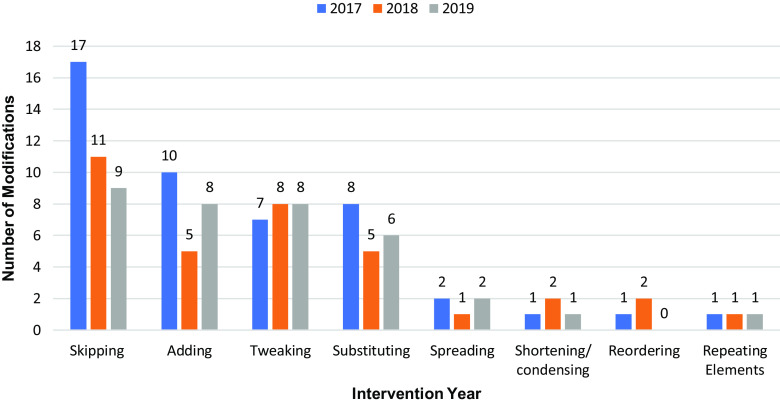
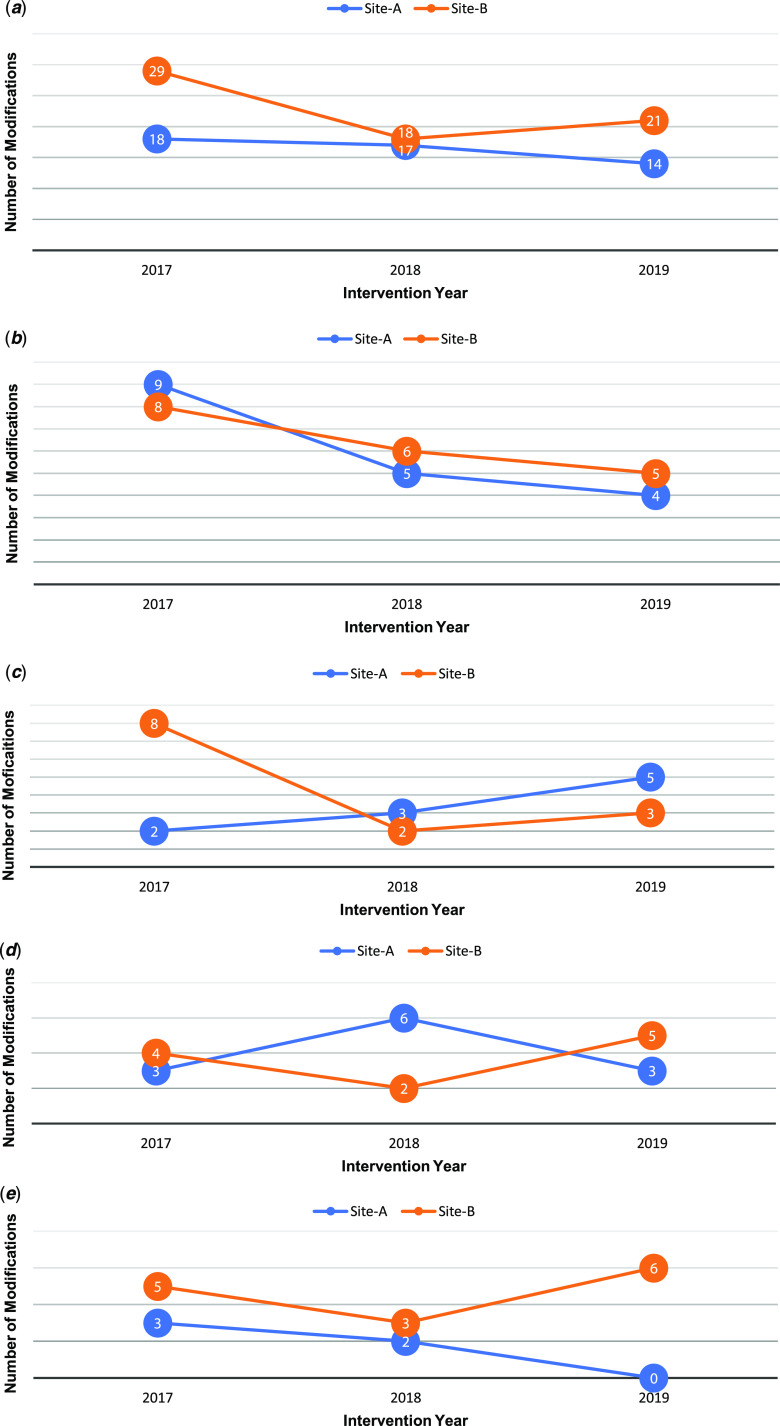
Across sites, more adaptations were made in the first year (n = 47), then fell and plateaued in the two remaining years (n = 35). Adaptations at Site-A were consistent across years (2017: n = 18, 2018: n = 17, 2019: n = 14), while Site-B made considerably fewer adaptations after the first year (2017: n = 29, 2018: n = 18, 2019: n = 21). Both sites proportionally made mostly skipping (32%), adding (20%), tweaking (20%), and substituting (16%) adaptation types. Skipping- and substituting-type adaptations were made due to institutional structural characteristics and lack of available resources, respectively. However, Site-A's greater proportion of skipping-type adaptations was attributed to greater system complexity, and Site-B's greater proportion of adding-type adaptation was attributed to the egalitarian team-based culture.
Our findings can help prepare implementers to expect certain context-specific adaptations and preemptively avoid those that hinder sustainment.
维持是指随着时间的推移持续提供干预措施,同时持续产生预期结果,通常需要不断进行调整,即对干预措施的设计或实施进行有目的的改变,以提高其适应性或有效性。西班牙裔肾移植项目(HKTP)是一项复杂的、具有文化适应性的干预措施,在两个移植项目中实施,以减少西班牙裔/拉丁裔活体供肾移植率的差异。本研究纵向考察了调整对HKTP维持的影响。
在三年的实施过程中,对医生、管理人员和工作人员(n = 55)进行了定性访谈、学习协作电话会议和电话会议,以确定HKTP的调整情况。采用《报告调整和修改的框架-扩展版》对调整类型和频率进行分类,并随时间在各地点之间进行比较。
在各地点中,第一年进行的调整较多(n = 47),然后在剩余两年中下降并趋于平稳(n = 35)。A地点的调整在各年份中保持一致(2017年:n = 18,2018年:n = 17,2019年:n = 14),而B地点在第一年之后进行的调整明显减少(2017年:n = 29,2018年:n = 18,2019年:n = 21)。两个地点按比例进行的调整大多为跳过(32%)、添加(20%)、微调(20%)和替换(16%)类型。跳过型和替换型调整分别是由于机构结构特征和缺乏可用资源导致的。然而,A地点较大比例的跳过型调整归因于系统复杂性较高,而B地点较大比例的添加型调整归因于基于团队的平等主义文化。
我们的研究结果可以帮助实施者预期某些特定背景下的调整,并预先避免那些阻碍维持的调整。